For a large family shop, start with tinned fruit in natural juice or water with no added sugar rather than syrup, in line with NHS guidance. Juice-packed fruit is not sugar-free: compare the ingredients and sugars figures for similar products, then check how much fruit you can serve and whether you can use any leftovers within the tin’s storage guidance.
Who this is for
Families moving away from syrup-packed fruit
If tinned fruit regularly goes into breakfasts, lunchboxes or puddings, the packing liquid is a useful first check. The NHS advises choosing canned fruit in natural juice or water with no added sugar or salt.
Households serving several people
A tin that looks large may contain less fruit than its total weight suggests. Drained weight, stated servings and the time allowed for refrigerated leftovers help you choose a size your household can use.
Shoppers comparing sugars on labels
If total sugars matter as well as added sugar, read the ingredients and nutrition panel together. Compare similar fruits using the same per-100g basis, and check the amount for the portion you intend to serve.
What to check when buying
Choose the packing liquid first, then check the fruit quantity, format and nutrition information against how your family will use the tin.
| Concern |
Buying check |
Who this matters to |
| Added sugar and syrup |
Read the packing description and ingredients for natural juice or water with no added sugar, rather than relying on the fruit name. |
If I am replacing syrup-packed tins used throughout the week, avoiding added sugar is my starting point. About 36% of consumers put that need first. |
| Usable family portions |
Compare drained weight where shown and the stated number of servings; check the opened-tin storage instructions before choosing a larger size. |
When several people will share a tin, I need enough fruit to serve without leaving more than we can use. That is the main concern for about 29% of consumers. |
| Fruit format |
Choose slices, halves, chunks, segments or mixed fruit for the meal you have planned, and check any relevant pip or seed warning. |
If the fruit is intended for breakfast toppings, fruit salad or baking, I want a format the household will actually use. About 21% of consumers prioritise that fit. |
| Total sugars |
Compare sugars per 100g and per serving for similar products, checking whether the nutrition figures refer to drained fruit or the full contents. |
When I need to compare total sugars, an “in juice” description alone does not answer my question. About 14% of consumers make that label comparison their primary concern. |
Common buying mistakes
-
Treating “in juice” as sugar-free
Fruit and its packing juice can both contribute to the total-sugars figure. The NHS also identifies fruit juice as a source of free sugars.
Use juice or water with no added sugar as an initial filter, then compare the sugars figures for similar fruit on a consistent nutrition basis.
-
Judging portions by total tin weight
The stated tin weight includes its liquid. A larger tin also means more fruit to store once opened.
Check drained weight where available and any stated servings, then choose a size you can use within that product’s refrigerated storage period.
-
Assuming a familiar brand always uses the same liquid
Sainsbury’s and Tesco list juice-packed and light-syrup fruit alongside one another, including different variants from familiar brands.
Check the individual tin’s packing description and ingredients, even when you have bought another fruit from that brand before.
-
Applying one storage period to every opened tin
Product directions differ: the listed Asda pears, Asda mandarins and M&S grapefruit give different periods for using refrigerated leftovers.
Follow the directions on the tin you open, including any instruction to transfer the fruit to a covered, non-metallic container.
Brands and ranges to consider
These examples show why the individual fruit, packing liquid and pack directions matter more than the brand name alone.
Del Monte
A familiar option for peaches and fruit cocktail, with both juice-packed and light-syrup variants appearing in supermarket listings.
- A fruit cocktail in juice offers a mixed-fruit format.
- The listed 415g fruit cocktail in juice has 11g sugars per 100g according to Asda Groceries; “in juice” does not mean sugar-free.
Princes
Its fruit range includes peaches, pineapple and other single-fruit and mixed-fruit options.
- Princes lists peach slices with juice in 410g and 220g sizes, and pineapple slices in juice in 432g and 227g sizes.
- Fruit type and recipe affect the label figures, so compare the particular tins you are considering rather than treating all juice-packed variants alike.
Tesco
Its tinned-fruit range provides a place to compare different fruit formats and packing liquids.
- Tesco Groceries lists both juice-packed and light-syrup fruit, alongside smaller fruit packs.
- Check each product’s label and pack size; a place in the range does not establish its added-sugar content.
Sainsbury's
Its listings include own-label fruit in juice and light-syrup alternatives.
- Listed juice-packed options include peach slices, apricot halves and mandarin segments.
- Use the individual product’s drained weight where stated; total tin weight alone does not tell you how much fruit you can serve.
Asda
Own-label pears and mandarins in fruit juice provide examples with stated serving guidance.
- Asda Groceries suggests three servings for its 410g pear halves and two for its 298g mandarins.
- Their directions for using refrigerated leftovers differ: four days for the pears and three for the mandarins.
M&S
Its 540g grapefruit segments in grapefruit juice are a distinct option for a household planning to serve grapefruit.
- The listed product contains grapefruit segments and grapefruit juice from concentrate.
- Marks & Spencer directs shoppers to refrigerate transferred leftovers and eat them within two days; consider whether the household will use the tin in that time.
Tinned fruit in juice on Joybuy
These juice-packed fruit cocktails, pineapple products and pear halves offer different formats for planned family meals and snacks. Check each tin’s usable fruit quantity and storage directions against the portions you need.
 No image available
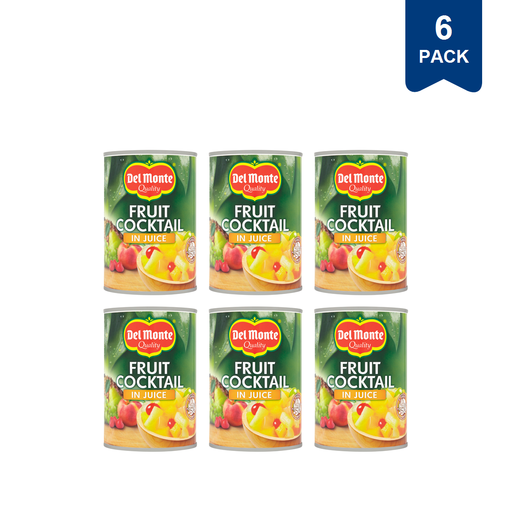
Del Monte Fruit Cocktail in Juice, 6 × 415g
The six-tin pack suits a shop planned around several fruit servings or meals. Each tin contains mixed fruit in juice; check its drained quantity when working out how much fruit you can serve at once.
View on Joybuy
 No image available
Del Monte Pineapple Slices in Juice, 435g
Pineapple slices offer a single-fruit format for a planned meal or dessert. The 435g figure is the tin size, not a measure of drained fruit; check the drained quantity against the portions you need.
View on Joybuy
 No image available
Princes Pineapple Chunks With Juice, 432g
Choose chunks if that format fits the dish you have planned. Compare the fruit quantity and the opened-tin directions with other pineapple options rather than using the 432g tin size as a portion count.
View on Joybuy
 No image available
Del Monte Fruit Cocktail in Juice, 415g
This single tin offers mixed fruit without committing to the six-pack. Check its drained quantity and the portions you intend to serve; juice-packed fruit still contains sugars from the fruit and juice.
View on Joybuy
 No image available
Del Monte Pear Halves in Juice, 415g
Pear halves provide a different fruit and cut for a planned dessert or fruit salad. Check how much pear is available after draining and follow the tin’s directions for any leftovers.
View on Joybuy
Questions about tinned fruit
Is tinned fruit in juice sugar-free?
No. Fruit and its packing juice can contribute to the total-sugars figure, and the NHS identifies fruit juice as a source of free sugars. If you are comparing total sugars, read the ingredients and compare the nutrition figures for similar products on the same basis.
What packing liquid should I look for when avoiding added sugar?
The NHS advises choosing canned fruit in natural juice or water with no added sugar or salt. Check the individual ingredients list, since a familiar fruit or brand can have variants packed in different liquids.
How long can I keep fruit after opening a tin?
Follow that tin’s storage directions rather than applying one period to every product. Asda Groceries directs shoppers to use its pear halves within four days and its mandarins within three days after opening; Marks & Spencer gives two days for its grapefruit segments. Follow the product’s instructions for transferring and refrigerating any leftovers.


