What matters when choosing a tin?
For afternoon tea, decide what will determine your choice: the packing liquid, the fruit needed for a dish, the amount you can serve or how you will use any leftovers.
| Concern |
What to check |
Who this matters to |
| Packing liquid |
Read the ingredients for juice, water, syrup and added sugar; do not rely on the word “light” alone. |
If I want to avoid added sugar when serving fruit with tea, I need to check the liquid as well as the fruit. About 33% of consumers would make that their primary concern. |
| Fruit and cut |
Choose the named fruit and cut your dish calls for, or check the ingredients of a mixed-fruit tin. |
For a trifle or cake that calls for peach halves or slices, I need that specific format rather than an unpredictable mix. Roughly 27% of consumers would put recipe fit first. |
| Usable quantity |
Compare drained weight and the stated servings where available, not only the total tin weight. |
When several guests are coming, I need enough fruit to serve after the liquid is drained. About 27% of consumers would prioritise the usable amount. |
| Leftovers |
Check the pack size, best-before date and product-specific instructions for storage after opening. |
If I may only use part of a tin, I need a realistic plan for the remainder. Around 13% of consumers would make avoiding leftovers their main consideration. |
Joybuy fruit selections
These selections cover single-fruit choices in juice, smaller peach portions and a mixed-fruit cocktail for afternoon-tea serving or desserts. Choose by fruit format and pack size, then check the individual label for ingredients, drained weight and leftover instructions.
 No image available
Princes Pineapple Chunks With Juice 432g
Choose pineapple chunks when you want one named fruit in a cut suitable for a fruit bowl or dessert. The tin is labelled 432g; check its drained weight when planning how much fruit to serve.
View on Joybuy
 No image available
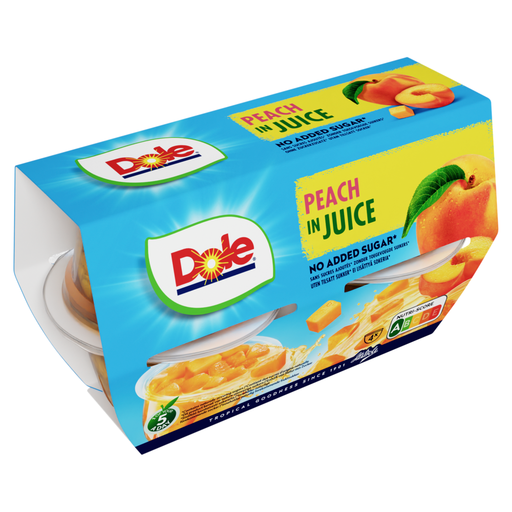
Dole Peaches In Juice 4 x 113g
Consider the four smaller peach portions when you do not want to open one larger tin for serving. Check the current ingredient list if sweeteners matter to your choice, and use drained weight for a fruit-quantity comparison.
View on Joybuy
 No image available
Del Monte Peach Halves In Juice 415g
Peach halves give you a defined fruit and shape for a dessert that calls for them. The tin is labelled 415g; if you expect leftovers, check its own storage instructions before opening.
View on Joybuy
 No image available
Del Monte Pear Halves in Juice 415G
Choose pear halves when your serving plan or recipe calls for pears rather than peaches or a mixed-fruit topping. The tin is labelled 415G; check the drained weight to plan portions.
View on Joybuy
 No image available
Del Monte Fruit Cocktail in Juice 415g
Fruit cocktail suits a mixed topping or fruit bowl when you do not need a fixed amount of one fruit. This is a 415g tin; check the ingredients and drained weight if the mix or serving quantity matters to your dish.
View on Joybuy
Frequently asked questions
Should I choose fruit in juice or light syrup for afternoon tea?
Choose natural juice or water with no added sugar or salt if that is your priority, in line with NHS advice for canned fruit. Light syrup can suit a dessert where you want a sweeter liquid; read the ingredients rather than assuming “light” means no added sugar.
Does tinned fruit count towards 5 A Day?
Yes. The NHS says 80g of fresh, canned or frozen fruit and vegetables counts as one portion of 5 A Day. It advises choosing canned fruit in natural juice or water with no added sugar or salt.
How can I tell how much fruit a tin contains?
Look for the drained weight as well as the total tin weight. Tesco’s Del Monte fruit cocktail listing, for instance, gives a 250g drained weight for a 415g tin; use the drained figure when planning the fruit you will serve.
What should I do with fruit left after opening a tin?
Follow that product’s transfer, refrigeration and use-within instructions. Sainsbury's specifies two days after opening for its peach slices in fruit juice, while Tesco’s Del Monte fruit cocktail listing specifies three to four days.
Which label details should I check before buying?
Check the ingredients, allergens, quantity and date marking, along with any storage instructions. GOV.UK’s guidance covers these details for pre-packed food and explains that a best-before date concerns quality, unlike a use-by date, which concerns safety.


