Choose the fruit and cut your world food night dish needs before deciding between juice and syrup: chunks and slices suit different toppings, fruit cocktail gives a mixed-fruit result, and halves work when larger pieces matter. If you prefer fruit in natural juice, check the exact tin rather than assuming similar-looking products use the same liquid. For a shared dish, compare net quantity with drained weight where it is stated, so you know how much fruit will reach the bowl.
Who is choosing?
Hosts making a shared dish
If the fruit will go into one dessert or topping for several people, check how much fruit the tin contains after draining, where that weight is stated. Tesco Groceries and Sainsbury's list different can sizes and fruit formats, so the quantity on the front of a tin does not tell you everything about the fruit you can use.
Cooks following a particular recipe
A fruit salad, trifle or baked dessert may call for a particular fruit or cut. Princes describes its fruit cocktail as a mixed-fruit option for trifle, while Del Monte presents pear halves for desserts and fruit salads. Check whether the recipe needs uniform pieces, large halves or a mixture.
Shoppers who prefer fruit in juice
If the packing liquid matters to you, read the label of the exact tin. Similar fruits are sold in juice and in light syrup; the NHS advises choosing tinned fruit in natural juice rather than syrup.
What matters when choosing?
For a world food night, establish the fruit and cut your dish requires, then check the packing liquid and the quantity you will use.
| Concern |
What to check |
Who this matters to |
| Fruit for a shared dish |
Check the net quantity and, where stated, the drained weight against the amount your recipe needs. |
When I am filling a shared dessert bowl, I want enough usable fruit without relying on the tin's total contents as my guide. About 33% of consumers put usable-fruit quantity first. |
| Fruit type and cut |
Match the fruit and its shape—such as chunks, slices, halves or cocktail—to the finished dish. |
If my recipe needs pieces that hold a particular shape, a mixed-fruit tin will not do the same job as a single fruit cut. For about 27% of consumers, recipe fit is the primary concern. |
| Juice or syrup |
Read the packing-liquid description and ingredients on the exact tin. |
I would rather use fruit in juice, so I need to distinguish it from a similar fruit packed in light syrup. That liquid choice comes first for about 27% of consumers. |
| Portion size |
Compare the pack format with the quantity needed for your serving plan. |
If I need separate portions rather than one shared topping, the pack format affects how I serve it. About 13% of consumers chiefly want a convenient portion size. |
Common buying mistakes
-
Judging the quantity by net weight alone
The net weight includes packing liquid, so two tins with similar stated quantities may not supply the same amount of fruit for a shared dish.
Compare the drained weights when they are stated, using tins with fruit types and cuts that both suit your recipe.
-
Treating juice and syrup as interchangeable
Retailer listings include similar fruits in juice and light syrup. The NHS advises choosing tinned fruit in natural juice rather than syrup, but the liquid also needs to fit what you are making.
Check the packing liquid, ingredients and nutrition panel on the exact product before choosing.
-
Buying a cut that does not suit the dish
Chunks, slices, halves and fruit cocktail produce different shapes or mixtures. Princes states that the fruits in its cocktail are present in variable proportions.
Note the fruit, cut and quantity your recipe calls for; use a mixed-fruit tin when a mixture is what you want.
Brands to consider for specific fruit formats
Tesco
Tesco Groceries lists own-label tinned fruit alongside branded lines, including fruit in juice and light syrup.
- Its listed formats include standard cans, fruit cocktail and multipacks, giving shoppers different serving formats to compare.
- Check the exact tin's fruit, liquid and drained weight where stated; a multipack and a standard can answer different serving needs.
Sainsbury's
Sainsbury's lists own-label and branded tinned fruits, including peaches in juice and in light syrup.
- The listed fruit and liquid choices allow a recipe-led comparison within the range.
- Check each product's cut, can size and drained weight where supplied before treating two tins as equivalent.
Del Monte
Del Monte describes prepared-fruit variants for recipes, while retailer listings include several fruits packed in juice or syrup.
- Its listed fruits and cuts include options for dishes needing a particular shape, such as pear halves.
- Juice and syrup products are distinct variants; check the ingredients and nutrition of the tin you select.
Princes
Princes lists canned fruit for uses including desserts and baking, with single-fruit and fruit-cocktail products.
- Princes describes its fruit cocktail with juice as an option for trifle when mixed fruit is wanted.
- The cocktail contains fruits in variable proportions, so choose a single-fruit tin when the recipe needs a predictable fruit type.
M&S
Marks & Spencer highlights tinned grapefruit segments and rhubarb chunks for desserts.
- Those fruits are relevant when grapefruit or rhubarb is a deliberate part of the menu.
- Choose by the ingredient your dish requires rather than treating a speciality fruit as a substitute for pineapple, peaches or mixed fruit.
Joybuy tinned-fruit selections
These tins cover pineapple slices and chunks, peach halves, mixed fruit in juice, and peach slices in light syrup. Choose the fruit, cut and liquid that fit your world food night menu.
 Image unavailable
Del Monte Pineapple Slices in Juice 435g
Consider pineapple slices when the dish calls for recognisable pieces in a fruit salad or topping. This is a 435g tin packed in juice; check the quantity your recipe needs against the fruit available after draining.
View on Joybuy
 Image unavailable
Del Monte Fruit Cocktail in Juice 415g
Choose fruit cocktail when a dessert calls for mixed fruit rather than a particular single fruit or cut. This 415g tin is packed in juice; check the exact fruit mixture if the proportions matter to your recipe.
View on Joybuy
 Image unavailable
Del Monte Peach Halves in Juice 415g
Peach halves suit a dish that needs larger pieces, such as a plated dessert. This is a 415g tin packed in juice; use the stated drained weight when planning how much peach the dish requires.
View on Joybuy
 Image unavailable
Princes Pineapple Chunks with Juice 432g
Choose chunks rather than slices when your recipe calls for pineapple pieces in a salad or topping. This 432g tin contains pineapple with juice; check how much drained fruit the dish needs.
View on Joybuy
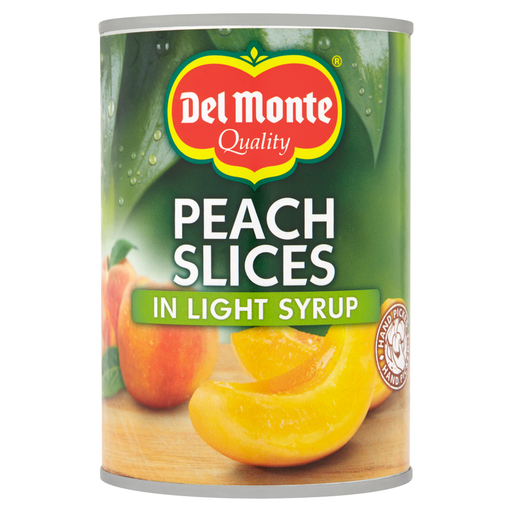 Image unavailable
Del Monte Peach Slices in Light Syrup 420g
Peach slices fit a topping or dessert that calls for sliced fruit. This 420g tin is packed in light syrup, not juice; check the stated drained weight for your recipe and choose another liquid if you prefer natural juice.
View on Joybuy
Questions about tinned fruit
Should I always choose tinned fruit in juice for a world food night?
Choose juice when you want to avoid syrup; the NHS advises selecting tinned fruit in natural juice rather than syrup. For the dish itself, also check the fruit, cut and ingredients on the exact tin, since a juice-packed product is not automatically the format your recipe needs.
How much tinned fruit counts as one adult fruit portion?
The NHS gives examples including two tinned pear or peach halves, six apricot halves or eight grapefruit segments. A recipe serving several people may require a different amount, so plan the dish from its ingredients and serving quantity rather than treating one portion as a tin-size rule.
Can I assume a plain fruit tin has no allergens?
No. If you are serving someone with an allergy or intolerance, check the ingredients and allergen information on the exact product you will use; tins in the same category need not have identical ingredients.
What should I do with an empty fruit tin?
Recycle Now advises emptying and rinsing food tins, then placing the lid inside the tin; labels can stay on. Check your local recycling arrangements if you are unsure what your collection accepts.


