Sunday-roast dessert planners
You want a fruit dessert ingredient that meets your low-fat requirement without much preparation after the roast. The NHS guide for solid foods is 3g total fat or less per 100g; check the figure on the tin you choose.


For a Sunday-roast dessert, check total fat per 100g first: the NHS guide for solid foods is 3g or less per 100g. Both juice-packed and light-syrup peaches can meet that guide, so choose fruit in juice if you also want to cut down on sugar; choose light syrup if its sweeter flavour suits the dessert, after checking the individual tin’s label. Drained weight and opened-tin instructions matter when planning how much to serve.
You want a fruit dessert ingredient that meets your low-fat requirement without much preparation after the roast. The NHS guide for solid foods is 3g total fat or less per 100g; check the figure on the tin you choose.
You are checking sugars as well as fat. The NHS advises choosing tinned fruit in juice rather than syrup when cutting down on sugar, but juice-packed fruit still has sugars listed on its nutrition panel.
You need enough fruit for the table and want to know how to handle what remains. Compare drained weight or stated servings, then follow the chosen tin’s instructions after opening.
For a Sunday-roast dessert, settle the low-fat requirement on the nutrition panel, then choose the packing liquid and the amount of fruit you need to serve.
| Concern | What to check | Who this matters to |
|---|---|---|
| Low-fat requirement | Compare total fat per 100g with the NHS guide of 3g or less per 100g for solid foods. | If low fat is my starting requirement, I need the per-100g figure before deciding between tins. About 42% of consumers put confirming that requirement first. |
| Juice or syrup | Read the packing liquid, ingredients and sugars per 100g; juice does not mean sugar-free. | When I want fruit for dessert without choosing syrup, the packing liquid changes my decision even if both tins meet the fat guide. For about 33% of consumers, avoiding syrup is the primary concern. |
| Fruit quantity and leftovers | Compare drained weight or stated servings, and read the opened-tin storage instructions. | If I am serving several people, I need to know how much fruit the tin contains and what to do with any leftovers. Planning portions and storage comes first for about 25% of consumers. |
A syrup-packed tin can meet the low-fat guide while containing added sugar. Sainsbury’s lists glucose-fructose syrup and sugar among the ingredients of Del Monte Peach Slices in Light Syrup 420g.
Check total fat for the low-fat decision, then compare the packing liquid, ingredients and sugars separately. The NHS recommends juice rather than syrup when cutting down on sugar.
The stated tin weight includes the liquid, so it does not tell you how much fruit will reach the dessert bowls. Tesco Groceries lists a 230g drained weight for Nature’s Finest Peach In Juice 400G.
Use drained weight or the stated serving count when deciding how many tins to open.
Leftover fruit needs the storage treatment specified for that product. The instructions and use periods are not interchangeable between tins.
Read the label before storing leftovers, including whether to transfer them to another container and how long to keep them refrigerated.
A stone-fragment warning on a peach tin is relevant when serving the fruit straight from the can, particularly to children.
Check the packaging for warnings and inspect the pieces before serving.
These ranges offer different fruit and packing-liquid choices; compare the label on the particular tin rather than assuming every product from a brand has the same nutrition.
Its peach range includes juice-packed and light-syrup options, allowing a packing-liquid choice without changing fruit type.
Princes lists peach slices with juice in 410g and 220g sizes.
Tesco Groceries lists several fruit types in juice, including apricots, mandarins, pears, pineapple and grapefruit.
Its peach listings include fruit in juice and a separate light-syrup option.
Its tinned-fruit selection includes grapefruit segments and rhubarb chunks, offering alternatives to a peach dessert.
These tinned-fruit options include pineapple, peaches and mixed fruit in juice, plus light-syrup peaches for a Sunday-roast dessert where that packing liquid suits your plans. Compare each tin’s current label before deciding.
 Image unavailable
Choose pineapple slices if you want a juice-packed fruit to serve with dessert. Check the drained weight for the number of portions you need, and read the tin’s instructions for any leftovers.
 Image unavailable
Choose peach halves when you want to serve larger pieces of juice-packed fruit. Check the drained quantity for portion planning and inspect the peaches before serving.
 Image unavailable
Choose pineapple chunks if smaller fruit pieces suit the dessert you are assembling. Check the serving information and follow the product’s instructions for storing any unused fruit.
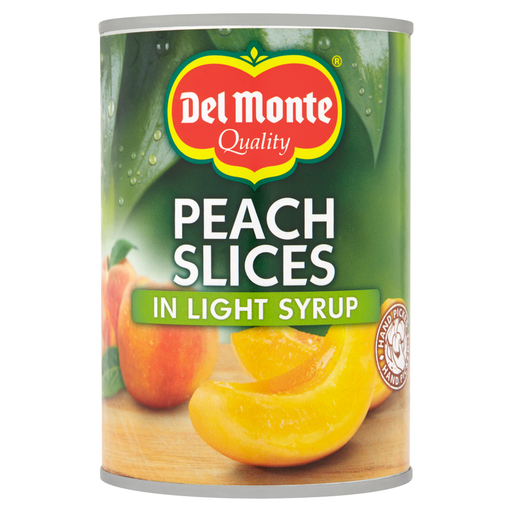 Image unavailable
Choose these peach slices if light syrup suits the dessert and you have checked the label against your priorities. Sainsbury’s lists a 250g drained weight and less than 0.1g fat per 100g for this 420g product; its ingredients include glucose-fructose syrup and sugar. The NHS advises choosing fruit in juice instead when cutting down on sugar.
 Image unavailable
Choose fruit cocktail if you want mixed fruit rather than a single fruit type for dessert. Check the tin’s fruit quantity when planning portions, as well as its nutrition and opened-tin storage instructions.
For solid foods, the NHS low-fat guide is 3g total fat or less per 100g. Read the total-fat figure on the particular tin rather than relying on its fruit type or whether it is packed in juice or light syrup.
Choose fruit in juice if cutting down on sugar is also part of your decision: that is the NHS advice when comparing canned fruit with syrup-packed fruit. Both formats can meet the low-fat guide, and juice-packed fruit still lists sugars, so compare the labels if that difference matters to you.
Follow the storage instructions on the tin you opened. Sainsbury’s instructions for its Peach Slices In Fruit Juice 411g specify transferring leftovers to a non-metallic container, refrigerating them and using them within two days; other products may give a different period.
Start with total fat and sugars per 100g, then read the packing liquid and ingredients. For a table of guests, drained weight or stated servings helps you plan the fruit quantity; check any stone warnings and opened-tin directions before serving.