Dessert-service planners
Planners choosing fruit pieces for plated desserts, or for serving with custard, yoghurt, cake or crumble. The cut and fruit variety affect how the dessert can be assembled.


For meals-on-wheels desserts, choose fruit in juice or water when the menu calls for a packing liquid without added sugar; consider syrup when its sweetness is intended and suits the recipient’s individual plan. For a more considered serving, choose a fruit cut that works for plating or layering, then check the ingredients, drained weight and any dietary or texture requirements before serving.
Planners choosing fruit pieces for plated desserts, or for serving with custard, yoghurt, cake or crumble. The cut and fruit variety affect how the dessert can be assembled.
Buyers looking for a cupboard dessert packed in juice or water rather than syrup. NHS guidance advises choosing canned fruit in natural juice or water with no added sugar or salt.
People checking a recipient’s ingredients, nutrition or texture requirements against an individual plan, rather than assuming one standard fruit dessert will suit everyone.
Choose the packing liquid for the planned dessert, then consider the fruit cut and serving format. Check the exact product against each recipient’s requirements before it goes on the menu.
| Concern | What to check | Who this matters to |
|---|---|---|
| Dessert presentation | Compare halves, slices and mixed fruit for the intended serving; check drained weight when planning portions. | If I want fruit to remain recognisable on the plate, I need a cut that suits the dessert rather than relying on the accompaniment alone. About 40% of consumers would put presentation and variety first. |
| Juice or syrup | Read the packing-liquid description and ingredients; check for added sugar rather than relying on the word “light”. | When the liquid will become part of the pudding, I need to decide whether juice or a sweeter syrup fits the recipe. About 40% of consumers would make the packing medium their primary concern. |
| Individual requirements | Check the actual tin’s ingredients and the recipient’s current nutrition or texture plan before serving. | If a recipient has a specific allergy, clinical-diet or swallowing requirement, I need the dessert to match their assessed plan. About 20% of consumers would put that individual fit first. |
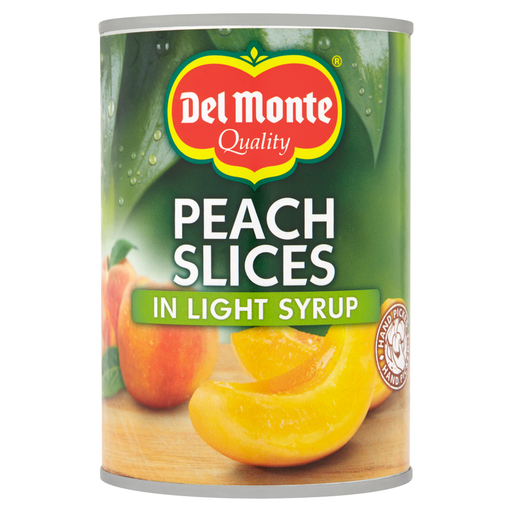
The packing liquids are not interchangeable. Del Monte Peach Slices in Light Syrup lists glucose-fructose syrup and sugar among its ingredients.
Read the ingredients on the exact tin. Choose the liquid for the recipe and the recipient’s plan, rather than assuming “light” means no added sugar.
A tin’s total weight includes its liquid, while a smaller tin or portion pack may better fit separate deliveries or limited leftovers.
Check drained weight where shown, the number of servings needed and the instructions for fruit left after opening.
Ordinary tinned fruit should not be assumed suitable for someone with an assessed swallowing or modified-texture requirement. Other individual dietary requirements also need checking.
Follow the recipient’s current plan and seek appropriate professional direction before changing the fruit’s texture or serving it under a clinical-diet requirement.
A retailer’s listed range does not establish what will be available for a particular delivery.
Confirm the chosen fruit and pack format through the intended ordering route before committing it to repeated service.
A prepared-fruit range that includes peaches and other fruit in juice or syrup formats.
A canned-fruit brand with peach slices and other fruit formats.
An own-label option with tinned fruit and portion-pack formats.
An own-label route with juice-packed fruit including peaches, apricots and pears.
An option for a different fruit-led dessert, with rhubarb chunks and grapefruit segments in its listed tinned-fruit range.
These options cover peach halves and slices, pineapple slices and fruit cocktail in juice, alongside peach slices in light syrup. Choose the fruit and pack format for the planned dessert, then check the recipient’s requirements.
 No image available
Consider the halves where recognisable fruit pieces are wanted for a plated dessert. Check the usable fruit amount on the pack when planning portions, and follow the recipient’s individual plan for ingredients and texture.
 No image available
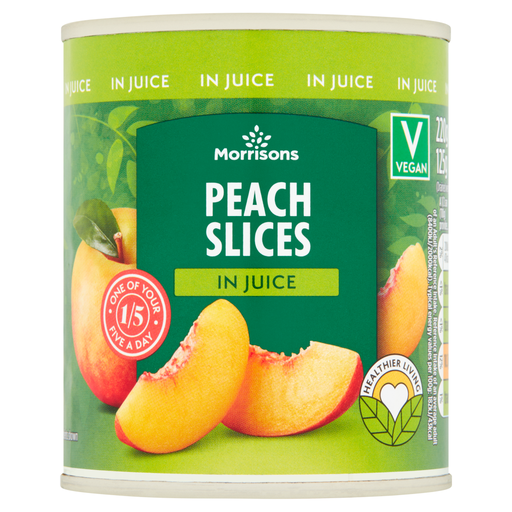
The 220g tin is a smaller format to consider for a limited number of servings. The listing warns that stone fragments may occasionally remain; check the fruit before serving and follow any recipient-specific requirements.
 No image available
These slices offer a fruit choice other than peaches for a dessert or yoghurt topping. Check the current label and the recipient’s plan before deciding on the serving.
 No image available
A mixed-fruit format can vary a dessert menu without selecting a separate tin for each fruit. Check the pack’s drained weight for portion planning, and read the current ingredients against individual requirements.
 No image available
Consider this format when a sweeter liquid is deliberately part of the dessert. Its ingredients include glucose-fructose syrup and sugar, so it does not meet a menu requirement for fruit in juice or water with no added sugar; check the recipient’s plan before serving.
Yes. The NHS says 80g of fresh, canned or frozen fruit and vegetables counts as one portion of 5 A Day. For canned fruit, it advises choosing varieties in natural juice or water with no added sugar or salt.
No. Syrup can be part of a planned dessert when its sweetness is wanted and the product fits the recipient’s individual requirements. It is not interchangeable with fruit in juice: Del Monte Peach Slices in Light Syrup lists glucose-fructose syrup and sugar, while NHS guidance advises choosing canned fruit in natural juice or water with no added sugar or salt.
Follow the instructions on that product’s pack. For Del Monte Peach Slices in Light Syrup, the listed directions say to transfer unused contents to a non-metallic container, cover and refrigerate them, and use them within 3–4 days; another product’s directions may differ.
Do not assume so when recipients have individual dietary or texture requirements. Check each person’s current plan and the exact product label; where a modified texture or clinical diet applies, follow the relevant professional direction rather than assuming ordinary tinned fruit is suitable.