Plated-dessert hosts
If you want two desserts to look composed with little preparation, recognisable slices or intact halves may suit the dish better than mixed fruit.


Choose the fruit shape to suit the dessert: pear halves make a distinct plated portion, peach slices work as a topping, and fruit cocktail suits a trifle or fruit salad. Then choose the packing liquid to suit the other ingredients rather than assuming all juice-packed or light-syrup tins have the same sweetness. For dinner for two, check the stated servings, drained fruit quantity where given, and instructions for storing any leftovers.
If you want two desserts to look composed with little preparation, recognisable slices or intact halves may suit the dish better than mixed fruit.
When fruit is going alongside cake, ice cream or another sweet component, the choice between juice and light syrup becomes part of planning the dessert.
For a dinner for two, stated servings and the instructions for storing fruit after opening help you decide whether you can use the pack.
| Concern | What to check | Who this matters to |
|---|---|---|
| Dessert format | Look for halves if the fruit will be plated, slices for a topping, or a mixed cocktail for a trifle or fruit salad. | If I want the fruit to look deliberate on two plates, its shape matters as much as the type of fruit. About 42% of consumers put presentation and recipe fit first. |
| Packing liquid | Read the ingredients and sugars per 100g on the specific tin, particularly when comparing juice with light syrup. | With an already-sweet dessert, I want to choose how much sweetness the fruit component brings. For about 33% of consumers, the primary concern is the packing liquid and sweetness balance. |
| Portions and leftovers | Check stated servings, drained weight where given, and the label's storage instructions after opening. | If dinner uses only part of the pack, I need a plan for the rest before opening it. Avoiding unwanted leftovers is the main priority for about 25% of consumers. |
The packing liquid changes the ingredients and can change the nutrition figures. Princes lists 9.0g sugars per 100g for its fruit cocktail with juice and 15.0g per 100g for its light-syrup version; those figures apply to these products, not every tin.
Choose the liquid for the dessert you are making, then compare the exact labels rather than relying on the fruit name.
The packing liquid contributes to net weight. Sainsbury's lists Del Monte Peach Slices in Juice at 415g net, with 250g drained fruit.
If your recipe needs a particular quantity of fruit, use the drained weight where the label gives one.
Instructions differ by product: Sainsbury's peach slices say to refrigerate the fruit in a non-metallic container and use it within two days, while ASDA's Just Essentials light-syrup peaches specify three days.
Check the servings and the exact opened-life instruction before choosing a pack for one dinner.
Princes lists the fruits in its cocktail in variable proportions, so it cannot promise matching pieces for each plate.
Choose halves or slices when consistent presentation matters; use fruit cocktail when a mixed topping or trifle suits the dish.
Prepared fruit in juice is relevant when you want slices or halves for a plated dessert or topping.
Peach slices and fruit cocktail provide different shapes for toppings, fruit salads and layered desserts.
Its own-label pear halves in juice offer an intact fruit format for plating.
Its own-label fruit in juice includes familiar dessert formats such as peach slices.
Its own-label peach slices offer a choice between fruit juice and light syrup.
These choices cover chunks, slices, mixed fruit and halves for a date-night dessert, with both juice and light-syrup options. Choose by the dish you plan to serve, then check the pack for portion and storage details.
 No image available
Pineapple chunks are an option when you want pieces to add to a fruit salad or spoon over dessert. This 432g pack is labelled as packed with juice; check the drained weight if your recipe needs a particular fruit quantity.
 No image available
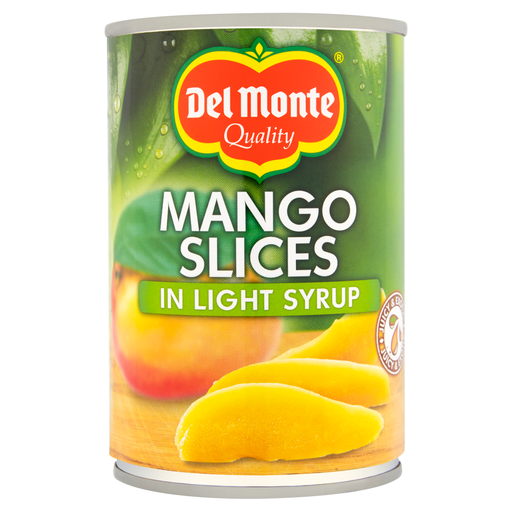
Consider sliced mango if you want a ready-cut fruit element and light syrup suits the rest of your dessert. The tin is 425g; check its serving information when planning portions for two.
 No image available
Mixed fruit suits a trifle or fruit salad when matching pieces are less important. Joybuy lists peaches, pears, pineapple, grapes and cherries for this 415g fruit cocktail in juice; check the pack if the quantity of any one fruit matters to your dish.
 No image available
Peach halves give you larger pieces to arrange on a dessert plate. This 415g tin is labelled as packed in juice; check the number and size of pieces on the pack when planning two portions.
 No image available
Pear halves suit a dessert where the fruit will be served as larger, recognisable pieces. This 415g tin is labelled as packed in juice; check its serving and drained-weight information if you need a precise yield for two plates.
Choose according to the dessert's other ingredients and compare the exact tins. Light syrup contains added sugar, while fruit in juice is not sugar-free: Princes lists 9.0g sugars per 100g for its fruit cocktail with juice and 15.0g per 100g for its light-syrup version.
Follow the product's label rather than using one rule for every pack. Sainsbury's peach slices instruct you to transfer leftovers to a non-metallic container, refrigerate and use within two days; ASDA's Just Essentials light-syrup peaches specify three days after opening.
Check the instructions on that can. The Sainsbury's peach-slice and ASDA Just Essentials peach-slice labels both direct you to transfer unused fruit to a suitable non-metallic container and refrigerate it.
A best-before date concerns quality, whereas a use-by date concerns safety, according to GOV.UK food-labelling guidance. Check which date appears on your tin and follow its storage instructions, including those that apply after opening.