Family meal planners
If several people will share fruit at breakfast or in a pudding, compare drained weights to work out how much fruit each tin provides. Tesco and Sainsbury's list standard peach tins alongside other formats.


For shared breakfasts, puddings or baking, a tin around 410–415g is a starting point if its drained weight supplies the fruit you need and you can use any remainder as directed on the label. Choose separate pots when avoiding an opened tin matters more. If the choice is between juice and syrup, NHS guidance favours canned fruit in natural juice or water with no added sugar or salt.
If several people will share fruit at breakfast or in a pudding, compare drained weights to work out how much fruit each tin provides. Tesco and Sainsbury's list standard peach tins alongside other formats.
If avoiding added sugar guides the cupboard shop, check whether the fruit is packed in natural juice or water and read the ingredients. This follows the NHS advice for choosing canned fruit.
Separate pots may suit lunchboxes or occasional snacks when an opened large tin is unlikely to be finished within its label-stated storage period.
| Concern | What to check | Who this matters to |
|---|---|---|
| Usable fruit | Check drained weight, not just the tin's net weight; the latter includes packing liquid. | When I'm serving fruit to several people, I need to know how much will be left after draining. Around 40% of consumers would make usable quantity their main concern. |
| Juice or syrup | Read the packing description and ingredients for the exact product. The NHS advises choosing canned fruit in natural juice or water with no added sugar or salt. | If avoiding added sugar guides my everyday cupboard choices, the packing liquid matters as much as the fruit type. For around 30% of consumers, that would be the primary need. |
| Portions and leftovers | Compare separate pots with a large tin, and read the tin's post-opening storage instructions. | For lunchboxes or occasional snacks, I would rather open one portion than store the rest of a tin. Avoiding leftovers would come first for around 30% of consumers. |
A tin's net weight includes its packing liquid, so it does not tell you how much fruit you can serve.
For a shared meal, compare the drained weights of the fruit types and tins you are considering.
The packing liquid matters if avoiding added sugar is your priority. The NHS advises choosing canned fruit in natural juice or water with no added sugar or salt.
Check the packing description and ingredients rather than relying on the fruit pictured on the front.
Post-opening instructions differ by product. BB Foodservice lists a two-day use period for Princes Peach Slices with Juice 410g; Joybuy's Del Monte Peach Halves in Juice 415g listing specifies three to four days after transfer, covering and refrigeration.
Follow the instructions on your own tin. If you are unlikely to use the remainder in time, consider separate pots.
Own-label peach formats include 410g tins and a four-pot pear-and-peach pack in Tesco's grocery listing.
Its listed own-label range includes 411g peach tins in fruit juice and light syrup, alongside other tinned fruits.
Tesco lists Princes 410g peach slices with juice and a 410g light-syrup alternative.
Del Monte Europe lists 415g pear halves in juice; UK grocery listings also include other prepared fruits from the brand.
These juice-packed tins and separate peach pots offer different ways to stock fruit for shared meals or individual portions during a weekly shop. Check the drained weight and storage directions on each product when deciding how much to buy.
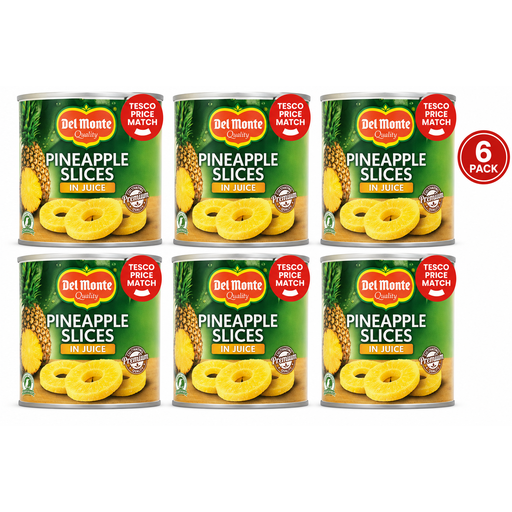 Image unavailable
Six separate tins may suit a cupboard shop when pineapple will be served across several meals. Each tin is labelled 435g; check its drained weight for the fruit quantity and follow its post-opening storage instructions.
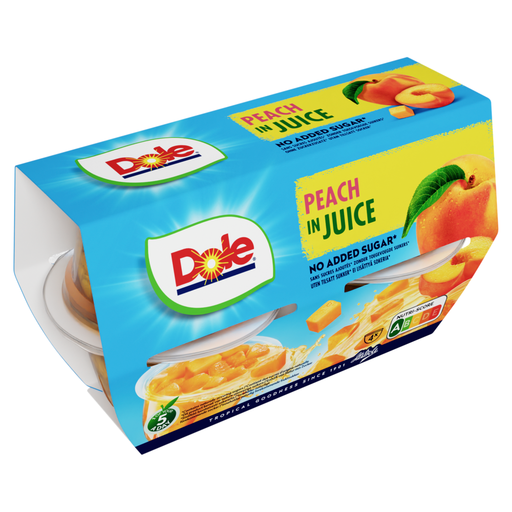 Image unavailable
Four separate pots suit occasions when opening a larger tin would leave unused fruit. The listed ingredients include steviol glycosides, so check the pack if you prefer fruit without added sweeteners.
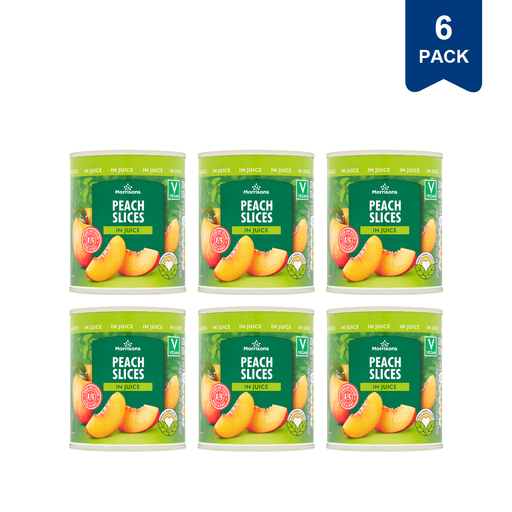 Image unavailable
Six 220g tins allow separate openings across the week rather than opening one larger tin. Check the drained weight for the amount of peaches in each tin and follow the label after opening.
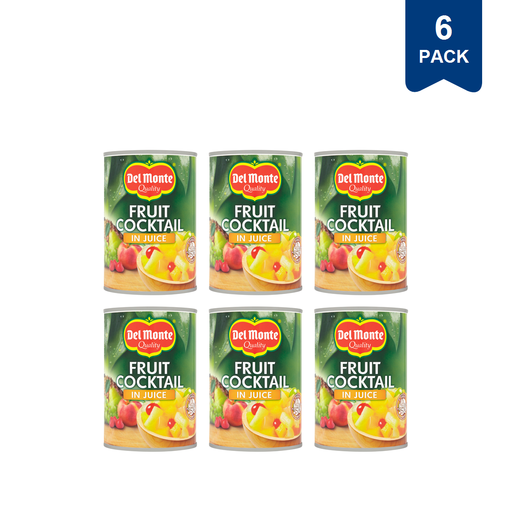 Image unavailable
This six-tin pack suits a shop that calls for fruit cocktail at more than one shared meal. The 415g label is a net weight, so check the drained weight when planning servings.
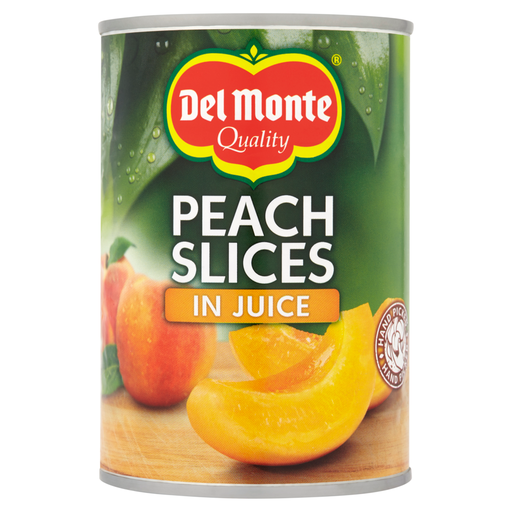 Image unavailable
A single 415g tin is an option when one shared meal calls for peach slices. Check its drained weight to plan portions and follow the tin's instructions for any fruit left after opening.
A tin around 410–415g is a starting point, but its drained weight tells you more about the fruit available to serve. Tesco and Sainsbury's list peach tins in this size range; check the drained weight against the portions you need rather than assuming every tin yields the same amount.
If avoiding added sugar is your priority, the NHS advises choosing canned fruit in natural juice or water with no added sugar or salt. Check the ingredients on the specific tin; light syrup remains a different packing choice for a recipe or household preference.
Follow that product's label, including any instructions to transfer, cover and refrigerate the remainder. The period is product-specific: BB Foodservice lists two days for Princes Peach Slices with Juice 410g, while Joybuy's Del Monte Peach Halves in Juice 415g listing gives three to four days under its stated storage conditions.
Compare the fruit available in each portion and how soon your household will use it. A tin's drained weight helps with shared servings; separate pots avoid opening the whole pack for one snack. For a tin, also check what its label requires after opening.