Juice-first dessert shoppers
If you want fruit without an added-sugar syrup, start with tins in natural juice or water and read the ingredients and nutrition panel for the exact product.


For a late-night fruit dessert, choose tinned fruit in natural juice or water without added sugar if that matches your ingredient preference; choose light syrup when you want its sweeter packing liquid for the dish. If supper is for one, compare the drained weight and opened-storage instructions before choosing a larger tin.
If you want fruit without an added-sugar syrup, start with tins in natural juice or water and read the ingredients and nutrition panel for the exact product.
If you are opening fruit for one serving, compare pack size, drained weight and the instructions for storing what remains.
If the packing liquid will become part of a topping or pudding, light syrup may suit the dish. Check its ingredients and sugars rather than treating “light” as meaning no added sugar.
Start with how you will use the liquid, then choose a quantity you can use within the tin’s opened-storage instructions.
| Concern | What to check | Who this matters to |
|---|---|---|
| Packing liquid and ingredients | Read the ingredients for added sugar. Compare sugars using the same serving size or per-100g basis. | For an everyday late supper, I want fruit without an added-sugar syrup, but still need to check the exact tin. About 42% of consumers put this ingredient choice first. |
| Portions and leftovers | Compare drained weight and stated servings; check the instructions for storing fruit after opening. | If supper is just for me, I need a quantity I can finish or use again within the labelled period. Leftover control is the primary concern for about 25% of consumers. |
| Dessert and recipe fit | Decide whether you will use the liquid or drain it, then compare the packing medium and fruit quantity. | When the fruit is going into a pudding or topping, I may want the sweeter liquid as part of the dish. About 33% of consumers put that dessert use first. |
ASDA lists sugar among the ingredients of its 411g light-syrup peaches. Its juice-packed and light-syrup peaches also show different sugars per equivalent drained serving; that comparison does not establish a rule for every tin.
Read the ingredients and compare the nutrition panels of the particular products you are considering.
Sainsbury’s lists Del Monte Peach Slices in Juice as 415g, with 250g drained. The full tin weight includes packing liquid.
Compare drained weights where available, and decide whether the liquid is useful for your dish.
ASDA’s checked 411g peach tins state three servings, while their opened-storage instructions differ. A single serving may leave fruit that needs refrigerating.
Choose a smaller format or plan how to use the remainder, following the instructions on your tin.
Fruit left beyond its labelled refrigerated period may have to be discarded.
Ingredients and product information can change, so an online description may not match the tin supplied.
Check the final package for ingredients, allergens, nutrition, storage directions and date marking.
Its prepared-fruit range includes juice- and syrup-packed formats. Sainsbury’s lists a 415g peach tin with 250g drained.
Princes lists Peach Slices with Juice in both 220g and 410g sizes, giving shoppers two pack formats for the same fruit style.
Tesco’s tinned-and-pot-fruit category includes own-label and branded fruit in several fruit and packing-liquid formats.
Its listed range includes own-label fruit in juice and light syrup alongside branded tins.
Its listed 411g peach products include a fruit-juice version and a Just Essentials light-syrup version.
Its listed tinned-fruit choices include grapefruit segments and rhubarb chunks for cupboard desserts or recipes.
These selections cover pineapple and peaches in juice, peaches in light syrup, and individually packed peach pots for a late-night fruit dessert.
 No image available
Choose pineapple chunks if that fruit style suits your supper. This 432g tin is packed in juice; plan a use for any remainder and follow the opened-storage directions on the label.
 No image available
The 220g juice-packed tin is a smaller format to consider for one supper. Check its drained weight, ingredients and opened-storage instructions on the final can.
 No image available
Consider these separately packed portions when you do not want to open a larger tin. The pack contains four 113g peach pots, not a conventional can; check the ingredients if you wish to avoid sweeteners.
 No image available
Choose slices rather than chunks if that shape suits your dessert or recipe. The juice-packed tin is 435g; compare drained weight and check how to store any fruit left after opening.
 No image available
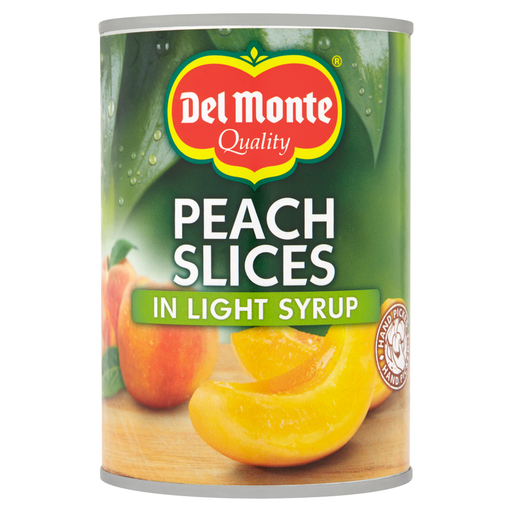
Consider this 420g format when you want the syrup as part of a peach dessert. It is not the juice-packed option; check the ingredients, drained weight and storage directions on the tin.
Yes. The NHS says 80g of canned fruit counts as one portion of 5 A Day and advises choosing fruit in natural juice or water without added sugar or salt for this purpose. Check the packing liquid and serving quantity on your tin.
No general comparison follows from those labels alone. ASDA lists 8.5g sugars per drained one-third-can serving for its 411g juice-packed peaches and 12g for its 411g light-syrup peaches. Compare the same serving basis on the particular tins you are choosing.
Follow the storage instructions on the tin. ASDA’s checked juice-packed peaches say to transfer unused fruit to a suitable non-metallic container, cover, refrigerate and use within four days; its checked light-syrup peaches specify three days.
Check the ingredients and applicable allergen information, nutrition panel, packing liquid, quantity and storage directions for the tin you will use. UK government food-labelling guidance also requires pre-packed food to carry date marking such as a best-before or use-by date.