For a low-fat weekend breakfast, check fat per 100g rather than assuming fruit in juice is lower in fat than fruit in light syrup: the Princes fruit cocktails in both liquids list less than 0.1g fat per 100g. Fruit in natural juice or water is the more suitable starting point if you also want to avoid added sugar, in line with NHS advice. Compare sugars, the serving you intend to eat and how you will use any leftovers.
Who this is for
Shoppers avoiding added sugar
If you want fruit with yoghurt, porridge or cereal without choosing a sugar syrup, the packing liquid and ingredients matter alongside the fat figure. The NHS advises choosing canned fruit in natural juice or water, with no added sugar or salt.
Shoppers checking low-fat labels
If a low-fat claim is important to your choice, check the product’s fat declaration per 100g. Fruit packed in juice is not automatically lower in fat than fruit packed in syrup.
Weekend breakfast planners
If you are serving one person or sharing a can, check the drained weight and stated portion before choosing a size. The label’s instructions also matter when some fruit will be left over.
What to check when buying
For a low-fat weekend breakfast, make the juice-or-syrup choice separately from the fat check; then choose an amount of fruit you can serve and store as directed.
| Concern | What to check | Who this matters to |
|---|
| Juice or syrup |
Read the packing-liquid description and ingredients. Compare sugars per 100g, then for the portion you intend to eat. |
I want fruit on porridge or yoghurt without choosing a sugar syrup, but still need to compare the sugars on the label. About 36% of consumers put avoiding syrup and checking sugars first. |
| Breakfast portions |
Check drained weight and the stated serving. NHS guidance counts 80g of canned fruit as one 5 A Day portion. |
When I am serving breakfast for one or sharing it, I need a can that provides the portions I have planned. Getting the serving size right comes first for about 29% of consumers. |
| Leftovers |
Compare the amount of fruit you will use with the drained weight, and read the opened-pack storage instructions. |
If some fruit will remain after breakfast, I want to know how to store it and whether I can use it within the label’s stated period. Avoiding unused leftovers is the main concern for about 21% of consumers. |
| Low-fat claim |
Check fat per 100g independently of sugars. For a solid food in Great Britain, legislation.gov.uk sets the condition for a low-fat claim at no more than 3g fat per 100g. |
I need the exact can to meet the low-fat condition, so its per-100g fat declaration decides my choice. About 14% of consumers make that their primary check. |
Buying pitfalls
-
Assuming fruit in juice is low in sugars
Juice-packed fruit can still contribute substantial sugars to a serving. Tesco lists 12.2g sugars per 100g and 27.7g per can for its Pineapple Slices in Juice.
Use the packing liquid to identify the type of product, then compare sugars per 100g and the amount you plan to serve.
-
Using syrup as a shortcut for judging fat
Princes lists less than 0.1g fat per 100g for both its Fruit Cocktail with Juice and Fruit Cocktail in Light Syrup. Their sugars differ: 9.0g and 15.0g per 100g respectively.
Check fat and sugars separately. If avoiding added sugar matters to you, read the ingredients as well as the nutrition panel.
-
Opening a large can without a plan for the rest
A sharing-size can may leave fruit to store. The Tesco fruit labels cited here instruct shoppers to transfer unused contents to a non-metallic container, refrigerate them and consume them within two days.
Choose a size you expect to use, and follow the storage period on the particular can you buy.
Brands to consider
Tesco
Tesco’s cited juice-packed pears, pineapple and fruit medley provide product-level nutrition and serving information for comparing breakfast choices.
- Each cited product lists less than 0.1g fat per 100g.
- Sugars differ between them: Tesco lists 8.5g per 100g for the pears, 10.0g for the medley and 12.2g for the pineapple.
Princes
Princes provides juice-packed and light-syrup versions of its fruit cocktail, allowing a comparison within the same fruit format.
- Princes lists less than 0.1g fat per 100g for both versions.
- Its juice version lists 9.0g sugars per 100g; the light-syrup version lists 15.0g and includes sugar in its ingredients.
Del Monte
Tesco’s tinned-fruit listings include Del Monte peach slices, fruit cocktail, pear halves and mandarins in juice, offering several fruit formats to consider for breakfast.
- The listed formats let you choose a single fruit or a mixture.
- Check the nutrition panel and packing liquid on the exact Del Monte can; figures for Tesco or Princes products do not describe it.
Joybuy product selections
For a weekend breakfast, these Joybuy selections include fruit in juice and one mango in light syrup. Choose the fruit and packing liquid that fit your plans, then check the exact can’s nutrition and serving information.
 Image unavailable
Princes Pineapple Chunks With Juice 432g
Consider this juice-packed pineapple if you are planning a breakfast for two: its product information describes a half-can serving. If fruit remains, follow the instruction to transfer it to a sealed container, refrigerate it and consume it within two days.
View on Joybuy
 Image unavailable
Del Monte Fruit Cocktail in Juice 415g
This 415g fruit cocktail offers a mixed-fruit choice in juice. Decide how much you will serve using the can’s label; for leftovers, its product instructions call for a covered, non-metallic container in the fridge and use within three to four days.
View on Joybuy
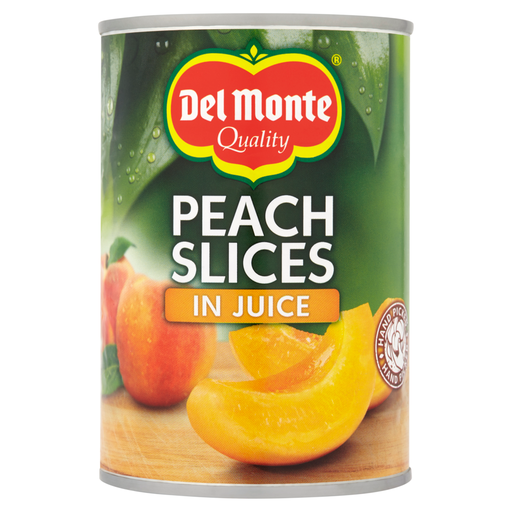 Image unavailable
Del Monte Peach Slices in Juice 415g
Choose peach slices if you want a single-fruit option in juice for breakfast. The product information identifies peaches and clarified pineapple juice; check the label for your serving, and refrigerate any leftovers in a covered, non-metallic container for use within three to four days.
View on Joybuy
 Image unavailable
Del Monte Pear Halves in Juice 415g
These pear halves are another single-fruit option packed in juice. Check the can for the amount you intend to serve; its opened-pack instructions call for refrigerated storage and use within three to four days.
View on Joybuy
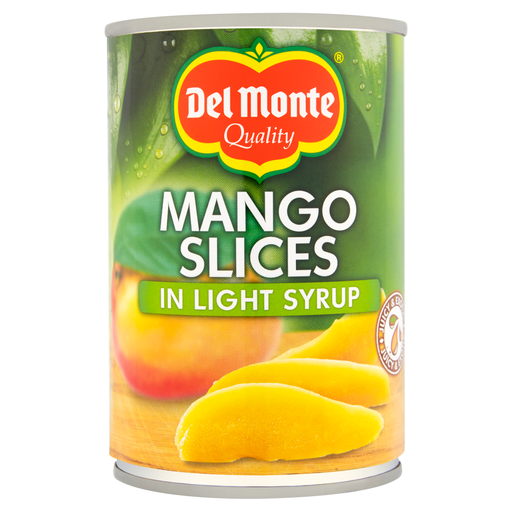 Image unavailable
Del Monte Sliced Mango in Light Syrup 425g
Consider this mango if you want the light-syrup format rather than fruit in juice. The product information gives a 230g drained weight; it also identifies water and sugar in the ingredients, so compare its nutrition on the stated per-100g drained basis. Refrigerate leftovers as directed on the can.
View on Joybuy
Questions about tinned fruit
Is fruit in light syrup higher in fat than fruit in juice?
Not necessarily. Princes lists less than 0.1g fat per 100g for both versions of its fruit cocktail. Their sugars differ: 9.0g per 100g in juice and 15.0g per 100g in light syrup.
What does “low fat” mean on a solid tinned-fruit product?
In Great Britain, legislation.gov.uk sets the condition for a low-fat claim on a solid food at no more than 3g fat per 100g. Check the per-100g fat declaration on the exact product rather than judging by its packing liquid.
Can tinned fruit count towards 5 A Day at breakfast?
Yes. The NHS says 80g of canned fruit counts as one 5 A Day portion and advises choosing fruit in natural juice or water with no added sugar or salt.
How should I store leftover tinned fruit?
Follow the instructions on your can. The Tesco fruit labels cited here say to move leftovers to a non-metallic container, refrigerate them and consume them within two days; storage periods on other products can differ.
Should I compare sugars per 100g or per can?
Use per 100g to compare products on the same basis, then check the figure for the amount you intend to eat. Tesco’s Pineapple Slices in Juice, for example, lists 12.2g sugars per 100g and 27.7g for the can.


