Hosts avoiding added sweeteners
You want fruit for a dessert or fruit course without assuming that packing it in juice removes all sugars. The NHS notes that sugars in fruit juice still count as free sugars.


If avoiding added sweeteners is the priority, start with fruit packed in juice and check the ingredients; choose a product explicitly labelled no added sugar when that claim matters. Neither description means sugar-free, so compare sugars per 100g and the amount you intend to serve. Light syrup is an option when the dessert calls for a sweet packing liquid, while fruit cut and drained weight determine how well a tin fits the recipe and guest list.
You want fruit for a dessert or fruit course without assuming that packing it in juice removes all sugars. The NHS notes that sugars in fruit juice still count as free sugars.
Your recipe calls for a particular cut, such as slices for plating or segments for a fruit salad, and you need enough drained fruit to serve your guests.
You want a store-cupboard option for a last-minute dessert and need to consider pack size, leftovers and the instructions for storing fruit after opening.
For a dinner-party dessert, settle the sugar and ingredient requirement first, then choose the fruit cut and quantity that suit the recipe.
| Concern | What to check | Who this matters to |
|---|---|---|
| Added sugar and total sugars | Read the ingredients or no-added-sugar claim, then compare sugars per 100g and for the portion you plan to serve. | If avoiding added sweeteners comes before dessert sweetness, I need to distinguish the claim from the total-sugars figure. About 36% of consumers put that distinction first. |
| Fruit cut and presentation | Choose the fruit type and cut for the recipe; check the drained weight if the fruit will be served without its liquid. | For a plated dessert, I want pieces that fit the presentation rather than a tin chosen solely for its packing liquid. Dessert format is the primary need for about 29% of consumers. |
| Quantity for guests | Compare drained weight and the recipe quantity instead of relying on the total pack weight. | When serving fruit to a group, I need to know how much usable fruit each tin provides. Having enough for guests comes first for about 21% of consumers. |
| Preparation and leftovers | Check the pack format and its instructions for refrigeration and use after opening. | If dessert preparation needs to be quick, I also need a plan for any opened fruit. Handling and leftovers are the main concern for about 14% of consumers. |
Fruit and its packing juice can still contribute to the total-sugars figure. A no-added-sugar claim does not mean sugar-free either.
Check the ingredients and compare “of which sugars” per 100g on the exact tins you are considering. Use the portion you will serve for a further comparison.
The total pack weight includes liquid, which may not go into your dessert. A recipe needing a set amount of fruit calls for a drained-weight check.
Compare drained weights and fruit cuts before deciding how many tins the guest list requires.
Storage directions vary by product, and fruit may need checking for pips or fragments before it is served.
Read the tin’s serving and storage instructions, refrigerate leftovers as directed and use them within the stated period.
Princes lists several tinned-fruit types, including pineapple, peaches and mandarins, for hosts choosing a particular fruit format.
Del Monte fruit appears in both juice and light-syrup formats in the retailer listings supplied for this topic.
Sainsbury’s lists own-label fruit in juice in several cuts, including peach slices and mandarin segments.
Tesco’s tinned-fruit category lists products in juice alongside light-syrup options from different brands.
M&S lists grapefruit segments and rhubarb for desserts where those fruit flavours suit the recipe.
These selections cover fruit packed in juice for plated or spooned dinner-party desserts. If a no-added-sugar claim is essential, confirm it on the current pack rather than relying on “in juice” alone.
 No image available
Consider this cut when pineapple slices need to remain visible on a plated dessert. Check the drained weight for the quantity your recipe requires, and compare sugars per 100g on the pack.
 No image available
Peach halves offer a defined shape for individual dessert portions. Check how many halves you need, the usable fruit quantity and the pack’s sugars per 100g.
 No image available
Chunks suit a fruit salad or a dessert served by the spoonful. Check the drained weight when planning portions and follow the pack’s directions for any leftovers.
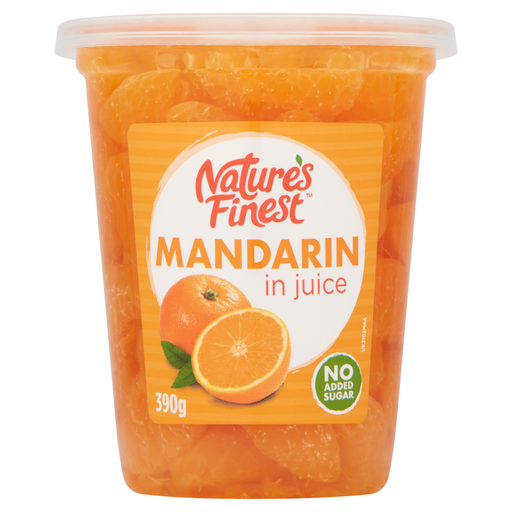 No image available
Mandarin segments fit a fruit salad or spooned dessert. If avoiding added sugar is the deciding factor, confirm the claim and ingredients on this pack, compare sugars per 100g and check for seeds or fragments before serving.
 No image available
A mixed-fruit format suits a dessert served in bowls or a fruit salad. Check that the fruit mix fits your menu, then confirm the drained quantity and nutrition details for the portions you plan to serve.
No. A no-added-sugar claim concerns sugars or other foods added for sweetening; sugars naturally present in the fruit or juice can remain. Check “of which sugars” on the nutrition panel if total sugars matter to your choice.
No. Juice describes the packing liquid, not a guaranteed total-sugars level. For example, Sainsbury’s lists 10.2g sugars per 100g for its Mandarin Segments in Fruit Juice; compare the exact alternatives and the amount you intend to serve.
Start with the cut your dessert needs, then check drained weight to plan how much fruit to serve. Compare the packing medium and sugars per 100g on the particular tins you are considering; the NHS notes that nutrition information is given per 100g and may also appear per portion.
Follow the instructions on the individual product. Marks & Spencer’s grapefruit segments, for example, instruct shoppers to transfer opened contents to a non-metallic container, refrigerate them and eat them within two days; another product’s directions may differ.