Quick dessert finishers
If fruit is the last course after dinner or a topping for yoghurt, choose a cut and pack size you can serve straight away and are likely to finish.


For an everyday fruit course or topping, choose a tin in natural juice or water with no added sugar, in line with NHS guidance. Syrup-packed fruit can suit a deliberately sweeter dessert; whichever format you choose, match the fruit and drained quantity to the dish and plan how you will store any leftovers.
If fruit is the last course after dinner or a topping for yoghurt, choose a cut and pack size you can serve straight away and are likely to finish.
If you usually choose fruit in juice, check the individual tin's packing liquid and ingredients. NHS guidance recommends canned fruit in natural juice or water with no added sugar or salt.
If one tin may last beyond dinner, compare its drained quantity with the portions you need and read its instructions for storing fruit after opening.
Start with the dish you intend to make, then check the packing liquid and how much fruit you will use at dinner.
| Concern | What to check | Who this matters to |
|---|---|---|
| Recipe fit | Match the fruit and cut to the dish: halves or slices for serving, mixed fruit for a fruit salad, or rhubarb for a cooked pudding. | When dinner needs a particular dessert, the fruit must work in that dish without extra preparation. About 33% of consumers put recipe fit first. |
| Packing liquid | Read the ingredients for juice, water or syrup and check the nutrition information on the exact tin. NHS guidance recommends natural juice or water with no added sugar or salt. | If I want the NHS-recommended format for an everyday fruit course, the packing liquid guides my choice; about 27% of consumers make it their primary concern. |
| Usable fruit and leftovers | Compare drained weight where declared, then check the opened-storage instructions if dinner will not use the whole tin. | A partly used tin needs a plan for the remaining fruit, so about 20% of consumers chiefly consider usable quantity and leftovers. |
| Portion convenience | Check whether a smaller tin, individual pot or standard tin suits the number of diners; treat suggested servings as product-specific guidance. | For a meal for one or two, I may prefer a pack I can finish without storing the rest. About 20% of consumers put portion convenience first. |
The liquid contributes to the can's stated weight. Sainsbury's lists 250g drained fruit for a 415g Del Monte peach tin.
Check the declared drained weight when the quantity available for your dish matters.
Light syrup does not mean no added sugar: M&S lists sugar in its Rhubarb Chunks in Light Syrup. NHS guidance instead recommends canned fruit in natural juice or water with no added sugar or salt.
Choose the packing liquid for the intended dessert and read the exact ingredients.
Storage instructions differ. ASDA says to decant and refrigerate unused peach slices and use them within four days; M&S gives two days for its grapefruit segments.
Choose a portion you can finish, or follow the storage and open-life instructions on your tin.
Health and Social Care Northern Ireland's tinned-food guidance warns that a deep dent can conceal a split, hole or damaged seal.
Check the tin before use and avoid one with a deep dent that could have affected its seal.
A reference point for branded peaches and other tinned-fruit formats shown in UK grocery listings.
Worth comparing when you need a smaller or standard tin of peach slices.
Its grocery catalogue lets shoppers compare own-label and branded peach formats.
Its tinned-fruit listings provide options for comparing fruit and packing liquids.
Its 411g Peach Slices in Fruit Juice offer a product-specific reference for portion and leftover planning.
An option to examine when a dessert calls for fruit such as rhubarb or grapefruit.
These tins offer pineapple, peaches, mixed fruit and pears in juice for a quick fruit course or dessert, alongside mango in light syrup for a sweeter recipe.
 No image available
Pineapple chunks are an option when the planned dish calls for pineapple rather than sliced fruit.
The tin is 432g and is labelled with juice. Check its drained weight if the amount of usable fruit will determine your portions.
 No image available
Choose peach halves when that cut suits the dessert you have in mind.
The can is 415g and is labelled as fruit in juice. Check the drained quantity and divide it by the portions you intend to serve.
 No image available
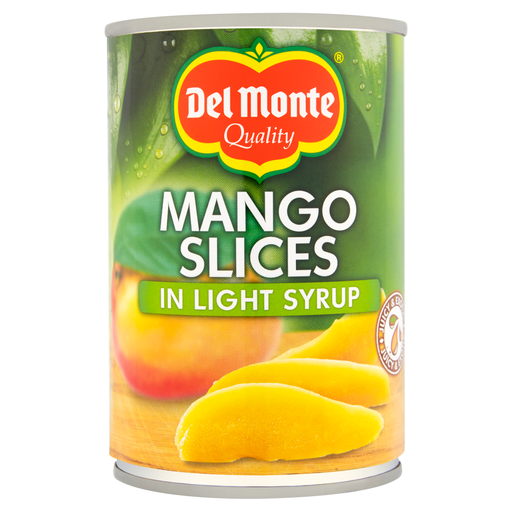
Mango slices in light syrup suit a dessert where you want that fruit and a syrup-packed format.
The tin is 425g. Check its ingredients and drained weight; light syrup should not be treated as a no-added-sugar description.
 No image available
Mixed fruit offers a different starting point from a tin containing just one fruit, particularly for a fruit salad.
This is a 415g tin labelled as fruit cocktail in juice. Check the ingredients for the fruit mix and the drained quantity for portion planning.
 No image available
Pear halves suit a fruit course or dessert that calls for whole fruit pieces rather than a cocktail.
The 415g tin is labelled as pears in juice. Check its drained weight and the instructions for any fruit left after dinner.
Choose natural juice or water with no added sugar if you want the format NHS guidance recommends for canned fruit. Syrup can suit a deliberately sweeter recipe, but check the exact ingredients: light syrup does not mean no added sugar.
Compare the drained quantity and any suggested servings with the number of diners. ASDA suggests three servings for its 411g Peach Slices in Fruit Juice, but that guidance should not be applied to other tins.
Follow that product's label rather than using one storage period for all tinned fruit. ASDA instructs shoppers to transfer unused peaches to a suitable non-metallic container, cover and refrigerate them, and use them within four days; M&S says to refrigerate its grapefruit segments and eat them within two days.
A best-before date concerns quality, whereas a use-by date concerns safety, according to GOV.UK food-labelling guidance. Also check the tin's condition and follow its storage instructions.