Hosts avoiding added sugar
If you want fruit for a shared dessert without automatically choosing syrup, compare the preserving liquid, ingredients and sugars per 100g. Fruit in juice can still contain sugars.


For a book-club spread where avoiding added sugar matters, start with fruit in juice or water, then check the ingredients and sugars per 100g: juice-packed fruit is not sugar-free. Princes lists 11.8g sugars per 100g for its peaches with juice and 15.0g for its matched light-syrup peaches; syrup makes more sense when its sweeter liquid is part of the planned dessert. Use drained weight to plan fruit for guests and follow the chosen pack’s instructions after opening.
If you want fruit for a shared dessert without automatically choosing syrup, compare the preserving liquid, ingredients and sugars per 100g. Fruit in juice can still contain sugars.
If the fruit will be drained for a bowl, yoghurt topping or dessert, drained weight helps you judge how much fruit guests will receive. Check the pack’s instructions if some remains after the meeting.
If the recipe uses the liquid as well as the fruit, light syrup may serve that purpose. The matched Princes peach products show why that choice needs to be weighed against a reduced-added-sugar aim.
For a book-club spread, settle the preserving liquid and dessert style, then check how much fruit the pack provides once drained.
| Concern | What to check | Who this matters to |
|---|---|---|
| Added sugar | Read the ingredients for added sugar or syrup, then compare sugars per 100g between comparable fruits. A no-added-sugar label does not mean sugar-free. | If I am putting fruit on the table without making syrup the default, the preserving liquid and ingredients guide my choice. About 42% of consumers put avoiding added sugar first. |
| Usable fruit | Check drained weight when the liquid will be discarded, and read the chosen pack’s opened-storage instructions. | For a shared bowl, I need enough fruit for the expected guests without opening more than we can use. About 33% of consumers put serving quantities and leftovers first. |
| Dessert fit | Decide whether the liquid will be drained or used in the recipe; compare the same fruit and nutrition basis when choosing between juice and syrup. | If the fruit and its liquid are going into a pudding, their flavour matters to the dish. About 25% of consumers put dessert style first. |
Fruit and juice contain sugars even when no sugar has been added. Princes lists 11.8g sugars per 100g for its peach slices with juice.
Check both the ingredient list and the ‘of which sugars’ figure per 100g.
Princes lists sugar among the ingredients of its light-syrup peaches and 15.0g sugars per 100g, against 11.8g for its peaches with juice.
Choose syrup deliberately for a recipe that uses the sweeter liquid; otherwise, start by checking fruit in juice or water.
The liquid is included in net weight. Tesco lists a 230g drained weight for a 400g Nature’s Finest peach tin.
When serving the fruit without its liquid, use drained weight to plan quantities.
The Dole peach pots described by Tesco are labelled no added sugar but list steviol glycosides in their ingredients.
If guests wish to avoid sweeteners, check the current ingredient list as well as the front-of-pack wording.
Princes offers a direct choice between peach slices with juice and peach slices in light syrup.
The Tesco listing includes several Del Monte fruits in juice, including peaches and pineapple.
Tesco’s tinned-fruit listings include own-label fruit in juice across several fruit types.
Sainsbury’s lists tinned fruit in juice alongside syrup-packed choices.
M&S lists grapefruit segments in grapefruit juice as a fruit choice for a different dessert flavour.
These juice-packed peach, pineapple and mandarin options offer separate pots or tins for a book-club fruit dish. Compare their current labels and the fruit needed for your serving plan; this selection does not include a light-syrup alternative.
 No image available
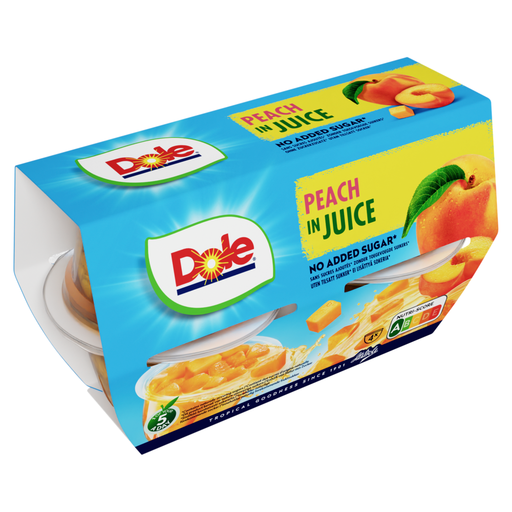
Four separate peach pots offer individual portions when attendance or serving needs vary. The Dole peach pots described by Tesco list steviol glycosides, so check the current ingredients if avoiding sweeteners matters.
 No image available
Pineapple slices in juice can be used for a shared fruit dish. The 435g pack weight includes the juice; check drained weight if you plan to serve only the slices.
 No image available
Peach halves offer a different presentation from sliced peaches for a shared dessert. Check the 415g tin’s drained weight when deciding how many halves to serve.
 No image available
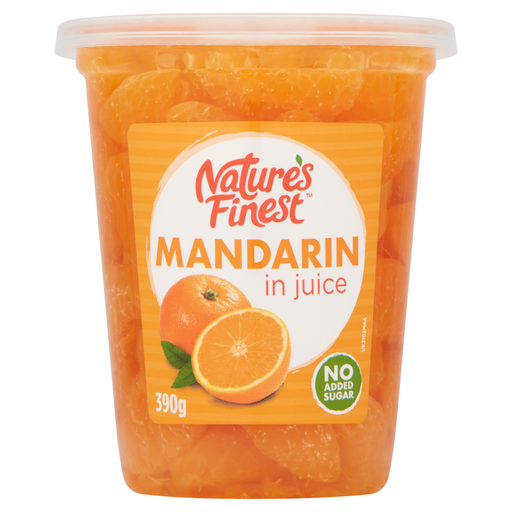
Mandarins in juice are an option when the planned dish calls for citrus segments. Check the 390g pack’s ingredients, sugars per 100g and drained weight for the particular way you will serve them.
 No image available
Pineapple chunks can go into a shared fruit bowl without cutting slices. The tin is 432g including juice; use its drained weight, rather than total weight, if serving only the fruit.
Yes, fruit and juice can contain sugars even without added sugar. Princes lists 11.8g sugars per 100g for its peach slices with juice. Read the ingredients and ‘of which sugars’ line rather than treating ‘in juice’ as ‘sugar-free’.
Start with fruit in juice or water if avoiding added sugar is your priority. Princes lists sugar in its light-syrup peach ingredients and 15.0g sugars per 100g, compared with 11.8g for its peaches with juice. Light syrup remains a deliberate recipe choice when you intend to use its sweeter liquid.
Start with the expected attendance and how the fruit will be served, then use drained weight if the liquid will not go into the dish. Tesco lists 230g of drained fruit for a 400g Nature’s Finest peach tin, illustrating why total tin weight alone can mislead.
Follow the opened-storage instructions on that product. The M&S grapefruit label, for example, says to transfer the fruit to a non-metallic container, refrigerate it and eat it within two days; that timing should not be assumed for other tins.