For a Valentine’s Day dessert or breakfast, compare the salt figure per 100g on the exact tin rather than relying on a reduced-salt search term, a familiar brand or the words “in juice”. Then choose the fruit and packing liquid that suit the dish, and check the serving size and instructions for any leftovers. NHS inform describes 0.3g salt or less per 100g as low; a low salt figure does not, by itself, tell you how much sugar a tin contains.
Who is choosing the fruit?
Salt-conscious dessert planners
If salt is your main consideration for a Valentine’s Day dish, compare the figure per 100g on the exact tin. NHS inform’s low-salt guide gives that figure a useful point of reference; the amount served is a separate check.
Juice-versus-syrup comparers
If the fruit is going into breakfast, a dessert or a garnish, decide whether juice or syrup suits the recipe. Read the ingredients and sugars lines separately from the salt line.
Small-occasion shoppers
For one or two people, compare the stated servings with the amount you need. The after-opening instructions matter if the whole tin will not be used at once.
What should you check?
Start with salt per 100g for a like-for-like label comparison. Choose the packing liquid and tin size for the dish you plan to serve.
| Concern |
What to check |
Who this matters to |
| Salt on the exact tin |
Compare salt per 100g on the same basis; check the amount in the serving you will use. NHS inform describes 0.3g or less per 100g as low. |
If salt is what will decide my choice, I need the nutrition panel rather than a claim suggested by a search term. About 42% of consumers put the salt declaration first. |
| Packing liquid and sweetness |
Read the ingredients to distinguish juice from syrup, and compare sugars if sweetness matters to the dish. |
For a dessert where the liquid will be served with the fruit, I want to know whether juice or syrup fits the recipe. Around 33% of consumers make that their primary concern. |
| Portions and leftovers |
Compare pack size and stated servings; read the product’s after-opening storage instruction. |
When I am serving one or two people, I do not want to open more fruit than I can use in time. Portioning and leftovers come first for about 25% of consumers. |
Common buying mistakes
-
Assuming fruit in juice has the lowest salt figure
“In juice” describes the packing liquid, not a comparison of salt values. The checked juice-packed products listed by Sainsbury’s, Tesco and Asda have different salt figures.
Compare salt per 100g on the exact variant first. Choose juice or syrup according to the ingredients and the dish.
-
Using salt as a shortcut for the whole nutrition label
A low salt figure does not establish a low sugars figure. Sainsbury’s lists 23.4g sugars for its 213g Peach Slices in Fruit Juice tin, alongside less than 0.01g salt per 100g.
If sweetness matters, compare sugars and the amount you intend to serve separately from salt.
-
Opening a large tin without a plan for the rest
After-opening instructions differ by product. The checked Sainsbury’s peach tin says to transfer and refrigerate leftovers and use them within one day; Tesco’s checked pineapple tin says within two days.
Choose an amount that fits the occasion, or read the exact tin’s storage instructions before opening it.
-
Relying on an online label without checking the tin
Retailers warn that product recipes and nutrition details can change. That matters particularly when a specific salt figure is essential to your choice.
Use listings to compare options, then check the label on the tin supplied before serving it.
Brands and ranges for reference
Tesco
Its own-label tinned-fruit range includes different fruit formats and pack sizes.
- Tesco lists less than 0.01g salt per 100g for its Pineapple Chunks in Juice 425G.
- That figure applies to the named product, not every Tesco fruit tin; check the current pack.
Sainsbury’s
Its own-label range offers fruit in different packing liquids and tin sizes.
- Sainsbury’s lists its Peach Slices in Fruit Juice 213g as one serving, with less than 0.01g salt per 100g.
- The listed after-opening period for that tin is one day; check the label of any other size or fruit separately.
Princes
Its tinned-fruit listings include pineapple and peach products in different formats.
- Asda lists 0.05g salt per 100g for Princes Pineapple Slices in Juice 432g.
- A figure for pineapple slices cannot be assumed to apply to chunks, peaches or fruit fillings.
Del Monte
Its range includes several fruit types and both juice- and syrup-packed options.
- Tesco lists 0.1g salt per 100g for Del Monte Peach Slices in Juice 415G.
- Use the nutrition panel for the precise fruit and packing-liquid variant you choose.
Asda
Asda is a retailer where shoppers can compare listed ingredients, nutrition and pack formats, including Princes fruit.
- Its listing for Princes Pineapple Slices in Juice 432g includes salt per 100g and instructions for leftovers.
- A retailer listing is a starting point for comparison; check the product label supplied.
M&S
Its Foodhall tinned-fruit listings include rhubarb chunks and grapefruit segments for shoppers seeking those fruit types.
- The listed formats offer alternatives to the peach and pineapple examples in this article.
- Check the nutrition label of the specific M&S tin before judging its salt content.
Tinned fruit selections on Joybuy
These tins offer pineapple, peaches or mixed fruit for a Valentine’s Day breakfast or dessert, with both juice- and syrup-packed options. Compare the current salt and sugars labels for the exact tin before choosing.
 No image available
Princes Pineapple Chunks With Juice 432g
Pineapple chunks suit a dish that calls for pieces rather than slices. This 432g variant is packed with juice; check its own salt-per-100g line rather than applying the figure for Princes pineapple slices to it.
View on Joybuy
 No image available
Del Monte Pineapple Slices in Juice 435g
Choose pineapple slices when that cut fits the dessert you are making. This 435g variant is packed in juice; compare its current salt and sugars figures and check how you will store any leftovers.
View on Joybuy
 No image available
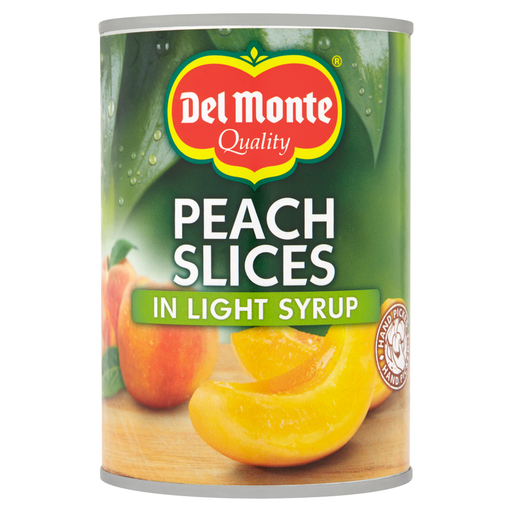
Del Monte Peach Slices in Light Syrup 420g
This 420g tin provides peach slices in light syrup for a recipe where syrup suits the dish. Check its salt and sugars figures independently: the packing liquid alone does not settle either comparison.
View on Joybuy
 No image available
Del Monte Fruit Cocktail in Juice 415g
Mixed fruit offers a different format from a single-fruit tin for a simple dessert. This 415g fruit cocktail is packed in juice; check the ingredient list if the fruit mix matters, alongside the current salt and sugars lines.
View on Joybuy
 No image available
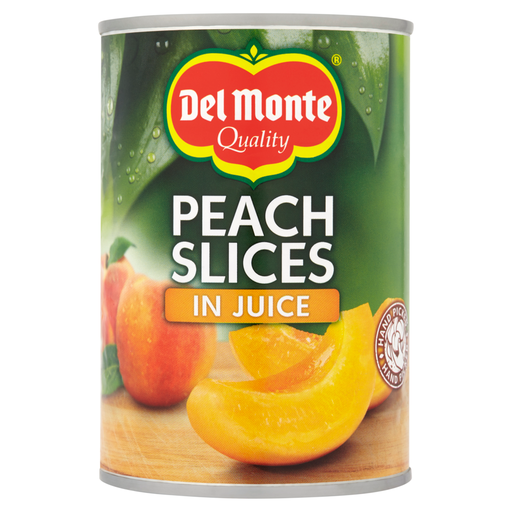
Del Monte Peach Slices in Juice 415g
For peach slices packed in juice rather than syrup, this is the 415g variant. Tesco lists 0.1g salt per 100g for the named product; confirm the current tin’s nutrition label and choose a serving amount that fits your dish.
View on Joybuy
Questions about labels and storage
What does a low salt figure mean when comparing tins?
NHS inform describes 0.3g salt or less per 100g as low. Compare the per-100g figures across tins of different sizes, then check how much fruit you plan to serve; the guide alone does not tell you what claim appears on a product’s packaging.
Is fruit in juice always the lower-salt option?
No conclusion about salt follows from “in juice” alone. Sainsbury’s Peach Slices in Fruit Juice 213g and Tesco Pineapple Chunks in Juice 425G each list less than 0.01g salt per 100g, while Asda lists 0.05g for Princes Pineapple Slices in Juice 432g. Compare the exact tins rather than the packing-liquid descriptions.
How should I handle fruit left after opening a tin?
Follow the instruction on that tin. The checked Sainsbury’s peach and Tesco pineapple products say to transfer leftovers from the can and refrigerate them, but their stated use periods differ: one day for the Sainsbury’s product and two days for the Tesco product.
Can I use an online nutrition panel instead of checking the tin?
Use an online panel to narrow your choices, then check the label on the tin supplied, especially if a particular salt figure is important. Retailers including Tesco and Sainsbury’s caution that product ingredients and nutrition information can change.


