No-cook dessert makers
If you want to open a tin and serve fruit with yoghurt, ice cream or cake, the cut and drained quantity help you decide how much fruit will reach the bowl.


For a no-cook late-night dessert, choose the fruit cut and packing liquid together: slices or fruit cocktail in juice if you do not want a syrup-based sauce, or fruit in light syrup if you want to serve its liquid too. Mango, grapefruit and rhubarb offer different flavours, though the particular format may be better suited to cooking than immediate serving. Check the exact tin’s ingredients, drained weight and storage directions before deciding.
If you want to open a tin and serve fruit with yoghurt, ice cream or cake, the cut and drained quantity help you decide how much fruit will reach the bowl.
If the packing liquid will be part of your dessert, compare juice and syrup on the exact ingredient list and nutrition panel rather than relying on the wording on the front of the tin.
Pineapple, mango and fruit cocktail can change a simple topping, while grapefruit or rhubarb may take the dessert in a sharper or more cooking-led direction.
For a late-night dessert, decide what you want to serve straight from the tin, then check whether its liquid and drained quantity suit the rest of the bowl.
| Concern | What to check | Who this matters to |
|---|---|---|
| Fruit and presentation | Choose a single fruit or cocktail, and check whether the pieces are slices, chunks or halves. For grapefruit or rhubarb, consider whether you want to serve it directly or use it in a cooked dessert. | I want the fruit itself to give a simple late-night bowl a distinct flavour or appearance. About 40% of consumers put that dessert character first. |
| Packing liquid | Check whether the fruit is in juice or syrup, then read the ingredients and nutrition panel for that tin. | If I am adding fruit to an already sweet dessert, I want to decide how much sweetness comes from the packing liquid. For about 30% of consumers, that choice is the primary concern. |
| Portions and leftovers | Compare drained weight with the amount of fruit you need. Check the pack’s directions for any contents left after opening. | When I am serving one or two people, I want enough fruit without opening more than I can use or store as directed. That practical need comes first for about 30% of consumers. |
Tesco’s ingredient listing for Del Monte fruit cocktail in light syrup includes glucose-fructose syrup and sugar. The syrup may be welcome in a dessert, but its name alone does not tell you how sweet the finished bowl will be.
Read the ingredients and nutrition panel, particularly if you will also serve the fruit with ice cream, custard or biscuits.
The total weight includes packing liquid. Sainsbury’s lists a 415g Del Monte fruit cocktail in juice with a drained weight of 250g.
Use drained weight to compare the amount of fruit available for your planned servings.
Sainsbury’s advises that product ingredients can change. That matters when you are checking a particular fruit mix, syrup or allergen information.
Read the current label before serving, especially if someone has an allergy or intolerance or you are adding other dessert ingredients.
A larger format may leave fruit and liquid after a single serving. Storage directions can differ by product.
Choose a pack size that fits the number being served, and follow that tin’s instructions for transferring and storing any remainder.
Leftovers may also need a suitable container and space in the fridge.
Worth comparing if you want a familiar fruit cocktail or a choice between fruit packed in juice and syrup.
A reference point for classic fruit formats when you want a straightforward topping or dessert ingredient.
Its own-label fruit formats provide points of comparison for a quick dessert, including pineapple chunks and slices in juice.
Its tinned-fruit listings let shoppers compare own-label fruit and branded dessert options.
Consider its listed grapefruit segments or rhubarb chunks when a sharper flavour or a cooking-led dessert appeals.
These Del Monte tins cover familiar fruit in juice for a no-cook dessert, plus mango in light syrup when you want a syrup-packed option. Choose by fruit cut, packing liquid and the amount you plan to serve.
 No image available
Choose pineapple slices if you want a recognisable fruit topping without preparing fresh fruit. This is a 435g tin packed in juice; check its drained weight when planning how many servings it will provide.
 No image available
Choose a cocktail if you want several fruits in one no-cook bowl rather than a single-fruit topping. Sainsbury’s lists this 415g five-fruit product with a 250g drained weight and 11g sugars per 100g of net contents; fruit proportions can vary. Check the current tin’s storage directions if you expect leftovers.
 No image available
Peach halves suit a dessert where you want larger pieces to serve whole or cut at the table. This 415g tin is packed in juice; compare its drained weight with the number of portions you need.
 No image available
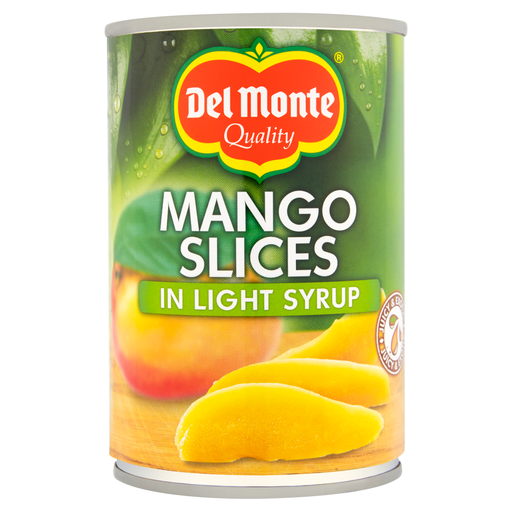
Mango slices offer a different fruit topping when you want to serve a no-cook dessert. This 425g tin is packed in light syrup, so decide whether to include some of the liquid and check the ingredients if its sweetness matters to you.
 No image available
Pear halves are another single-fruit choice for serving without cooking. This 415g tin is packed in juice; check the drained weight on the tin if the amount of fruit per serving is important.
Choose a fruit and cut that suit what you are serving it with: pineapple slices can form a topping, fruit cocktail adds variety, and mango offers a different flavour. Decide separately whether to drain the fruit or include some packing liquid, since that changes how saucy the dessert will be.
Do not assume that from the pack wording alone. Sainsbury’s lists 11g sugars per 100g of net contents for Del Monte fruit cocktail in juice, while Tesco’s ingredient list for Del Monte fruit cocktail in light syrup includes glucose-fructose syrup and sugar. Compare the nutrition panels for the exact tins and the serving quantities you intend to use.
Follow the selected tin’s after-opening directions, including any instruction to transfer unused contents to a suitable container and refrigerate them. Check its stated period for using leftovers rather than applying another product’s directions.
Yes, check the current product label and any ingredients you add to the dessert. This is particularly important for mixed or flavoured products and toppings such as biscuits, dairy or nuts; Sainsbury’s notes that product ingredients can change.