Families sharing a pudding
If several people will eat from one tin, compare the drained fruit rather than the tin’s total weight. Plan how you will store and use any fruit left after tea time.


For a regular family tea time, the NHS advises choosing tinned fruit in natural juice or water with no added sugar or salt; compare the ingredients and sugars per 100g on the exact product. A large tin suits a shared serving if its drained fruit can be used promptly. Smaller tins let you open less at once, while fruit-snack multipacks provide separate portions; check the fruit cut and any instructions for storing leftovers.
If several people will eat from one tin, compare the drained fruit rather than the tin’s total weight. Plan how you will store and use any fruit left after tea time.
If the preserving liquid matters to you, read the ingredients and sugars per 100g for the exact variant. A brand name alone does not tell you whether its fruit is packed in juice or syrup.
Individual fruit pots may be more convenient when children need separate servings or you would rather not open a sharing tin. Sainsbury’s lists Dole fruit snacks in four-packs of 113g pots.
Choose the preserving liquid and ingredients first, then consider how much fruit you need to open for one tea time.
| Concern | What to check | Who this matters to |
|---|---|---|
| Juice or syrup | Read the ingredients and sugars per 100g on the exact variant; do not treat “light syrup” as meaning no added sugar. | If I am choosing fruit for regular tea times, I want to know what is in the preserving liquid, not rely on the front of the tin. About 40% of consumers put this ingredient and sugar comparison first. |
| Fruit to share | Compare drained weight where shown, then check the instructions for storing fruit after opening. | When several people share one dessert, I need enough fruit to serve without leaving more than we can use. This is the primary concern for about 30% of consumers. |
| Separate servings | Check whether smaller tins or individual pots fit the portions you plan to serve, and look at the fruit cut. | If children need their own portions at different times, opening only what is needed makes serving simpler. About 30% of consumers prioritise separate, quick-to-serve portions. |
The weight printed prominently on a tin includes its juice or syrup. Sainsbury’s lists Del Monte peach slices in juice at 415g net but 250g drained, so the two figures answer different questions.
For a shared bowl, use the drained weight where it is shown to judge how much fruit you can serve.
Princes Food and Drinks lists sugar in its light-syrup fruit cocktail, with 15.0g sugars per 100g. Its fruit cocktail with juice lists 9.0g sugars per 100g. That comparison applies to those two variants, not every tin of fruit.
Check the ingredients and nutrition panel of the product you intend to buy. The NHS advises choosing canned fruit in natural juice or water with no added sugar or salt.
Storage instructions vary by product. Marks & Spencer’s grapefruit segments specify refrigeration and use within two days after opening; the Joybuy listing for Del Monte peach slices in juice specifies 3–4 days.
Follow the instructions on your tin, including any direction to transfer unused fruit to a non-metallic container.
Fruit left beyond the product’s stated storage period may go unused.
Tinned-fruit ranges include slices, chunks, segments, halves and mixed fruit. The size and condition of the pieces matter when serving children.
Choose a cut that suits your planned serving, inspect the fruit for pips, stones or firm pieces, and follow any preparation guidance on the pack.
Its juice-packed sharing tins are relevant when drained fruit quantity matters at a family tea time.
Princes lists fruit-cocktail formats for comparing tin size and preserving liquid.
Tesco Groceries lists both smaller and larger tins across juice-packed and syrup-packed fruit.
Its listed range includes own-label sharing tins, Del Monte tins and Dole fruit-snack multipacks.
Marks & Spencer lists grapefruit segments in juice for shoppers considering a different fruit and flavour.
These products cover juice-packed sharing tins, smaller tins that can be opened one at a time, and individually portioned fruit pots. A six-pack of tins is not the same serving format as a pack of individual pots.
 No image available
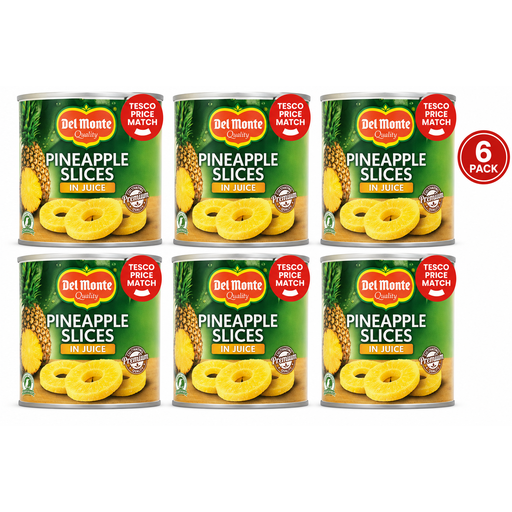
For tea times when pineapple slices will be shared, this bundle lets you open one tin at a time. Each tin is labelled 435g; compare drained weight when planning the amount to serve, and follow the tin’s instructions for any leftovers.
 No image available
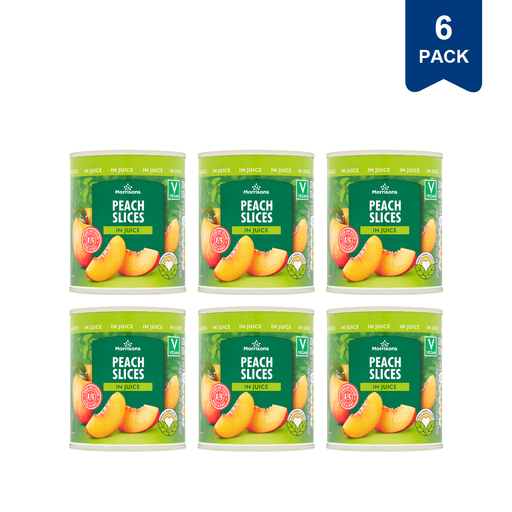
Six smaller tins let a household open peaches across separate tea times rather than opening a larger tin at once. Each tin is labelled 220g and contains slices in juice. Inspect the fruit before serving children, as the product information warns that stone fragments may occasionally remain.
 No image available
This mixed fruit is an option for a shared dessert. The tin is labelled 415g, including its juice; check drained weight on the pack if you need a particular amount of fruit to serve. Follow the pack’s storage instructions after opening.
 No image available
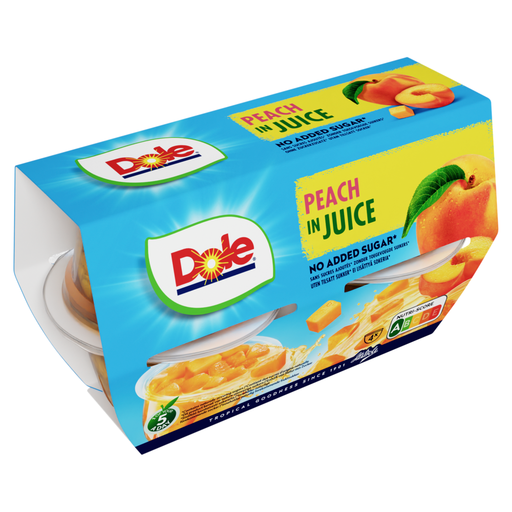
Four individual pots suit separate servings without opening a shared tin. Check the exact ingredients if you prefer fruit without added sweetener: the product information lists steviol glycosides. Use the pack’s nutrition-label basis when comparing its sugars per 100g with another product.
 No image available
This sharing tin contains peach halves in juice. Check the piece size when preparing portions for children, and follow the can’s instructions for storing any fruit left after opening.
Yes. The NHS includes canned fruit in its 5 A Day guidance and advises choosing fruit in natural juice or water with no added sugar or salt. Its stated 80g portion is a general 5 A Day measure, not a reason to treat every individual pot as one portion.
No. Princes Food and Drinks lists sugar in its light-syrup fruit cocktail and grape juice from concentrate in its fruit cocktail with juice. The variants list 15.0g and 9.0g sugars per 100g respectively; check the exact labels rather than applying those figures to other products.
Choose by how much fruit you will serve at one tea time. A large tin can serve several people, while smaller tins let you open less fruit at once and individual pots provide separate portions. For tins, compare drained weight where shown and consider whether you can use leftovers within the product’s storage instructions.
Follow the instructions on the product you bought. Marks & Spencer’s grapefruit segments specify transfer to a non-metallic container, refrigeration and use within two days; the Joybuy listing for Del Monte peach slices in juice specifies transfer and refrigeration, with use within 3–4 days. Do not apply either period to a different tin.