Make-ahead dessert hosts
If you are assembling a trifle or filling a serving bowl, a fruit cocktail saves you from combining separate tins. A single fruit gives you more control over the pieces in each layer or portion.


Choose the fruit and cut to suit the dessert: fruit cocktail offers a ready-made mix for a trifle or serving bowl, while slices, chunks and halves give you more control over presentation. Whether you choose juice, light syrup or syrup, compare the exact ingredients and sugars per 100g, then use drained weight rather than total tin weight to plan portions.
If you are assembling a trifle or filling a serving bowl, a fruit cocktail saves you from combining separate tins. A single fruit gives you more control over the pieces in each layer or portion.
If guests have different fruit or sweetness preferences, compare the exact fruit mix, packing liquid, ingredients and sugars per 100g. The words “in juice” or “light syrup” do not replace the product label.
If only a few servings are needed, check how much fruit remains after draining and whether an opened tin will leave more than you can use. Read its post-opening storage instructions before deciding on pack size.
For a dinner-party dessert, settle on the serving style before comparing the packing liquid, usable fruit and likely leftovers.
| Concern | What to check | Who this matters to |
|---|---|---|
| Dessert format | Choose cocktail for a mix, or check whether slices, chunks or halves fit the planned serving style. Read the fruit mix if particular fruits matter. | For a layered dessert or serving bowl, I want pieces that look right without extra preparation. About 29% of consumers put dessert format first. |
| Packing liquid and ingredients | Compare the exact ingredients and sugars per 100g; check whether the tin contains juice, light syrup or syrup. | When serving guests with different preferences, I want to know what surrounds the fruit rather than rely on the front label. Ingredient and sweetness comparison comes first for about 29% of consumers. |
| Usable fruit | Use drained weight, where shown, to work out how much fruit the recipe will have after the liquid is removed. | If the recipe calls for a particular amount of fruit, I need enough to serve everyone without counting the packing liquid. About 24% of consumers make usable yield their primary concern. |
| Leftovers | Match pack size to the planned servings and read the tin’s post-opening storage instructions. | For a smaller gathering, I do not want an opened tin left over without a plan to use it. Managing that surplus is the main concern for about 18% of consumers. |
Total weight includes liquid. Sainsbury’s lists 260g of drained fruit in a 435g tin of Del Monte Pineapple Chunks in Juice, so the front-of-tin weight would overstate the fruit available for serving.
Start with the amount of fruit your recipe needs, then compare drained weights on the tins you are considering.
Juice describes the packing medium, not the full ingredient list or nutrition values. Princes lists grape juice made from concentrate in its Peach Slices with Juice and declares 11.8g sugars per 100g.
Compare ingredients and sugars per 100g for the exact variants. Choose syrup when its packing liquid suits the dessert, rather than treating any one label as a shortcut.
Fruit remaining after service needs appropriate storage. Zero Waste Scotland advises transferring leftovers out of an opened can and refrigerating them.
Check the selected tin’s post-opening instructions, then move unused contents to a suitable covered container and refrigerate them.
Prepared fruit in single-fruit and mixed-fruit formats, with the packing medium varying by product.
A canned-fruit range that includes peaches, pineapple, pears and fruit cocktail.
Own-label tinned fruit includes different fruits, cuts and pack sizes.
Own-label fruit includes juice-packed options as well as light-syrup peach slices.
A supermarket option for shopping for tinned fruit online.
A Foodhall option for specific tinned fruits rather than a general mixed-dessert range.
These tins offer single-fruit shapes in juice or light syrup, plus a fruit cocktail in juice. Choose the cut and packing medium for your dessert, then check the individual tin for drained yield and ingredients.
 Image unavailable
Consider the defined pineapple slices when the dessert calls for a recognisable fruit shape. This is a 435g tin packed in juice; check drained weight when working out portions.
 Image unavailable
Peach halves give you a defined shape for individual dessert portions. The 415g tin is packed in juice; use its drained weight, rather than total weight, to plan how many portions it will provide.
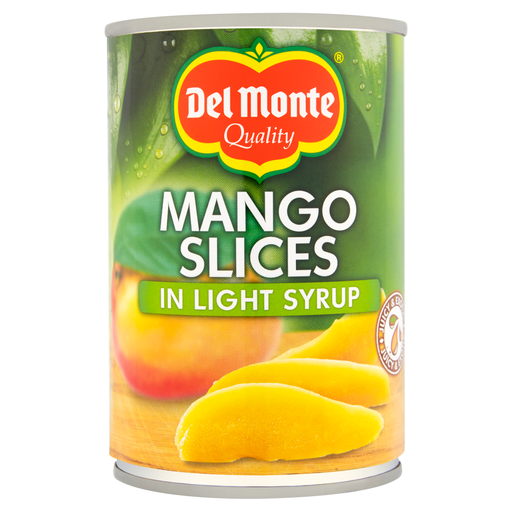 Image unavailable
Choose mango slices if that fruit and cut fit the dessert and you want a light-syrup packing liquid. The tin is 425g; compare its ingredients, sugars per 100g and drained weight with any juice-packed alternative you are considering.
 Image unavailable
Pear halves offer a defined shape when you plan to plate the fruit separately. This is a 415g tin in juice; confirm its drained weight before relying on it for a set number of portions.
 Image unavailable
A fruit cocktail avoids combining separate tins for a mixed-fruit dessert, though it gives you less control over each fruit’s proportion. This 415g tin is packed in juice; check the actual label for its fruit mix, colour additives and drained weight if those details affect your guests or recipe.
No. “In juice” describes the packing medium, not the fruit’s full nutrition profile. Princes lists peaches, grape juice made from concentrate and water in its Peach Slices with Juice, with 11.8g sugars per 100g; compare the panel on the exact tin you plan to serve.
Use the product’s drained weight when it is shown. For example, Sainsbury’s lists 260g drained fruit for a 435g tin of Del Monte Pineapple Chunks in Juice; the rest of the tin’s weight is not fruit for plating.
Transfer it out of the opened tin into a suitable covered container and refrigerate it, then follow the selected product’s post-opening instructions. Zero Waste Scotland advises eating opened tinned-food leftovers within two days, so plan when you will use any remainder.
Read the selected tin’s ingredients, allergen information where applicable, nutrition panel, date mark and storage instructions. GOV.UK explains that prepacked food carries mandatory label information; the actual product label lets you check whether its contents suit your planned dessert and guests.