For a world food night where avoiding added syrup sugar matters most, start with fruit in natural juice or water and check the ingredients and nutrition panel. Fruit in juice is not necessarily low in total sugars; choose the fruit and cut your recipe needs, then compare sugars per 100g on like-for-like products. Light syrup is an option when extra sweetness is intentional.
Who this is for
Hosts avoiding added syrup sugar
If you are serving fruit as a dessert, topping or buffet ingredient, the packing liquid matters as well as the total sugars on the label. The NHS advises choosing canned fruit in natural juice or water with no added sugar.
Cooks planning a themed dish
Pineapple slices, mandarin segments, peaches and mixed fruit offer different cuts and combinations. Choose the format your planned dessert or salad calls for before deciding how sweet its packing liquid should be.
Hosts planning portions
A small dessert component and a shared fruit dish may call for different pack sizes. Check how much you will serve and follow that product’s instructions for anything left after opening.
What matters when choosing
For an added-sugar-conscious shop, the NHS recommends canned fruit in natural juice or water with no added sugar. If the recipe calls for a sweeter syrup, make that a deliberate choice rather than treating juice and light syrup as interchangeable.
| Concern | What to check | Who this matters to |
|---|
| Avoiding added syrup sugar |
Read the packing-medium and ingredients labels; compare sugars per 100g between similar fruit products. |
I want fruit for a sweet dish without choosing syrup by accident. About 50% of consumers put avoiding added syrup sugar first. |
| Getting the recipe right |
Match the fruit variety and cut to the dish, then decide whether its packing liquid should add sweetness. |
If I am layering a dessert or making a fruit salad, the pieces need to suit the recipe. Recipe fit comes first for about 30% of consumers. |
| Portions and leftovers |
Match pack size to the amount needed and read the product’s after-opening storage instruction. |
For a smaller gathering, I would rather open an amount I can serve and store as directed. Around 20% of consumers prioritise manageable portions and leftovers. |
Buying pitfalls
-
Assuming ‘in juice’ means sugar-free
Juice replaces syrup as the packing liquid, but the nutrition panel still records total sugars. Sainsbury’s lists 11.0g sugars per 100g for its peach slices in refined grape juice; Princes lists 12.2g per 100g for its pineapple slices in juice.
Use ‘in juice’ as a starting filter, then compare the ingredients and sugars per 100g on similar fruit products.
-
Overlooking ‘light syrup’ on the front of the pack
Tesco and Sainsbury’s list peach products in both juice and light syrup. The NHS counts sugars in syrups as free sugars, so the packing-medium wording changes the choice for someone avoiding added syrup sugar.
Check the full product name and ingredients; choose syrup when its extra sweetness is part of the recipe.
-
Applying one storage rule to every opened pack
Sainsbury’s instructs shoppers to refrigerate its peach slices and use them within one day after opening, while the Dole mandarin jar listed by Asda says to refrigerate and use it within five days.
Plan the quantity you need and follow the instructions on the pack you open.
-
Choosing the fruit before checking the dish
Slices, segments and mixed fruit are not interchangeable in every dessert or salad: the intended presentation and fruit mix can change what you need.
Settle on the fruit type and cut for your dish, then compare its available juice and syrup formats.
Brands to consider
Del Monte
A reference for several fruit types and packing liquids in Tesco and Sainsbury’s listings.
- The listed range includes juice-packed fruit for comparing different recipe formats.
- Some listed Del Monte products are in light syrup, so check the specific pack rather than relying on the brand name.
Princes
Its product information covers fruit cocktail with juice and pineapple slices in juice.
- Princes publishes ingredients and sugars per 100g for these specific products: 9.0g for the fruit cocktail and 12.2g for the pineapple slices.
- Those figures describe different products and should not be applied across the Princes range.
Tesco
Its tinned-fruit listings include own-label choices alongside branded fruit.
- The listed products include mandarins in juice and Del Monte peaches in both juice and light syrup.
- Use the individual product label, not the category listing, for ingredients and nutrition.
Sainsbury's
Its range provides peach examples in fruit juice and light syrup.
- Sainsbury’s lists 11.0g sugars per 100g for its peach slices in refined grape juice, a reminder to read the nutrition panel even on juice-packed fruit.
- That value applies to the cited peach product, not every Sainsbury’s fruit tin.
Asda
A retailer reference for the Dole mandarins in juice listed in its range.
- The Dole listing says no added sugar and gives an after-opening refrigeration instruction.
- This is a Dole product sold by Asda, not an Asda own-label reduced-sugar tin; no added sugar does not mean sugar-free.
M&S
Its listed tinned-fruit range includes grapefruit segments and rhubarb chunks.
- Those fruit types may be relevant when a recipe calls for them.
- Check the individual product’s packing liquid, ingredients and nutrition before choosing it for an added-sugar-conscious dish.
Joybuy fruit selections
These juice-packed fruit selections offer different cuts and pack sizes for a world food night. Check each current pack label if its sugar content, ingredients or container format will decide your choice.
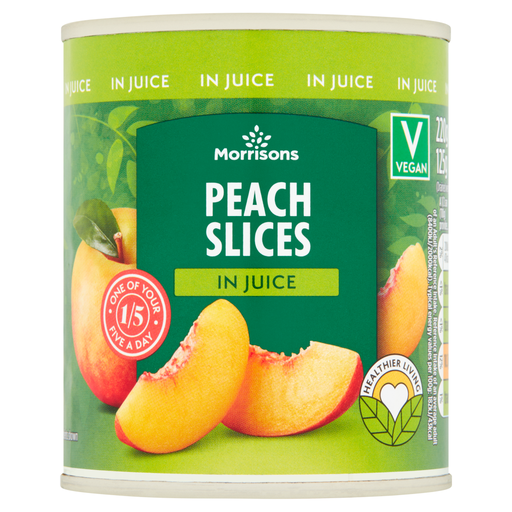 Image unavailable
Morrisons Peach Slices in Juice 220g
A 220g pack of peach slices to consider when the dish needs a smaller fruit component. Check the current label for sugars, ingredients and after-opening instructions; take care when serving fruit that may contain stone fragments.
 Image unavailable
Del Monte Pear Halves in Juice 415g
Consider these pear halves when the planned dessert or salad calls for larger pieces rather than slices or mixed fruit. The pack is 415g; compare its label with other pear products if total sugars matter to you.
 Image unavailable
Del Monte Fruit Cocktail in Juice 415g
A 415g mixed-fruit option for a dish that calls for more than one fruit. Check the current ingredients for the particular fruit mix and any ingredients that matter to your guests.
 Image unavailable
Princes Pineapple Chunks with Juice 432g
The chunk format suits a recipe calling for pineapple pieces rather than slices. This pack is 432g; use its own nutrition and storage instructions when planning portions and leftovers.
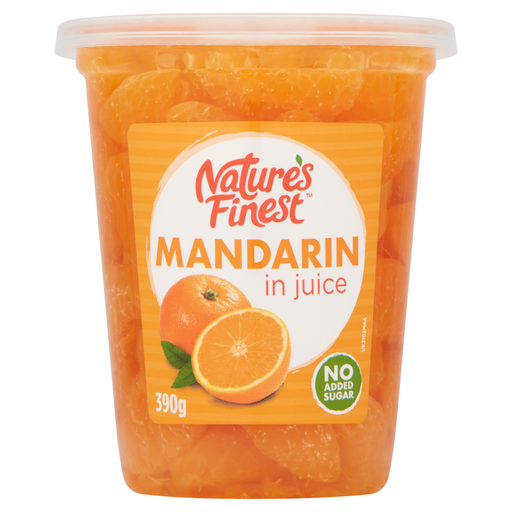 Image unavailable
Nature's Finest Mandarins in Juice 390g
Mandarins offer a different fruit choice for a dessert or fruit salad. The pack is 390g; check its container format if you specifically need a tin, and read the nutrition panel rather than equating juice-packed fruit with sugar-free fruit.
Questions and answers
Does ‘in fruit juice’ mean tinned fruit is low in sugar?
No. It identifies the packing liquid, not a low total-sugars figure. Sainsbury’s lists 11.0g sugars per 100g for its peach slices in refined grape juice, while Princes lists 12.2g per 100g for its pineapple slices in juice. Compare sugars per 100g between similar fruit products and read the ingredients for added sugar or syrup.
Can canned fruit be part of 5 A Day?
Yes. The NHS includes canned fruit in its 5 A Day guidance and advises choosing fruit in natural juice or water with no added sugar or salt.
How long can fruit be kept after opening?
Follow the particular pack’s instruction rather than using one period for every product. Sainsbury’s says to refrigerate its opened peach slices and use them within one day; the Dole mandarin jar listed by Asda says to refrigerate after opening and use within five days.
Which label details should I check for guests?
Read the ingredients, including any listed allergens, and the date on the individual pack. UK government food-labelling guidance identifies ingredients including allergens and a best-before or use-by date among required information. The nutrition panel and after-opening instructions also help you choose and serve the fruit.


