Students checking sugar claims
If you want to avoid added sugar, distinguish a no-added-sugar statement from the total sugars shown on the nutrition panel. Fruit and its packing liquid both matter when you compare tins.


If you want to avoid syrup, start with fruit packed in juice or a product that explicitly says no added sugar, but check the ingredients and total sugars as well: neither description means sugar-free. For a student cupboard, the amount of fruit you will use and the instructions for refrigerating leftovers may matter as much as the unopened tin size.
If you want to avoid added sugar, distinguish a no-added-sugar statement from the total sugars shown on the nutrition panel. Fruit and its packing liquid both matter when you compare tins.
A tin may fit easily in a cupboard, but its leftovers need space in the fridge after opening. Check the product’s storage instructions before choosing a size you might not finish promptly.
Net weight includes the packing liquid. Drained weight and stated servings, where given, help you judge how much fruit a tin provides and whether you can use it after opening.
For a student moving in, check the packing liquid and sugar label, then choose a portion size that works with your available fridge space.
| Concern | What to check | Who this matters to |
|---|---|---|
| Sugar claims and packing liquid | Read the ingredients for juice or syrup. Compare total sugars per 100g, and per serving where shown; check for an explicit no-added-sugar statement rather than assuming one. | If avoiding syrup is my priority, I want to know what surrounds the fruit without mistaking “in juice” for sugar-free. About 42% of consumers put interpreting the packing liquid and sugar claim first. |
| Leftovers after opening | Check the product-specific refrigeration and use instructions, then consider a tin or separate pots you can finish in time. | With little space in a shared fridge, I need to know whether I can use an opened tin before its stated period ends. For about 25% of consumers, managing leftovers is the primary concern. |
| Usable fruit and portions | Compare net and drained weight where available, alongside the stated number of servings and the fruit you expect to use. | When stocking a new cupboard, I would rather choose an amount of fruit that fits my meals than judge a tin by its size alone. Usable portions come first for about 33% of consumers. |
Juice-packed fruit can still show sugars on its nutrition panel. The ASDA Groceries listing for Peach Slices in Fruit Juice gives 10g sugars per 100g drained, while the Tesco Groceries listing for Princes Pineapple Chunks in Juice gives 10g per 100g.
Use the same per-100g basis when comparing suitable products, and read the ingredients to identify the packing liquid.
Storage instructions differ by product. The Tesco Groceries listing for Princes pineapple says to use refrigerated leftovers within two days; the ASDA Groceries listing for its peach slices gives four days.
Before opening a tin, decide whether you can use the remaining fruit within its own label instructions. Separately portioned products may be more practical if you usually eat alone.
Fruit left beyond the product’s stated refrigerated-use period may have to be discarded.
Net weight includes liquid, so tins of similar stated size need not provide the same amount of fruit.
Check drained weight and servings where they are given, then choose an amount you expect to finish.
Tesco Groceries lists both juice-packed peaches and Tesco Peach Slices in Light Syrup. A fruit name alone does not identify the packing liquid.
Check the exact product title, ingredients and nutrition panel rather than applying one product’s details to a whole range.
Its Fruit Cocktail in Juice offers several fruits in one tin.
Its Pineapple Chunks in Juice are an option if pineapple fits your planned meals.
Its peach range illustrates why the packing liquid needs checking product by product.
Its own-brand peach slices and pineapple chunks provide fruit-in-juice options to compare.
Its Peach Slices in Fruit Juice provide a peach option with stated serving information.
Its Grapefruit Segments offer a different fruit choice from the peach and pineapple tins.
These peach, pineapple, mixed-fruit and mandarin products suit students comparing juice-packed fruit and portion formats. Check each pack’s label for the sugar claim, nutrition values and instructions that matter to you.
 Image unavailable
The 220g tin is worth considering if you prefer a smaller peach-in-juice pack to an opened larger tin. If you will save any fruit, check the pack’s refrigeration and use instructions before opening it.
 Image unavailable
Consider this pineapple option if you can plan around the two servings stated in the Tesco Groceries listing. Its ingredients include pineapple and pineapple juice, and it lists 10g sugars per 100g. Refrigerate leftovers and use them within the product’s stated two-day period.
 Image unavailable
This mixed-fruit tin suits someone who wants several fruit types without choosing a syrup-packed product. The Tesco Groceries listing gives a 250g drained weight and 11g sugars per 100g. Plan how to use the fruit after opening and follow the tin’s storage instructions.
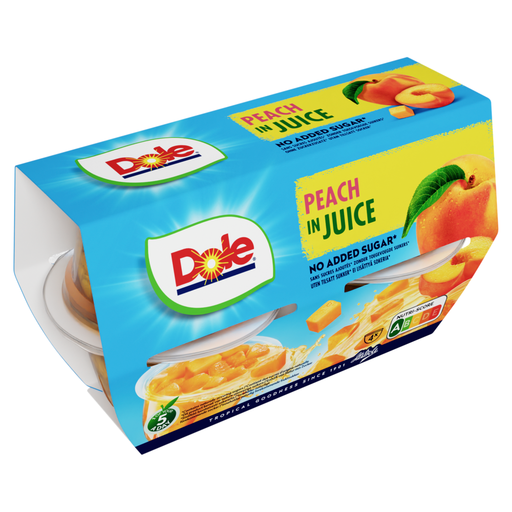 Image unavailable
The four 113g pots offer separately portioned peaches for someone who does not want to open one large tin. If a no-added-sugar claim matters to you, check its exact wording, ingredients and total sugars on the pack rather than relying on the fruit-in-juice description.
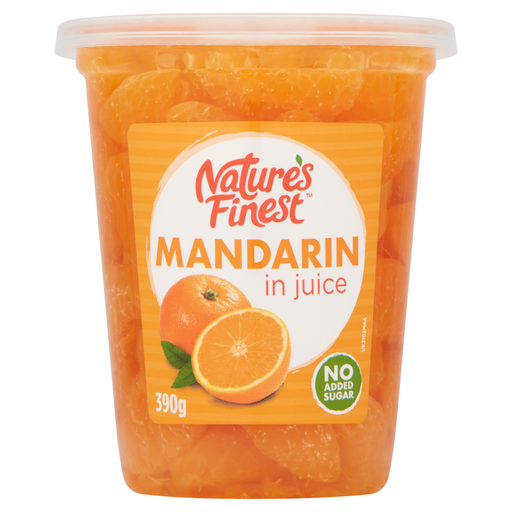 Image unavailable
This 390g mandarin option broadens the fruit choices for a student cupboard. Compare its on-pack sugar information with other juice-packed fruit, and check its drained weight and storage instructions if you expect to keep leftovers.
No. A no-added-sugar statement does not mean the total-sugars figure will be zero. For example, the Nature's Finest Peach in Juice listing at Tesco Groceries says “No Added Sugar” and also says it contains naturally occurring sugars; check the nutrition panel for the amount in the product you choose.
Start with juice-packed fruit if avoiding syrup is your aim, but compare the exact ingredients and total sugars before choosing. The ASDA Groceries peach listing and Tesco Groceries Princes pineapple listing each give 10g sugars per 100g on their stated bases, so “in juice” alone does not settle the sugar comparison.
Follow that product’s storage instructions, including any direction to transfer the fruit to a non-metallic container and refrigerate it. The stated period varies: Tesco Groceries gives two days for Princes pineapple, while ASDA Groceries gives four days for its peach slices.
Compare sugars on the same per-100g basis, then check the ingredients, drained weight, stated servings and opened-pack instructions. The NHS explains that nutrition information is given per 100g or 100ml and may also appear per portion; that stated portion may differ from the amount you eat.