Salt-first label comparers
You compare salt per 100g on individual packs instead of relying on the brand, packing liquid or a front-of-pack description.


Start with the salt figure per 100g on the particular pack: the NHS describes 0.3g of salt or less per 100g as low. If avoiding added sugar also matters, follow NHS advice to look for fruit in natural juice or water with no added sugar or salt, but do not treat “in juice” as proof of a reduced-salt claim. Check whether nutrition figures refer to drained fruit or the full contents, then choose a pack size that suits how you will use it after opening.
You compare salt per 100g on individual packs instead of relying on the brand, packing liquid or a front-of-pack description.
You want fruit in juice or water for breakfasts, snacks or desserts, while still checking the ingredients and salt figure on the chosen pack.
You buy cupboard fruit for several uses and need to consider drained weight, stated servings and the instructions for leftovers.
For a weekly shop, compare the salt declaration first, then check whether the packing liquid and usable quantity fit your household’s plans.
| Concern | What to check | Who this matters to |
|---|---|---|
| Salt declaration | Read salt per 100g on the exact pack. For comparisons, check whether figures cover drained fruit or the full contents. | If keeping salt low is my main aim, I need the figure for the fruit I am putting in the trolley, not an assumption based on “in juice”. About 42% of consumers put that product-specific salt check first. |
| Packing liquid | Check whether the fruit is in natural juice, water or syrup, and read the ingredients if avoiding added sugar. | For everyday breakfasts or desserts, I may want to avoid added sugar without losing sight of the salt label. That is the primary concern for about 33% of consumers. |
| Usable quantity | Compare drained weight and stated servings, then read the pack’s instructions for storing leftovers. | When one pack needs to serve several household uses, I want an amount we can finish within its stated storage period. About 25% of consumers make that portion-planning need their priority. |
Juice describes the packing liquid, not a uniform salt value. The Princes peach slices with juice page declares less than 0.01g salt per 100g, while Tesco lists 0.03g per 100g for its peach slices in juice; compare the exact products and their nutrition bases.
Use juice or water as a starting point when avoiding added sugar or salt, then check the salt line on the pack you choose.
A pack’s total weight includes its liquid. Tesco lists 250g drained weight for its 410g peach slices in juice, so the front-of-pack weight alone does not tell you how much fruit you will serve.
Compare drained weights where stated and choose a quantity your household can use within the pack’s instructions after opening.
Fruit left beyond its stated refrigerated-use period may go to waste.
Product details can change, making an older listing a poor substitute for the pack in hand when the salt figure or ingredients affect your choice.
Check the current label on the delivered or in-store pack, including its nutrition basis and leftover-storage instructions.
A branded option if you are looking for peach slices in juice.
Peach slices with juice are listed by Princes in 410g and 220g sizes.
An own-label peach-slice option with quantity information useful for planning servings.
Its tinned-fruit range includes peach slices in fruit juice and in light syrup.
An own-label peach-slice option with a stated drained-fruit nutrition basis.
A citrus option for shoppers considering fruit other than peaches.
These Joybuy selections include peaches and mixed fruit in juice, peaches in syrup, and a bottled peach product. For a lower-salt weekly shop, compare the current salt labels and choose the packing liquid and pack size that suit your plans.
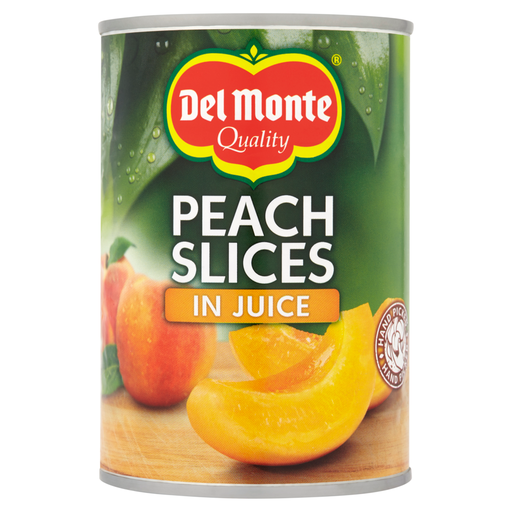 Image unavailable
Consider this juice-packed option if drained quantity matters for several servings. Sainsbury’s lists the matching 415g product with 250g drained weight; check the current pack’s salt figure and nutrition basis before comparing it with other fruit.
 Image unavailable
Choose halves rather than slices if that form suits the dishes you plan to make. This is a 415g juice-packed product; check its drained weight, salt declaration and instructions for leftovers on the current pack.
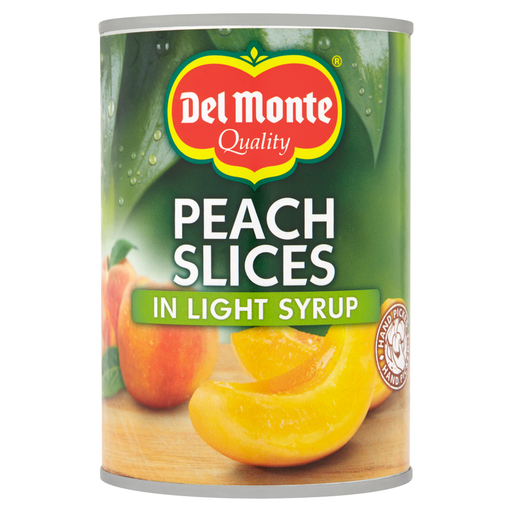 Image unavailable
Consider this 420g pack when light syrup suits your intended dessert or recipe. It is a different packing-liquid choice from juice or water, so check both the ingredients and salt per 100g rather than judging it by either detail alone.
 Image unavailable
This 415g fruit cocktail offers a mixed-fruit choice in juice. If you are planning portions across the week, check the drained quantity and storage instructions alongside the salt figure on the current pack.
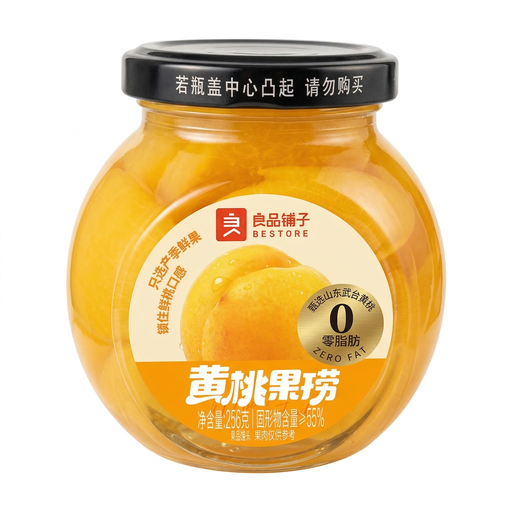 Image unavailable
Consider this bottled peach product if syrup suits your intended use. Its title specifies 256g/Bottle; check the current package for its salt figure, usable quantity and instructions after opening, particularly if you will not finish it at once.
Read the salt figure per 100g on the exact pack. The NHS describes 0.3g of salt or less per 100g as low; when comparing packs, also check whether each figure refers to drained fruit or the full contents.
No. “In juice” identifies the packing liquid, not a reduced-salt claim. Read the salt line on the particular product, even when juice or water is your preferred packing medium.
The NHS includes canned fruit in its 5 A Day guidance and advises choosing fruit in natural juice or water with no added sugar or salt. Check the pack if you need its stated serving information for your weekly-shop plans.
Follow the instructions on the particular pack. Check whether unused fruit needs transferring to another container and refrigerating, and how soon the label says to use it; do not assume every product has the same storage period.