Label-focused organiser
If avoiding added salt or sugar matters for the table, compare packing liquid, ingredients and the salt figure on each tin. Fruit packed in juice does not, by itself, settle every label question.


For a coffee morning, do not choose tinned fruit on a reduced-salt impression alone. The NHS advises choosing canned fruit in natural juice or water with no added sugar or salt; check the exact tin’s ingredients and salt value, then compare drained weight with the number of guests. Before serving, check for pips or stones and read the instructions for storing leftovers.
If avoiding added salt or sugar matters for the table, compare packing liquid, ingredients and the salt figure on each tin. Fruit packed in juice does not, by itself, settle every label question.
When serving several guests, use drained weight and the tin’s serving guide to plan how much fruit to buy. Decide what you will do with any fruit left after opening.
Keep the current ingredient information available for guests and take notice of any warning that pips or stones may remain. If you are packing fruit for sale, check whether your setup falls within food-labelling rules.
Choose the packing liquid and check the exact label before planning portions and serving arrangements.
| Concern | What to check | Who this matters to |
|---|---|---|
| Salt and added sugar | Check the ingredients, packing liquid and salt per 100g on the exact tin. The NHS advises choosing canned fruit in natural juice or water with no added sugar or salt. | If avoiding added salt or sugar is my main concern, I need more than an “in juice” description to decide what to serve. About 42% of consumers put that label check first. |
| Usable quantity | Compare drained weight and stated servings rather than relying on total tin weight. | With several guests coming, I need to know how much fruit will reach the table once the liquid is drained. For about 25% of consumers, having enough usable fruit is the primary concern. |
| Serving and leftovers | Choose a format that suits your serving dish and follow the tin’s instructions after opening. | I want to put fruit out without much preparation and have a workable plan for what remains. Easy serving and leftovers come first for about 17% of consumers. |
| Shared-food information | Read ingredient information and warnings about possible pips or stones; check any labelling duties if packing food for sale. | When guests share a bowl, I need to pass on relevant food information and avoid overlooking a pip or stone warning. About 16% of consumers make that their primary concern. |
Juice-packed products can have different ingredients and salt values. The NHS advice specifies natural juice or water with no added sugar or salt, not juice packing alone.
Read the exact tin’s ingredients and nutrition table, and compare salt figures on the same per-100g basis.
Total weight includes packing liquid, so it does not tell you how much drained fruit is available to serve.
Use drained weight and stated servings to plan the quantity, allowing for the other food on the coffee-morning table.
ASDA’s pear, mandarin and peach listings, and the M&S grapefruit listing, include warnings that seeds, pips or stones may remain.
Keep the relevant warning available to anyone serving the fruit and check the contents when transferring them to a bowl.
Opened-pack instructions vary between the products reviewed by Tesco, ASDA, M&S and Sainsbury’s.
Follow the current tin’s directions for transferring and refrigerating leftovers, including its stated time limit.
A branded tinned-fruit option with products including mandarins, peach slices and fruit cocktail in juice.
A branded pineapple option, including slices in pineapple juice listed by Sainsbury’s.
A grocery retailer listing the reviewed Del Monte Mandarins in Juice; that listing is not evidence about Tesco own-label fruit.
A grocery retailer listing branded tinned fruit, including the reviewed Princes pineapple slices in juice.
An own-label option with reviewed pears, peach slices and mandarins packed in fruit juice.
An own-label option that includes grapefruit segments in grapefruit juice.
These juice-packed pineapple, peach and pear tins offer different fruit formats for a coffee-morning table. Use each tin’s current label to decide whether its ingredients, salt value and usable quantity meet your needs.
 No image available
Chunks offer a portionable pineapple format for a shared bowl. This is a 432g tin with juice; check the current label for its salt value, serving guide and leftover instructions.
 No image available
Choose the sliced format if it suits how you plan to serve pineapple. The tin is 435g; use its drained weight and current serving information, rather than total weight alone, to plan quantities.
 No image available
Peach halves are an option if that format suits your serving dish. This juice-packed tin is 415g; check its current drained weight, ingredients and any stone warning before serving guests.
 No image available
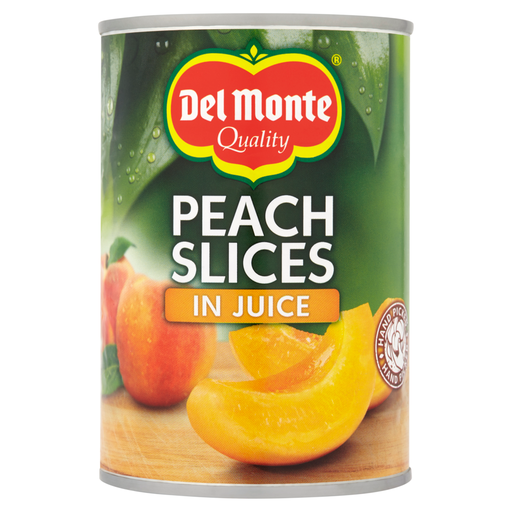
Slices may be convenient when guests will serve themselves from a bowl. The juice-packed tin is 415g; check drained weight and serving guidance to work out how many tins the table needs.
 No image available
Pear halves provide another fruit format for the shared table. This is a 415g tin in juice; check the current label for usable quantity, ingredients and any warning about seeds before serving.
No. The NHS advises choosing canned fruit in natural juice or water with no added sugar or salt. For a particular coffee-morning tin, read its ingredients and compare the actual salt value on the nutrition panel; do not assume all fruit in juice has the same value.
Start with the drained weight and the product’s stated servings, then consider the number of guests and what else will be on the table. Total tin weight includes liquid, so it is not the quantity of fruit you will serve if you drain it.
Follow the exact tin’s storage directions. The reviewed M&S grapefruit and Princes pineapple instructions say to transfer leftovers to a non-metallic container, refrigerate them and use them within two days; instructions for other products can differ.
If the organiser is operating as a food business and the cups meet the definition of prepacked for direct sale, UK requirements apply. The Food Standards Agency and Food Standards Scotland describe the required label as showing the food name, a full ingredients list and any of the 14 regulated allergens emphasised within it. Whether those conditions apply to a particular coffee morning depends on how it operates and how the cups are packed and sold.