Lunch shoppers who read labels
If you want fruit for routine lunches without assuming that every juice-packed tin has the same ingredients, compare the packing liquid, ingredient list and sugars per 100g.


For regular lunches, choose fruit packed in juice or water if you want to avoid syrup, then compare the ingredients, sugars per 100g and quantity of fruit you can use. A large tin or multi-tin pack suits planned portions that you can store and finish according to the label; individual portions are more practical when opening a large tin would leave unwanted fruit.
If you want fruit for routine lunches without assuming that every juice-packed tin has the same ingredients, compare the packing liquid, ingredient list and sugars per 100g.
If you prepare lunches for several people or days, a multi-tin pack may fit your plan. Check the number of tins and, where stated, the drained weight to judge how much fruit you can serve.
If you will not finish a large tin promptly after opening it, a smaller tin or individual portion may be easier to fit around the product’s storage instructions.
| Concern | What to check | Who this matters to |
|---|---|---|
| Packing liquid and sugars | Read the ingredients to distinguish juice or water from syrup, then compare sugars per 100g on the exact products. | I want fruit for a regular lunch but do not want to mistake light syrup for juice. About 36% of consumers put this label choice first. |
| Usable fruit quantity | Compare tin count and size; use drained weight where stated rather than relying on net weight alone. | When planning several lunches, I need enough fruit to serve, not just a large total pack weight. This is the primary concern for about 29% of consumers. |
| Leftovers after opening | Check the serving count and the exact product’s refrigeration and open-life instructions. | If I open a large tin for one lunch, I need a realistic plan for what remains. About 21% of consumers prioritise avoiding those leftovers. |
| Fruit type and cut | Choose slices, chunks, halves or mixed fruit for the intended lunch, and check the ingredients of mixed products. | For a packed lunch or topping, I want a fruit and cut I will actually use. Roughly 14% of consumers make that fit their primary concern. |
Light syrup can still contain added sugar. The words on the front of the tin do not replace the ingredients and nutrition panel.
Check the packing liquid and compare sugars per 100g, particularly if you are choosing between tins for regular lunches.
Net weight includes the packing liquid, so two tins of similar size need not provide the same quantity of fruit.
Use drained weight where available and check the number of tins in a multipack before deciding how many lunch portions it will cover.
Fruit left after lunch must be stored and used according to that product’s instructions. For example, M&S directs buyers of its Grapefruit Segments to transfer leftovers to a non-metallic container, refrigerate them and eat them within two days; that period should not be assumed for other tins.
If the remaining fruit will not be used within the stated open-life, consider a smaller tin or individual portions.
Unwanted leftovers also mean some of the fruit bought for lunches goes to waste.
Del Monte appears in the checked Tesco and Joybuy ranges with fruit cocktail and pineapple in juice, including multi-tin formats.
Princes lists pineapple slices in juice in 227g and 432g sizes, and peach slices with juice in 220g and 410g sizes.
Tesco’s tinned-fruit range includes own-label juice-packed options alongside branded tins.
Sainsbury's lists juice-packed tinned fruit, including its 411g Peach Slices In Fruit Juice.
The checked M&S tinned-fruit range includes grapefruit segments and rhubarb chunks.
These selections cover larger tins, six-can packs and a pack of individual peach pots. Choose between them by the portions you can use after opening a tin, as well as the fruit and packing liquid named on the pack.
 No image available
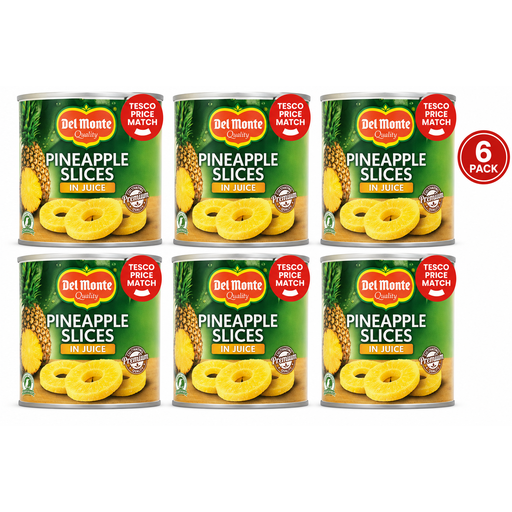
Consider the six-tin format if pineapple slices are planned for several lunches. Each tin is labelled 435g; check its drained weight and after-opening instructions when deciding how many portions it will provide.
 No image available
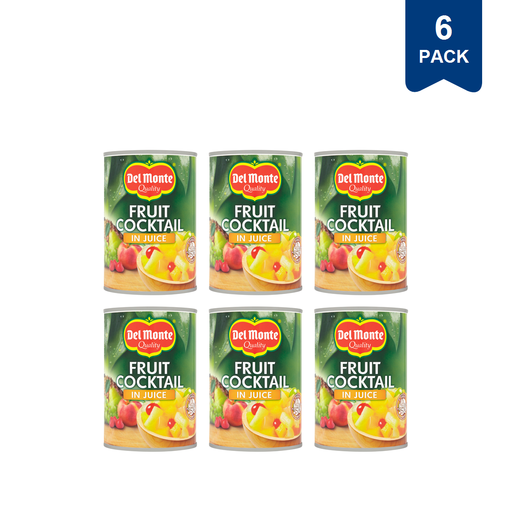
The six-tin pack fits repeated lunches where mixed fruit is wanted. Each tin is labelled 415g; check the fruit mix, drained weight and storage instructions on the exact pack before planning portions.
 No image available
This single 432g tin is an option when chunks suit your lunch and you do not need a multi-tin pack. Check how much fruit it yields and whether you can use any remainder within the pack’s open-life.
 No image available
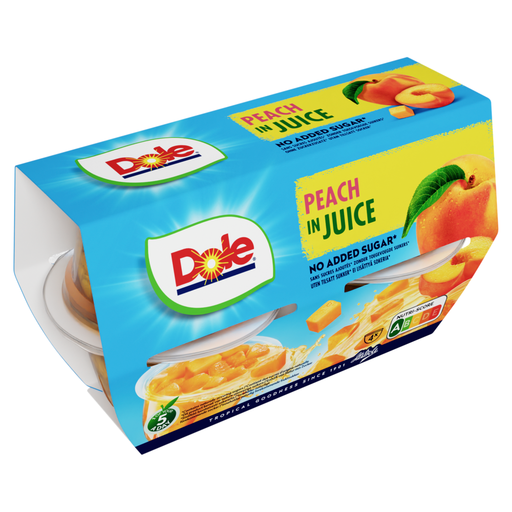
Four individual pots suit lunches where opening one large tin would leave fruit unused. These are pots rather than tins; check the ingredients on the exact pack if added sweeteners matter to your choice.
 No image available
This single 415g tin suits a lunch plan that calls for peach halves rather than chunks or mixed fruit. Check its drained weight and on-pack directions for storing and using any leftovers.
Yes. The NHS says 80g of fresh, canned or frozen fruit and vegetables counts as one portion of 5 A Day. Check the fruit quantity you will actually serve rather than assuming the full weight of a tin is fruit.
No. Juice-packed products can differ in their fruit, ingredients and sugars per 100g. Read the exact label, particularly when comparing a mixed-fruit product with a single-fruit tin or when you want to avoid syrup.
Follow that product’s after-opening instructions. M&S says to transfer leftover Grapefruit Segments to a non-metallic container, refrigerate them and eat them within two days; this is an instruction for that product, not a universal open-life. GOV.UK says food that its label directs you to refrigerate after opening should be kept at 5°C or below.
No. GOV.UK distinguishes best-before dates, which concern quality, from use-by dates, which concern food safety. For a tin you have opened, also follow its separate storage and open-life instructions.