Parents comparing packing liquids
If you want a simple fruit dessert without syrup, the NHS advises choosing canned fruit in natural juice or water with no added sugar or salt. Check the exact pack rather than relying on a low-fat description alone.


For a low-fat tinned-fruit dessert while caring for a new baby, start with fruit in natural juice or water rather than syrup if limiting added sugar also matters. Check the exact product’s ingredients, sugars and fat declaration, then choose portion pots for easier serving or a larger tin if you can use and store the leftovers.
If you want a simple fruit dessert without syrup, the NHS advises choosing canned fruit in natural juice or water with no added sugar or salt. Check the exact pack rather than relying on a low-fat description alone.
Pre-cut fruit or individual pots may suit a disrupted routine when opening a larger tin and managing leftovers feels less convenient. Tesco lists pear-and-peach pieces in four 120g pots as one example of the format.
A standard tin may suit fruit shared at breakfast or used in more than one dessert. Before choosing the larger format, consider how you will refrigerate and use any fruit left after opening.
For an adult dessert, compare the packing liquid and the product’s own nutrition panel first. Pack format then determines how much serving and leftover handling your routine allows.
| Concern | What to check | Who this matters to |
|---|---|---|
| Packing liquid and fat | Check for natural juice or water rather than syrup; compare the stated sugars and fat on equivalent nutrition labels. | If I want a low-fat fruit dessert without added sugar from syrup, the packing liquid matters as much as the fat declaration. About 42% of consumers put this combination first. |
| Serving effort | Compare a standard tin with ready-portioned pots, including the portion size and packing liquid. | When time to prepare dessert is limited, I would rather open an individual portion than deal with a partly used tin. Serving convenience comes first for about 33% of consumers. |
| Pack size and leftovers | Choose a size you can use, and read its directions for refrigerating fruit after opening. | For fruit shared across several meals, I need a pack that suits our household without leaving more than we can store and use. Around 25% of consumers make that their primary concern. |
A fat declaration does not tell you whether the fruit is packed in juice or syrup. For this dessert choice, the ingredients and sugars are worth reading alongside fat.
Start with the packing liquid, then check the nutrition panel on the exact product you intend to serve.
Diabetes UK advises avoiding fruit tinned in syrup, including light syrup, when considering sugar content. “Light” does not mean the fruit has no added sugar.
Read the ingredients and compare sugar figures using the same quantity, such as per 100g, on both packs.
Individual pots simplify serving, while a standard tin may be practical when several people will eat the fruit. Neither format prevents waste unless its contents fit how you will use them.
Choose pots for separate servings or a tin when you can use and store the opened fruit as directed.
Unopened cupboard storage does not tell you how to handle fruit after opening. The directions and use-within period can differ between products.
Read the pack, refrigerate opened fruit as directed and choose a size you expect to finish within its stated period.
Princes has canned-fruit options including pineapple, peaches and pears. Its product pages are useful for checking the formulation of an individual tin.
Del Monte peach products appear in both juice and light-syrup formats in Tesco’s tinned-peach listing.
Tesco’s own-label examples include a standard tin of peach slices in juice and individual pear-and-peach pots.
M&S lists tinned fruit types including grapefruit segments and rhubarb chunks for shoppers seeking those particular fruits.
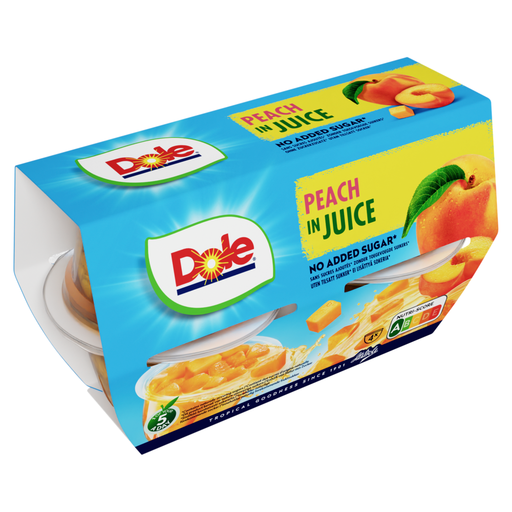
These juice-packed fruit options include individual peach pots and standard tins for adult desserts. Choose between them according to serving effort, fruit preference and how you will handle an opened pack.
 No image available
The individual pots suit a dessert you can serve without opening a shared tin. If you want fruit and juice without sweeteners, check the current ingredients for steviol glycosides; follow the pack’s directions for any opened pot.
 No image available
This standard tin suits pineapple served across more than one portion. It is not individually portioned, so plan to transfer and refrigerate leftovers as the pack directs.
 No image available
The mixed-fruit tin suits a dessert where you want several fruits without preparing them separately. It is a shared tin rather than individual portions; refrigerate any leftovers according to the pack.
 No image available
Choose this standard tin if peach halves suit the dessert you intend to serve. Because the tin is not portioned, transfer and refrigerate unused contents as directed on the pack.
 No image available
The pineapple chunks suit a fruit dessert when you want a standard tin rather than separate pots. Plan for any remainder: the product guidance calls for opened contents to be sealed, refrigerated and used within two days.
Yes. The NHS includes canned fruit in its 5 A Day advice and recommends choosing it in natural juice or water, with no added sugar or salt. Check the product’s portion information if you are serving it as part of a meal.
No: fat and packing liquid are separate checks. Diabetes UK advises avoiding fruit tinned in syrup, including light syrup, when sugar content matters; compare the ingredients and sugars on the specific packs.
Fruit in juice or water can be served on its own or with an accompaniment. If keeping the whole dessert low in fat matters to you, check the accompaniment’s nutrition label as well as the fruit’s.
Follow that product’s on-pack directions for transferring, refrigerating and using opened fruit. Do not assume that the unopened tin’s cupboard storage instructions apply once it has been opened.
An adult dessert choice does not establish that a product is suitable for a baby. If the fruit is for a baby, check its ingredients for added sugar or salt and follow NHS infant-feeding advice on preparing and serving food at an appropriate texture.