Hosts checking salt labels
If keeping salt low matters for your party spread, compare the declared amount per 100g. A small stated value is not, by itself, evidence that a product has less salt than another version.


Choose tinned fruit by its stated salt per 100g, not by whether it is packed in juice: the reviewed Tesco and Sainsbury’s peaches and M&S grapefruit have values within Bristol City Council’s low-salt benchmark of no more than 0.3g per 100g, but that does not establish a comparative “reduced salt” claim. For a party dessert, also check the fruit type, drained weight, warnings about stones or pips, and the instructions for keeping opened tins.
If keeping salt low matters for your party spread, compare the declared amount per 100g. A small stated value is not, by itself, evidence that a product has less salt than another version.
For fruit salads, trifles and toppings, the fruit’s shape, packing liquid and drained quantity affect what you can serve. Check the pack for stone or pip warnings before putting fruit on a shared table.
If tins may be opened during party preparation, read each product’s storage directions. The reviewed Tesco, Sainsbury’s and M&S products specify use within 2 days after opening; the reviewed Del Monte listing specifies 3–4 days.
Start with the salt declaration, then work out how much drained fruit the dessert needs and when you will open the tins.
| Concern | What to check | Who this matters to |
|---|---|---|
| Stated salt level | Compare salt per 100g with Bristol City Council’s low-salt benchmark of 0.3g or less per 100g. Do not treat “in juice” as a salt declaration. | I want a checkable low-salt choice for the shared table, rather than assuming one from the packing liquid. About 42% of consumers put the stated salt level first. |
| Fruit and usable quantity | Check fruit type, packing liquid and drained weight or stated servings where available. | For a trifle or fruit bowl, I need pieces that suit the dish and enough fruit after draining. Serving format is the primary concern for about 33% of consumers. |
| Opened-tin storage | Read the product’s directions for transferring, refrigerating and using unused contents. | If I prepare fruit ahead or expect leftovers, I need to know how soon the opened tin’s contents must be used. Roughly 25% of consumers prioritise managing opened fruit. |
Packing liquid does not establish a comparative salt claim. The reviewed Del Monte peach listing declares less than 0.5g salt per 100g, which does not establish whether it meets Bristol City Council’s 0.3g-per-100g low-salt benchmark.
Use the salt figure on the tin you are buying; distinguish a low stated amount from a claim that salt has been reduced relative to another product.
The total includes packing liquid, so tins of similar size need not yield the same quantity for a dessert.
Use drained weight and stated servings, where supplied, to plan the amount you will plate.
The reviewed products give different instructions after opening: several specify 2 days, while the reviewed Del Monte peach listing specifies 3–4 days.
Follow the purchased pack’s directions for transferring and refrigerating unused fruit, and plan when you will serve the remainder.
Opening more fruit than guests need can leave leftovers that must be used within that product’s stated period.
The reviewed Tesco and Sainsbury’s peaches warn that stones may remain; the reviewed M&S grapefruit may contain pips.
Inspect the fruit while plating it, particularly before placing a bowl on a self-serve table.
Tesco Peach Slices in Juice come in a 410g can with a stated 250g drained weight, useful for planning fruit-salad or dessert portions.
Sainsbury’s Peach Slices in Fruit Juice are a 411g peach option for a fruit bowl or dessert layer.
Princes lists juice-packed peach slices in 410g and 220g sizes, alongside 298g mandarin segments for a different fruit shape.
M&S Grapefruit Segments are a 540g tin in grapefruit juice for a dessert where grapefruit’s sharper flavour suits the dish.
The reviewed Del Monte Peach Slices in Juice listing describes a 415g can with 250g drained weight.
These tins offer different fruit shapes and packing liquids for a party fruit bowl or dessert. Check each product’s nutrition panel if a particular salt level is essential; packing in juice or syrup does not establish it.
 Image unavailable
Choose pineapple chunks if they suit the fruit salad or dessert you plan to serve. This is a 432g tin packed with juice; check its drained weight when working out portions.
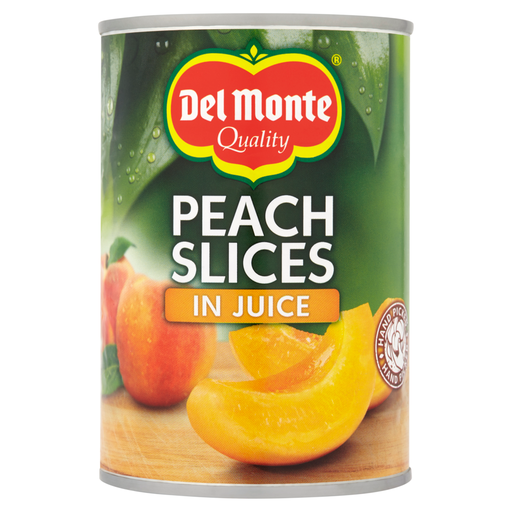 Image unavailable
Peach slices can be layered into a dessert or served in a fruit bowl. This 415g tin is packed in juice; check the purchased pack for its packing liquid and drained quantity if either matters to your recipe.
 Image unavailable
Consider a fruit cocktail when you want mixed fruit in one dessert or serving bowl. This is a 415g tin in juice; check the pack for the fruit mix and drained quantity if the proportions matter.
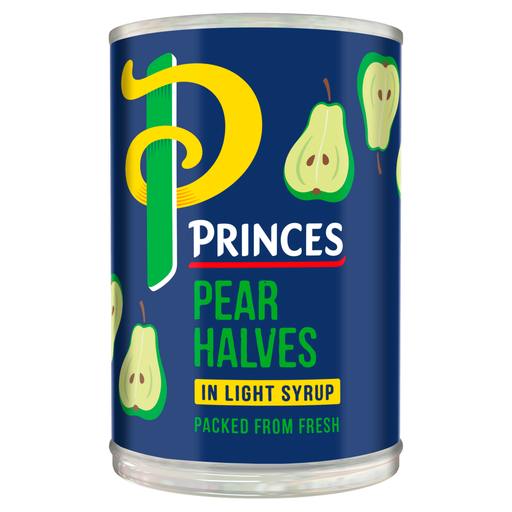 Image unavailable
Pear halves offer a different shape for a plated dessert. This 410g tin is packed in syrup rather than juice; check whether that liquid suits the dish, along with the pack’s salt declaration and drained weight.
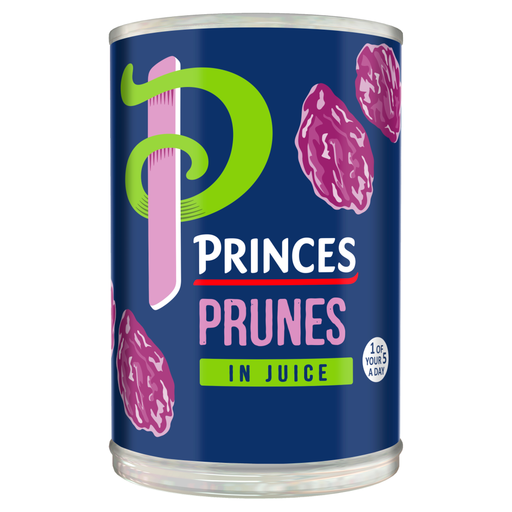 Image unavailable
Prunes provide another fruit option if they suit your dessert or breakfast-style spread. This is a 410g tin with juice; check the pack for stone warnings before serving guests.
Read the salt amount per 100g on the product label. Bristol City Council gives 0.3g salt or less per 100g as the low-salt benchmark; do not assume every tin meets it because it contains fruit or is packed in juice.
No: a low stated amount describes the product’s salt level, while “reduced salt” compares it with another product. Use the amount on the pack when making your choice rather than assuming that a low-salt tin carries a comparative claim.
Follow the instructions on the tin you open. The reviewed Tesco, Sainsbury’s and M&S products specify transferring unused contents, refrigerating them and using them within 2 days; the reviewed Del Monte peach listing gives 3–4 days.
Check the product warnings and inspect the fruit while plating it. The reviewed Tesco and Sainsbury’s peaches warn that stones may remain, and the reviewed M&S grapefruit may contain pips.