Lunch planners checking the packing liquid
If fruit is part of a packed lunch, the ingredients, portion size and difference between juice and syrup may guide your choice. The NHS says an 80g portion of canned fruit counts towards 5 A Day.


For a lunch tin, choose fruit in juice or water if you want to avoid syrup, but check the ingredients and nutrition panel for the exact product. A smaller tin can limit leftovers for one lunch; a larger tin is more practical when you have a plan to use the rest within its stated storage time.
If fruit is part of a packed lunch, the ingredients, portion size and difference between juice and syrup may guide your choice. The NHS says an 80g portion of canned fruit counts towards 5 A Day.
Tins contain fruit and packing liquid. Check the drained weight when it is shown, particularly if you are comparing different tin sizes or fruit formats.
A smaller tin may fit a single lunch more closely. With a larger tin, consider when you will use the remainder and follow that product's after-opening instructions.
Decide which of these needs comes first for your lunch, then check the exact tin rather than relying on its size or front label alone.
| Concern | What to check | Who this matters to |
|---|---|---|
| Usable fruit | Check the drained weight, where displayed, and compare similar fruit formats. | If I want to know how much fruit I can serve, the liquid in the tin makes its total size less useful on its own. About 37% of consumers would put usable fruit first. |
| Packing liquid | Read the ingredients and per-100g nutrition panel; distinguish juice or water from light syrup or syrup. | For a lunch without syrup, I need to check what the fruit is packed in, not just recognise the fruit name. About 27% of consumers would make the packing liquid their primary concern. |
| Portion fit | Match the tin size to planned servings and read its after-opening storage directions. | When I am packing one lunch, I may not have another use for an opened tin. Avoiding leftovers would come first for about 18% of consumers. |
| Fruit and format | Check whether the tin contains the fruit and form you want, such as slices, halves or chunks. | If the fruit needs to go straight into my lunch, I want a type and cut that suit that plan. About 18% of consumers would prioritise fruit choice and format. |
The juice and other ingredients can differ between products. Princes, for example, lists grape juice made from concentrate in its Peach Slices with Juice.
Check the ingredients and nutrition panel of the particular tin, especially when choosing between juice, water and syrup.
Storage directions apply to the individual product. Marks & Spencer instructs buyers of its grapefruit segments to transfer the contents to a non-metallic container, refrigerate and eat them within two days of opening.
Choose a size you can use, and follow the directions printed on your tin rather than applying that grapefruit instruction to every product.
GOV.UK distinguishes best-before dates, which concern quality, from use-by dates, which concern safety. It lists tinned foods among products that carry best-before dates.
Read the date wording and storage directions on the can. Do not eat food after a use-by date.
Princes lists Peach Slices with Juice in 220g and 410g formats.
Del Monte describes prepared fruit in juice, light syrup and syrup; its Pear Halves in Juice format is 415g.
Tesco Groceries lists own-label tinned fruit alongside products from Princes, Del Monte and other brands.
The researched M&S range includes grapefruit segments in grapefruit juice.
These tins cover a smaller peach-slices option and larger pear, peach and pineapple formats for lunches or planned repeat use. Compare the fruit, packing liquid and size against the portions you intend to serve.
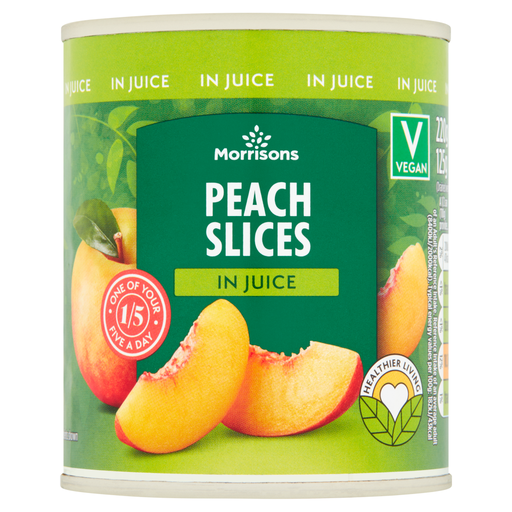 Image unavailable
The 220g tin is an option when you want a smaller pack of peach slices for lunch. Check the label for the amount of drained fruit and the directions for any leftovers.
 Image unavailable
Choose this 415g pear-halves format if you have a use for a larger tin. The product is labelled as packed in juice; check its ingredients and follow its storage directions after opening.
 Image unavailable
This 415g tin suits a plan that calls for peach halves rather than slices. If you will not use it at once, read the product's after-opening storage instructions before choosing the larger format.
 Image unavailable
The 435g tin provides pineapple in slices for lunches where that cut is useful. Plan how you will use the opened fruit and check the storage directions on the pack.
 Image unavailable
The 432g tin offers pineapple chunks rather than slices for a planned lunch use. Check the pack label for its drained-fruit quantity and instructions for storing any remainder.
Yes. The NHS says 80g of canned fruit counts as one 5 A Day portion. Check the amount of fruit you serve rather than treating a whole tin as one portion.
No. Ingredients and nutrition differ by product. Princes Peach Slices with Juice, for example, lists grape juice made from concentrate, so read the exact tin's label when the packing liquid matters to you.
Follow that product's after-opening directions. For its grapefruit segments, Marks & Spencer instructs shoppers to move the contents to a non-metallic container, refrigerate and eat them within two days; do not assume the same limit applies to other tins.
GOV.UK says best-before dates concern quality, unlike use-by dates, which concern safety. Check the can's date wording and storage advice; food past a use-by date should not be eaten.
Yes, especially if ingredients or storage directions affect your lunch plan. Marks & Spencer advises shoppers to read the product label because product information can change.