Juice-first lunchbox planners
Parents and carers looking for a fruit serving that follows the NHS lunchbox suggestion of tinned fruit in juice rather than syrup.


For a school packed lunch, start with tinned fruit in juice rather than syrup: the NHS suggests a small pot of fruit in juice as a lunchbox option. Peach or pear halves can give the serving a more dessert-like appearance, while fruit cocktail offers variety and individual pots make portioning easier. Choose a fruit the child likes and pack a manageable serving in a sealed pot.
Parents and carers looking for a fruit serving that follows the NHS lunchbox suggestion of tinned fruit in juice rather than syrup.
Those considering intact peach or pear halves for their presentation, while still checking the packing liquid and preparing a portion the child can eat at school.
Households comparing smaller pots or multipacks with mixed-fruit tins, depending on how much preparation is practical and which fruits the child enjoys.
Check the packing liquid first: the NHS suggests a small pot of tinned fruit in juice, not syrup, for a lunchbox. Then consider how you will portion it and whether the child likes the fruit.
| Concern | What to check | Who this matters to |
|---|---|---|
| Packing liquid | Check the exact pack for juice, syrup or light syrup; fruit from the same brand may come in different liquids. | In a school lunchbox, I want fruit in juice rather than syrup. About 42% of consumers put the packing liquid first. |
| Portioning and storage | Compare pack size and, where shown, drained weight. Check the instructions for storing fruit left over after opening. | When mornings are busy, I need a serving that fits in a lidded pot without leaving more opened fruit than I can use. Roughly 33% of consumers prioritise portioning and handling. |
| Fruit choice and presentation | Choose between halves, slices and mixed pieces; read a cocktail’s ingredient list and confirm its packing liquid. | If my child enjoys several fruits, a cocktail may appeal; if appearance matters more, I might choose halves. About 25% of consumers put fruit choice and presentation first. |
The NHS lunchbox suggestion distinguishes tinned fruit in juice from fruit in syrup; a light-syrup label does not make the liquids interchangeable.
Read the packing-liquid description on the particular tin. If you want to follow that lunchbox suggestion, choose one labelled as fruit in juice.
Del Monte Peach Halves in Juice contains 235g drained fruit in a 415g tin. Its opened-product instructions say to transfer unused fruit to a non-metallic container, cover and refrigerate it, then use it within 3–4 days.
Put the lunch serving in a suitable lidded pot and plan when you will use the rest. Check the instructions on any different tin you buy.
Fruit left over from a larger tin needs chilled storage and timely use.
Princes Fruit Cocktail with Juice contains peach, pear, pineapple, grapes and cherries in variable proportions. That can be awkward if a child avoids one of those fruits.
Check the ingredient list and the child’s preferences; choose a single-fruit option when a predictable serving matters more than variety.
A special-looking fruit serving does not, by itself, tell you whether the fruit is packed in juice or syrup, how much fruit is in the pack, or whether the child will enjoy it.
Choose the fruit and presentation you want, then check the packing liquid, serving format and label separately.
A range to compare when deciding between single-fruit halves and fruit cocktail, including juice-packed options.
Its Fruit Cocktail with Juice offers a mixed-fruit alternative in listed 220g and 410g sizes.
Its range includes formats to compare with full-size tins, such as Pear and Peach Pieces in a 4 x 120g pack.
A retailer range to check for less familiar dessert-style fruits, including listed grapefruit segments and rhubarb chunks.
Its listing for Del Monte Fruit Cocktail in Juice provides an example of a 415g mixed-fruit tin to compare.
These juice-packed fruit options cover single-fruit slices or halves, a mixed-fruit tin and individual peach pots. Consider the child’s fruit preferences and how much portioning you want to do before choosing a format.
 Image unavailable
Consider this for a child who likes pineapple and for a lunch serving you can prepare from a larger tin.
The 435g pack contains pineapple slices in juice. Transfer the serving to a suitable lidded pot; refrigerate unused fruit after opening and follow the pack’s storage instructions.
 Image unavailable
Choose peach halves if their appearance appeals to the child and you can portion the fruit before school.
The 415g tin has a 235g drained weight. Put the lunch serving in a lidded pot; transfer unused fruit to a non-metallic container, cover and refrigerate it, then use it within 3–4 days.
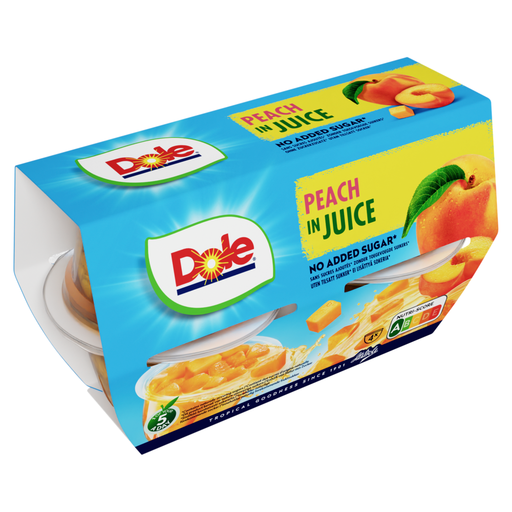 Image unavailable
The individual pots suit lunches where opening and dividing a full-size tin would be inconvenient.
This is a four-pack of 113g peach portions. Check the current label for the listed juice and sweetener ingredients, and whether the child prefers diced fruit to halves.
 Image unavailable
These pear halves offer a single-fruit alternative for a child who prefers pears to peaches or mixed fruit.
The tin is 415g and contains fruit in juice. Check the drained weight when planning servings, portion the fruit into a lidded pot and follow the pack’s instructions for refrigerated leftovers.
 Image unavailable
Consider the cocktail when the child enjoys mixed fruit rather than needing the same fruit in every serving.
The 415g tin lists peaches, pears, pineapple, grapes and cherries in juice; proportions vary. Check the drained weight when planning portions, and refrigerate unused fruit according to the pack instructions.
Choose fruit in juice if you want to follow the NHS lunchbox suggestion: it describes a small pot of tinned fruit in juice, not syrup, as a lunchbox option. Check the wording on the exact pack, including whether it says light syrup.
Transfer the serving to a suitable sealed food pot instead. For Del Monte Peach Halves in Juice, the opened-product instructions also say to move unused fruit to a non-metallic container, cover and refrigerate it, then use it within 3–4 days; follow the instructions on the tin you buy.
Check the school’s own packed-lunch and allergy policies, including any container rules. Department for Education guidance on school food standards applies to England but does not itself determine what each school permits in food brought from home.
Yes. Read the current ingredients and allergen information for the exact product: Princes Fruit Cocktail with Juice lists several fruits, including grapes and cherries, while Asda advises shoppers to check labels because product information can change.