Weekday lunch planners
If you keep fruit in the cupboard for regular home lunches, the drained weight helps you judge how much fruit a tin provides. Consider how much you will use, rather than choosing by can size alone.


For a working-from-home lunch, choose tinned fruit by the amount of drained fruit you expect to eat, its packing medium and whether you can use any leftovers. A larger tin suits several planned lunches only if you can refrigerate and finish it within its label’s instructions; a smaller tin may make more sense when the rest would go unused. If avoiding added sugar is a priority, follow the NHS advice to look for fruit in natural juice or water with no added sugar.
If you keep fruit in the cupboard for regular home lunches, the drained weight helps you judge how much fruit a tin provides. Consider how much you will use, rather than choosing by can size alone.
If the packing liquid affects your choice, check the exact label. The NHS advises choosing canned fruit in natural juice or water with no added sugar.
If an opened tin is likely to last beyond one lunch, choose a size you can use within its after-opening instructions or plan how you will store the remainder.
Start with the amount you will eat at lunch, then check the packing liquid and what you would do with any fruit left over.
| Concern | What to check | Who this matters to |
|---|---|---|
| Usable fruit and waste | Check the drained weight and whether the tin provides an amount you will use across your planned lunches. | When fruit is part of several weekday lunches, I want enough to use without discarding the remainder. About 42% of consumers put usable fruit and avoiding waste first. |
| Packing medium | Read the label for natural juice, water or syrup, and check the ingredients against your preference. | If I am avoiding added sugar, the liquid the fruit is packed in matters more to me than the can size. For about 33% of consumers, that is the primary concern. |
| Portions and leftovers | Check the serving information and the label’s refrigeration and use-after-opening instructions. | Eating lunch alone, I may need a portion I can finish or store for another day. Managing leftovers comes first for about 25% of consumers. |
The weight of a tin includes its packing liquid, so two tins of similar size need not contain the same amount of fruit.
Compare drained weights where they are stated, then choose an amount you expect to use.
Supermarket ranges include both juice- and syrup-packed fruit. The fruit name alone does not tell you which you are buying.
Check the packing-medium wording and ingredients on the exact tin. If avoiding added sugar is your priority, the NHS advises fruit in natural juice or water with no added sugar.
After-opening instructions vary by product: the listed M&S grapefruit segments say to consume them within two days, while the listed Del Monte fruit cocktail says to use leftovers within three to four days.
Move unused fruit to a covered, suitable non-metallic container, refrigerate it and follow the instruction on your tin.
Food-safety guidance warns against eating food from a visibly bulging can.
Choose an intact can and do not eat the contents of one that is visibly bulging.
These product-line examples can help you identify fruit styles and pack formats to compare; check the details on the tin you choose.
Tesco Groceries lists own-label pineapple in juice in 227g and 425g tins, as well as a 4 × 120g pineapple-pieces multipack.
The Sainsbury's tinned-fruit range includes own-label fruit in both juice and light syrup.
The listed Del Monte range includes fruit cocktail, peaches, pears, mandarins and prunes.
Princes lists pineapple chunks in juice in 227g and 432g sizes.
Listed M&S grapefruit segments in juice offer a fruit option beyond the pineapple and peach examples.
These juice-packed pineapple, peach and fruit-cocktail options include different tin sizes and a multipack. Compare the portion you expect to use and check each product’s label for drained weight and after-opening instructions.
 No image available
Consider this larger tin if you plan to use pineapple slices over more than one lunch. Check its drained weight and follow its after-opening storage instructions if you keep any fruit.
 No image available
If you prefer peach halves and expect to serve more than one lunch from a tin, compare its drained weight with the amount you will eat. Plan to store any remainder as directed on the label.
 No image available
This format is worth considering when you want pineapple chunks for planned lunches. Princes lists pineapple, pineapple juice and citric acid as ingredients; check the tin for the drained amount and instructions for any leftovers.
 No image available
The smaller tin may fit a lunch where you want fewer leftovers. Check the serving and drained-weight information, and read the ingredients if sweeteners affect your choice.
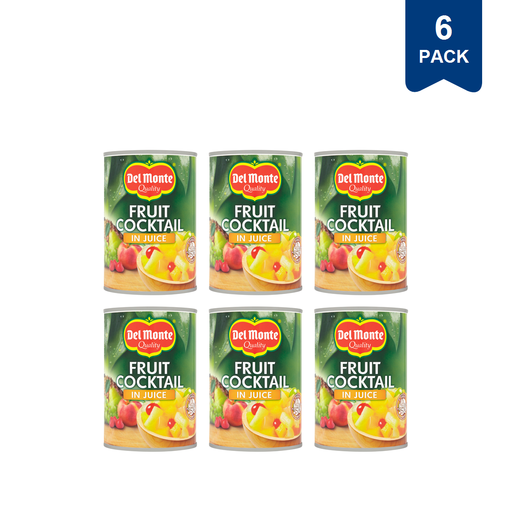 No image available
A multipack may suit lunches planned across several weeks, with each can opened when needed. Confirm the pack contents and check the drained weight and storage instructions on the cans.
Yes. The NHS says 80g of canned fruit counts as one portion and advises choosing fruit in natural juice or water with no added sugar.
If avoiding added sugar is your priority, follow the NHS advice to choose fruit in natural juice or water with no added sugar. Check the exact tin’s ingredients rather than treating juice- and syrup-packed versions as interchangeable.
Transfer it to a suitable non-metallic container, cover and refrigerate it, then follow the tin’s use-after-opening instruction. The listed M&S grapefruit segments specify two days, while the listed Del Monte fruit cocktail specifies three to four days.
No. GOV.UK explains that a best-before date concerns food quality; once you open the tin, follow its storage and use-after-opening instructions. Where the label requires refrigeration after opening, GOV.UK says to keep the food at 5°C or below.