Plated-dessert hosts
If the fruit will be visible on each plate, its cut and how neatly it drains matter more to you than a luxury description on the tin.


For a plated dessert, choose slices or halves that you can arrange; choose chunks if you plan to spoon fruit over individual portions. Compare juice-packed fruit with light-syrup fruit by reading the ingredients, particularly if you want to limit added sugar. Check drained weight when planning servings, then drain the fruit before plating.
If the fruit will be visible on each plate, its cut and how neatly it drains matter more to you than a luxury description on the tin.
If the rest of the dessert is already sweet, you may want to choose the packing liquid deliberately and check the ingredients rather than relying on the word ‘light’.
If you plan to chill, drain and serve the fruit with little preparation, the cut and the amount of fruit after draining help you plan portions.
Decide how you will serve the fruit before comparing cuts, packing liquids and usable quantities.
| Concern | What to check | Who this matters to |
|---|---|---|
| Fruit shape | Choose slices or halves for arranging on a plate; choose chunks for spooning into bowls or over portions. | If I am plating each dessert, I want pieces I can arrange neatly. About 36% of consumers put presentation first. |
| Sweetness and liquid | Check whether the fruit is in juice or syrup, then read the ingredients for added sugar. | When other dessert components are sweet, I want to choose the fruit’s packing liquid carefully; about 29% of consumers prioritise sweetness control. |
| Usable quantity | Compare drained weight where shown, rather than using the full can weight to plan portions. | If fruit is the main part of a shared dessert, I need enough to serve everyone. About 21% of consumers make portion planning their primary concern. |
| Product type | Check whether the tin contains pieces of fruit or a prepared fruit filling before choosing a substitute. | If I am choosing between tins for a quick dessert, I need to know whether a filling will work in place of fruit pieces; about 14% of consumers put range and substitution first. |
Sainsbury's lists sugar among the ingredients of Del Monte mango slices in light syrup. The NHS recommends choosing tinned fruit in juice rather than syrup for a less sugary dessert choice.
Read the packing description and ingredients. Choose syrup when you want that sweeter component, not because ‘light’ sounds equivalent to juice.
The Sainsbury's listing for Del Monte pineapple chunks gives a 435 g can weight but 260 g drained weight. The liquid is not fruit you can arrange on a plate.
Use the stated drained weight to plan servings, especially when fruit is the main dessert component.
Tesco Groceries lists Princes fruit fillings alongside tinned fruit pieces. A filling serves a different dessert role from slices or chunks in juice.
Check the product type before substituting: choose pieces when you want visible fruit, or a filling when the recipe calls for one.
Sainsbury's instructions for the Del Monte pineapple chunks and mango slices say to cover and refrigerate leftovers and use them within 3–4 days.
Transfer leftovers to a suitable covered container, refrigerate them and follow the instructions on the particular tin.
Retailer listings include pineapple, peach and mango formats that serve different dessert needs.
Tesco Groceries lists Princes pineapple chunks in juice as well as prepared fruit fillings.
Tesco Groceries lists own-label pineapple chunks and slices in juice.
These tins offer slices and halves for arranging on a dessert plate, plus mango in light syrup when that packing liquid suits the dish.
 Image unavailable
The slice format suits a dessert where you want to arrange visible pieces. This is a 435 g tin packed in juice; check the drained weight when planning servings.
 Image unavailable
Peach halves can remain whole on a plate or be cut for individual portions. This 415 g tin is packed in juice; compare drained weight if the fruit is the main dessert component.
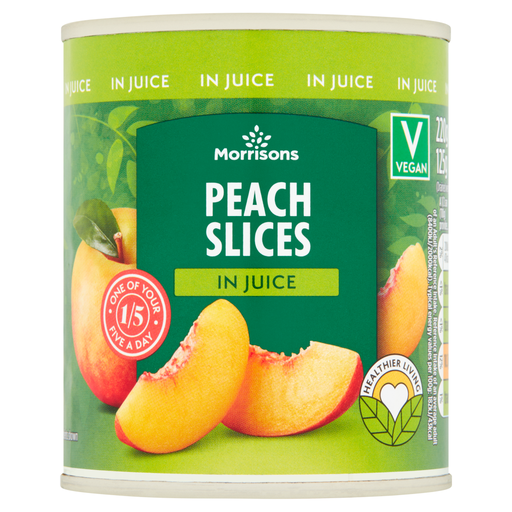 Image unavailable
Peach slices suit portions where you want visible fruit pieces without cutting halves. This is a 220 g tin packed in juice; check drained quantity when serving a group.
 Image unavailable
Pear halves offer larger pieces to arrange in a bowl or on a plate. This 415G tin is packed in juice; check drained weight on the pack if you need to plan portions precisely.
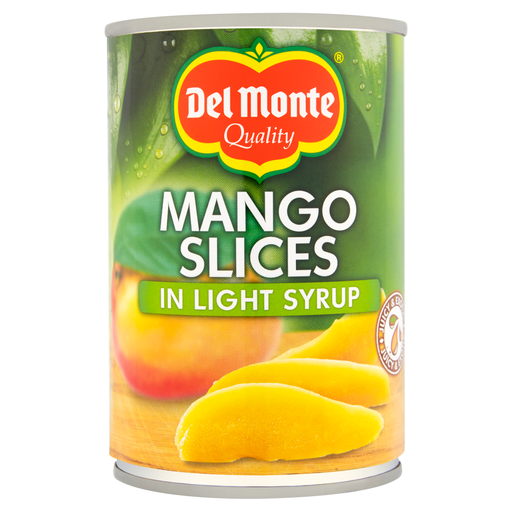 Image unavailable
Mango slices suit a dessert where you deliberately want a syrup-packed fruit component. This is a 425 g tin in light syrup; compare its ingredients with juice-packed options if added sugar matters to your choice.
No. Choose fruit in juice if you want to avoid added syrup sweetness; the NHS recommends it over syrup for a less sugary dessert choice. Syrup-packed fruit can still suit a dessert where you deliberately want a sweeter component, so check the ingredients of the particular tin.
Use drained weight to plan how much fruit you can serve when it is shown. For example, Sainsbury's lists Del Monte pineapple chunks at 435 g for the full can and 260 g drained.
Follow the instructions on the particular tin. Sainsbury's listings for Del Monte pineapple chunks and mango slices say to cover and refrigerate leftovers and use them within 3–4 days.