What matters when buying?
For a Mother’s Day dessert, decide how the fruit will be served before choosing between halves, slices and a mixed tin. Then check the packing liquid and ingredients against the rest of the recipe.
| Concern |
What to check |
Who this matters to |
| Plated presentation |
Look for halves rather than slices, and check drained weight when planning portions. |
If I want fruit to be the centre of each plate, I need pieces I can arrange separately. About 31% of consumers would put plated presentation first. |
| Easy layering |
Check the fruit mix and whether the recipe calls for the packing liquid to be kept or drained. |
When making a trifle, I want fruit that can be distributed through the layers without preparing several tins. About 31% of consumers would prioritise that convenience. |
| Sweetness |
Compare ingredients and sugars per 100g on the exact packs; do not assume all juice-packed fruit has the same values. |
If custard, sponge or sauce is already part of the dessert, I want to choose how much sweetness comes from the fruit. That would be the primary concern for about 23% of consumers. |
| Distinctive flavour |
Check the named flavouring and ingredients, particularly for a liqueur-flavoured product, before serving it. |
For a small occasion dessert, I may want a flavour beyond standard tinned fruit, provided the recipient likes it. About 15% of consumers would make that their first consideration. |
Tinned fruit on Joybuy
These tins cover peach and pear halves for plated servings, plus slices and fruit cocktail for desserts assembled in layers. Choose between juice and syrup according to the exact product and your recipe.
 No image available
Del Monte Peach Halves in Juice 415g
Peach halves can be arranged as individual dessert portions; plan any cream, sponge or sauce separately.
- 415g net weight; 235g drained weight on the matching Joybuy product listing.
- Packed in juice. Follow the tin’s instructions for leftovers after opening.
View on Joybuy
 No image available
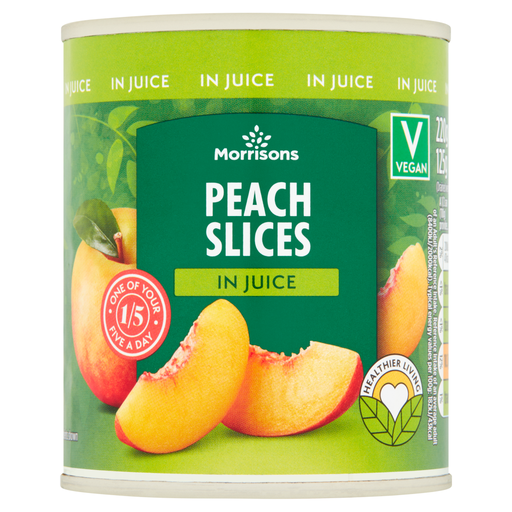
Morrisons Peach Slices in Juice 220g
Peach slices suit a layered dessert or topping when separate halves are not needed on the plate.
- 220g tin, packed in juice.
- Check the product’s stone-fragment warning when preparing and serving it.
View on Joybuy
 No image available
Del Monte Pear Halves in Juice 415g
Pear halves offer another fruit shape to arrange as individual dessert portions.
- 415g tin, packed in juice.
- Check the drained weight if the amount of fruit per serving matters.
View on Joybuy
 No image available
Del Monte Fruit Cocktail in Juice 415g
Fruit cocktail provides a mixed-fruit component for a trifle or another spoonable dessert; check that its mix suits the recipe.
- 415g tin, packed in juice.
- Check the drained weight when planning the amount needed for each layer.
View on Joybuy
 No image available
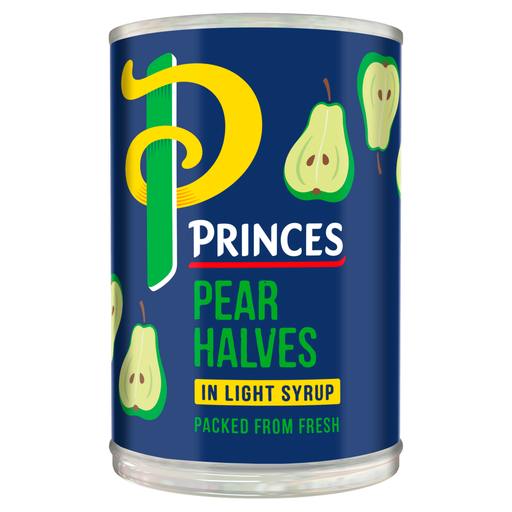
Princes Pear Halves in Syrup 410g
Pear halves suit individual plating when syrup’s sweetness is intended to be part of the dessert.
- 410g tin, packed in syrup rather than juice.
- Compare the exact nutrition panel with a juice-packed option if sugars matter to your choice.
View on Joybuy
Frequently asked questions
Is fruit in juice always preferable to fruit in syrup for dessert?
No. Juice-packed fruit is a starting point if you want to choose any added sweetness separately; syrup may fit a recipe that uses its sweet liquid. For a product-specific comparison, Waitrose & Partners lists 9.4g sugars per 100g for its Essential Pear Halves in Juice and 17.7g per 100g for its Essential Pear Halves in Light Syrup. Compare the exact tins you intend to buy.
How should I store tinned fruit after opening?
Follow the instructions on the particular tin. Waitrose & Partners says to transfer its Essential Pear Halves in Juice to a non-metallic container, cover, refrigerate and use within two days; the Joybuy listing for Del Monte Peach Halves in Juice gives a different period of three to four days. Do not apply either period to every product.
What is the difference between a best-before and a use-by date?
GOV.UK distinguishes best-before dates, which relate to food quality, from use-by dates, which relate to safety. Check which date appears on the tin and follow its storage instructions; do not treat a use-by date as a best-before date.
What should I check if a guest has an allergy or intolerance?
Check the ingredients and allergen information on the physical pack of the exact fruit you will serve. A description such as “in juice” does not tell you every ingredient in the tin.
When is Mother’s Day in the UK in 2027?
UK Mothering Sunday falls on Sunday 7 March 2027, according to timeanddate.com. Check the arrangements for buying and receiving the fruit nearer the occasion.


