Low-fat label checkers
For a movie-night dessert where low fat is the priority, these shoppers want the fat figure for the exact product rather than an assumption based on the fruit pictured on the tin.


Start with fat per 100 g on the exact tin or pot: the nutrition-claims annex published by legislation.gov.uk sets a limit of 3 g per 100 g for a low-fat claim on solid food. Fruit in juice gives you a fruit-and-juice base, but it does not settle the sugar question; compare sugars for the portion you plan to serve. Choose a can or individual pots according to how many people are sharing, and check the opened-pack instructions if you expect leftovers.
For a movie-night dessert where low fat is the priority, these shoppers want the fat figure for the exact product rather than an assumption based on the fruit pictured on the tin.
These shoppers want to compare sugars and packing liquid before pairing the fruit with another dessert ingredient. A juice-packed product still has a sugars figure worth checking.
These shoppers are deciding whether one can will serve the group or whether separate pots will make portioning and leftovers simpler.
Check the fat figure for the fruit itself, then decide whether its packing liquid and pack format suit the dessert you plan to serve.
| Concern | What to check | Who this matters to |
|---|---|---|
| Low-fat status | Read fat per 100 g on the current label. For solid food, the nutrition-claims annex published by legislation.gov.uk sets the low-fat claim limit at no more than 3 g per 100 g. | If low fat is my main reason for choosing fruit, I need a figure for the exact tin or pot, not a general impression of fruit. About 42% of consumers put that label check first. |
| Sweetness and packing liquid | Compare ingredients and sugars per 100 g and per intended serving. Tesco Groceries lists 9.7 g sugars per 100 g for its Peach Slices in Juice. | When fruit is going into a dessert, I want its sweetness and fruit mix to work with what else I am serving. Roughly 33% of consumers make that their primary concern. |
| Sharing and leftovers | Check net weight, drained weight where stated, and the instructions for storing an opened pack. | If several people are sharing, I want enough fruit without leaving an awkward amount to store afterwards. For around 25% of consumers, portioning and leftovers are the main consideration. |
Packing liquid and sugar content are separate checks. Tesco Groceries lists 9.7 g sugars per 100 g for its Peach Slices in Juice, despite listing 0 g fat per 100 g.
Read the sugars line for the portion you intend to serve, particularly if the fruit will accompany another dessert ingredient.
The low-fat claim limit concerns fat in the labelled food; it does not describe the energy or sugars in a finished dessert with toppings.
Check the fruit’s label, then consider any other ingredients separately.
Opened-pack instructions can affect whether a can suits the number of people eating. Tesco Groceries instructs buyers of its Peach Slices in Juice to move unused contents to a non-metallic container, cover and refrigerate them, and consume them within two days.
Choose the pack format with the planned portions in mind, and follow the instructions on the one you buy.
Fruit left over after the film may go to waste if it cannot be used within the pack’s stated period.
Fruit type, packing liquid and nutrition figures vary by product. The label for Tesco Peach Slices in Juice also warns that some stones may remain.
Read the ingredients, nutrition panel and any product-specific safety information on the current pack before making a shared dessert.
Use these product-line examples to guide label comparisons, not as a substitute for checking the pack you choose.
Tesco’s Peach Slices in Juice provides a labelled example for checking nutrition alongside serving and storage details.
Princes Fruit Cocktail with Juice is an option to examine if you want mixed fruit rather than a single fruit type.
Tesco Groceries lists Del Monte peach formats packed in juice and in light syrup, making the packing liquid a useful distinction when comparing variants.
These options cover fruit in juice, individually portioned peach pots and peach slices in light syrup. Use each format as a starting point, then check the current nutrition label against your low-fat and serving needs.
 No image available
Pineapple chunks offer a juice-packed option to consider for sharing. The stated pack weight is 432 g; check the fat and sugars figures and the drained weight on the current pack before deciding how many portions it provides.
 No image available
Peach halves in juice may suit a dessert where you want to serve pieces of one fruit. The stated pack weight is 415 g; check the current drained weight and nutrition panel when planning portions.
 No image available
This is a pear alternative when the dessert calls for one fruit type packed in juice. The stated pack weight is 415 g; read the current fat and sugars figures and check the drained weight before dividing it among guests.
 No image available
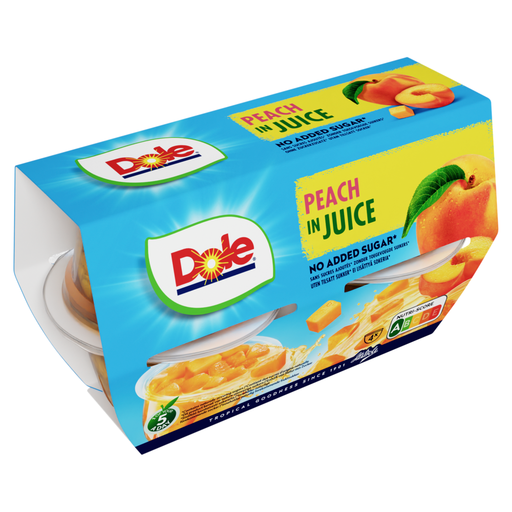
Four separate 113 g pots offer a portioned alternative to opening one can for a group. Compare nutrition for the amount in a pot, and check the fruit’s drained weight if that matters to your serving plan.
 No image available
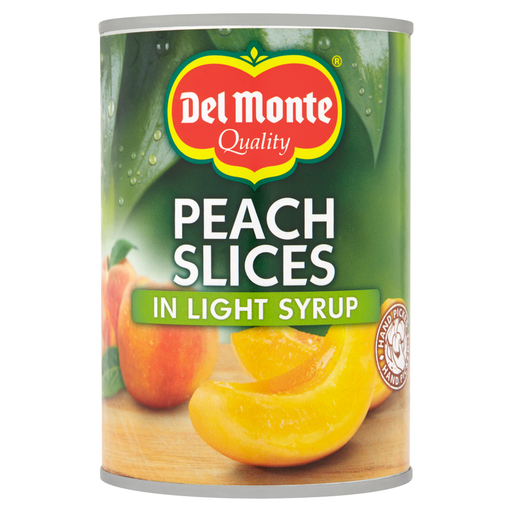
Choose this format to consider peach slices packed in light syrup rather than juice. The stated pack weight is 420 g; compare its fat and sugars figures with juice-packed options on their current labels, without treating the packing-liquid descriptions as nutrition results.
For solid food, the nutrition-claims annex published by legislation.gov.uk sets a limit of no more than 3 g fat per 100 g for a low-fat claim. Check fat per 100 g on the current label of the product you intend to serve.
No. Tesco Groceries lists 9.7 g sugars per 100 g for its Peach Slices in Juice, while Princes Food and Drinks lists 9.0 g per 100 g for its Fruit Cocktail with Juice. Compare the exact product’s sugars figure and your intended serving rather than relying on “in juice”.
Follow that can’s storage instructions. For Tesco Peach Slices in Juice, Tesco Groceries says to transfer unused contents to a non-metallic container, cover and refrigerate them, and consume them within two days; instructions for other products may differ.
Check the drained weight and any stated serving size for the exact can, then compare them with the portions you plan to make. Net pack weight alone does not tell you how much fruit you will have after draining.