What matters when choosing?
Decide which sugar wording matters to you, then choose a tin size that fits how the second home will be used.
| Concern |
What to check |
Who this matters to |
| Added sweetening and total sugars |
Read the packing medium and ingredients, then compare sugars per 100g on the exact tins. |
If avoiding added sweetening comes first, I want to tell juice from syrup without assuming the fruit is sugar-free. About 42% of consumers put avoiding added sweetening first. |
| Fruit left after opening |
Match the tin size to likely use and follow its specific refrigeration and use-after-opening instructions. |
When a visit ends after one meal, I need to be able to use or store what remains. For about 33% of consumers, preventing opened-tin waste is the primary concern. |
| Usable fruit quantity |
Compare the drained net weight of similar fruit packed in the same type of liquid. |
For fruit in juice, I want to know how much fruit the tin provides once drained. Usable fruit quantity is the main priority for about 25% of consumers. |
Tinned fruit in juice on Joybuy
These juice-packed tins offer different fruits and sizes for stocking a second home. Compare each label’s sugars information and choose a quantity that suits the likely length of a visit.
 Image unavailable
Princes Pineapple Chunks With Juice 432g
The chunk format may suit a stay when you expect to use a 432g tin. Princes lists 10.0g sugars per 100g for its pineapple chunks in juice, so juice packing should not be read as sugar-free.
After opening, transfer unused contents to a sealed container, refrigerate and use within two days. Check the drained weight on the tin if usable fruit quantity is central to your choice.
View on Joybuy
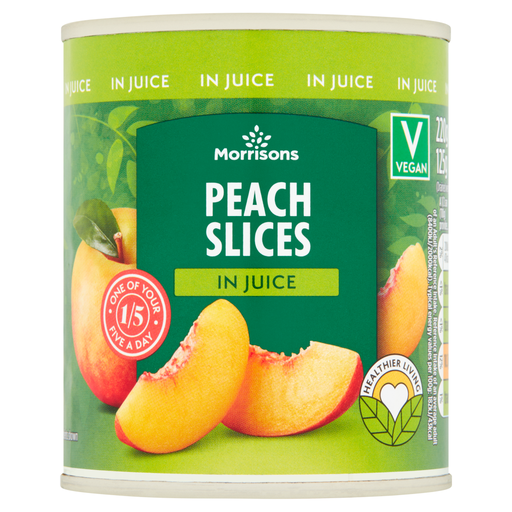 Image unavailable
Morrisons Peach Slices In Juice 220g
The 220g tin is an option when you expect to use less fruit during a short visit. Check its nutrition panel if total sugars are important to your choice.
After opening, transfer leftovers to a non-metallic container, refrigerate and use within two days. Check the tin’s drained-weight label for a precise usable-fruit comparison.
View on Joybuy
 Image unavailable
Del Monte Pineapple Slices in Juice 435g
Choose the 435g sliced-pineapple tin if that quantity fits your planned meals, rather than relying on its juice packing to indicate a particular total-sugars level.
If fruit remains after opening, transfer and refrigerate it, then use it within the stated 3–4 days. A short, lightly occupied stay may call for a smaller tin.
View on Joybuy
 Image unavailable
Del Monte Fruit Cocktail in Juice 415g
This 415g fruit cocktail suits a plan to use mixed fruit during the stay. Compare its nutrition panel with other fruit varieties rather than assuming all juice-packed tins have the same sugars value.
Transfer leftovers to a non-metallic container, refrigerate and use within the stated 3–4 days after opening. Consider whether the whole tin will be used before you leave.
View on Joybuy
 Image unavailable
Del Monte Peach Halves In Juice 415g
The 415g tin provides peach halves rather than slices, a distinction worth checking against your planned use. Read the nutrition panel when comparing it with other juice-packed fruit.
Refrigerate unused portions after opening and use within the stated 3–4 days. Match the tin size to the number of people likely to eat it during the visit.
View on Joybuy
Frequently asked questions
Does “no added sugar” mean tinned fruit is sugar-free?
No. Fruit and juice can contain sugars without added sweetening. Sainsbury’s lists 12g sugars per 100g for its Dole pineapple slices in juice, which carry no-added-sugars wording; check both the ingredients and nutrition panel.
Is fruit in juice always lower in sugar than fruit in syrup?
Do not assume a total-sugars comparison from the packing-medium wording alone. Princes lists 10.0g sugars per 100g for its pineapple chunks in juice, while Sainsbury’s lists 11.0g per 100g for its peaches in fruit juice. Because the fruits differ, compare the exact tins you are considering rather than treating either figure as a general rule for juice-packed fruit.
What should I check before leaving tins at a second home?
Check each tin’s best-before date and unopened-storage instructions, then plan how you would use it after opening. The reviewed Sainsbury’s peaches and M&S grapefruit instruct use within two days after opening, while Sainsbury’s lists five days for its Dole pineapple. Follow the particular tin’s instructions for refrigeration and transferring leftovers.
How can I compare tins of different sizes?
For similar fruit in the same type of packing liquid, compare drained net weight rather than the whole tin weight alone. GOV.UK food-labelling guidance says solid food packed in liquid must show its drained net weight. Also consider whether you can use the contents within the tin’s post-opening period.


