Solo dessert planners
If you want fruit to make one dessert feel more considered, the fruit mix, cut and packing liquid matter as much as how easily you can serve it.


Choose an individual fruit pot or a small tin if opening only what you need matters most. A larger tin gives you another way to choose a particular fruit or cut, provided you can store and use the remainder as its label directs. For a dessert that feels more considered, choose the fruit and presentation you want, then check the packing liquid and drained quantity rather than relying on a luxury description.
If you want fruit to make one dessert feel more considered, the fruit mix, cut and packing liquid matter as much as how easily you can serve it.
For a packed lunch or quick evening dessert, an individually sealed pot lets you open one unit without storing the rest of an opened tin.
If packing liquid or sugars influence your choice, compare the ingredients and nutrition panels of the exact juice and syrup variants you are considering.
| Concern | What to check | Who this matters to |
|---|---|---|
| Fruit choice and presentation | Choose a named fruit or a mixed cocktail, then check its cut and drained quantity. | If I want one dessert to feel more considered, I would choose fruit I enjoy serving rather than rely on a luxury description. About 40% of consumers put fruit choice and variety first. |
| Portion and leftovers | Compare separately sealed units with small and larger tins; check storage instructions if you will leave any fruit. | For a meal on my own, I may want to open just one pot and leave the other units sealed. Around 40% of consumers prioritise portion control and avoiding leftovers. |
| Packing liquid and sugars | Read the liquid in the ingredients list and compare sugars per 100g for the exact variants. | If I serve tinned fruit regularly, I want to know whether it is packed in juice or syrup before choosing a dessert. Roughly 20% of consumers make the liquid and sugar information their primary concern. |
Fruit in juice and fruit in light syrup are not interchangeable label descriptions. Princes lists 9.0g sugars per 100g for its fruit cocktail with juice and 15.0g per 100g for its light-syrup fruit cocktail; the comparison applies to those two products, not every tinned fruit.
That wording does not tell you whether the fruit, cut, liquid or amount will suit your dessert.
Pick the fruit you want to serve, then compare the pack format and drained quantity where shown.
The nutrition information can differ even between fruit cocktails from the same brand. Princes lists 9.0g sugars per 100g for its juice-packed version and 15.0g per 100g for its light-syrup version.
Check the ingredients and per-100g panel on the exact variant. The NHS advises choosing canned fruit in natural juice or water with no added sugar or salt.
A larger tin may leave more fruit than you want for one dessert, making its after-opening instructions part of the decision.
Choose an individual unit if you only need one now. If you choose a larger tin, plan another use and follow its own storage directions.
Fruit left unused beyond the product’s stated storage period may have to be discarded.
The stated pack weight can include packing liquid, so it may not describe the fruit you will put in the bowl.
Check drained weight where it is displayed, especially when deciding whether one pack is enough for your dessert.
These ranges provide different fruit, liquid and pack-format choices; their names alone do not establish which dessert you will prefer.
Del Monte appears in UK grocery listings with fruit cocktail and individual fruits, including a 227g fruit cocktail format.
Princes lists fruit cocktail with juice in 220g and 410g sizes, as well as a light-syrup version.
Tesco Groceries lists its own-label Pear and Peach Pieces in 4 x 120g portions alongside other tinned and pot fruit.
Sainsbury's lists a 213g own-label peach-slices-in-fruit-juice option as well as larger canned-fruit formats.
An Asda Groceries listing identifies Smartprice Peach Slices in Light Syrup.
Marks & Spencer lists tinned rhubarb chunks and grapefruit segments among its store-cupboard fruit.
These selections cover individually sealed peach pots, a smaller bottle of peaches in syrup and larger tins of fruit in juice. Choose by what you will serve now and how you will handle any remainder.
 No image available
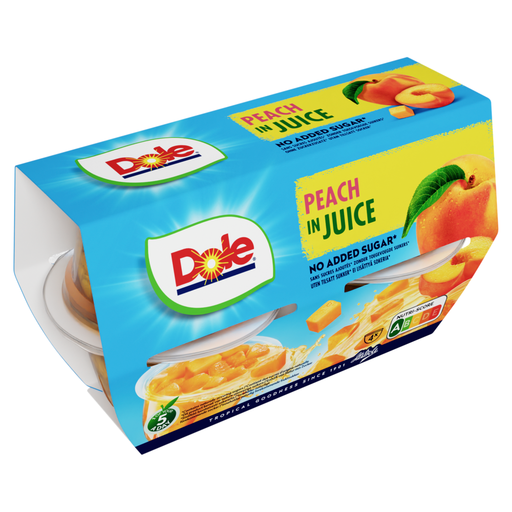
Choose this format when you want to open one peach pot for a dessert and leave the other units sealed. Each pot is labelled 113g; check the drained quantity if the amount of fruit matters to your serving.
 No image available
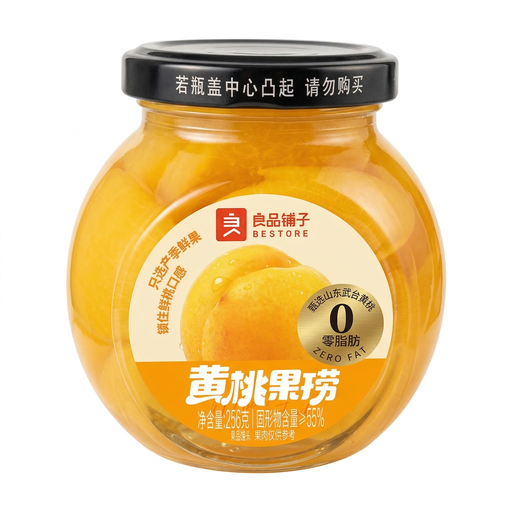
Consider this if you want yellow peach in syrup rather than fruit in juice. The bottle is labelled 256g, but that does not establish how much drained peach you will serve; check the label and follow its directions if you leave any open.
 No image available
A mixed-fruit choice if variety matters more than opening exactly one serving. This is a 415g tin, so check its drained quantity and plan how to store and use any fruit left after dessert.
 No image available
Choose peach halves when that particular fruit and cut suit the dessert you have in mind. The 415g tin may provide more than you want at once; check the drained amount and follow the pack’s directions for leftovers.
 No image available
This tin suits a dessert built around pineapple chunks if you can also use what remains. It is labelled 432g; check the drained fruit quantity for your serving and the storage directions after opening.
Choose by the dessert you want and the exact product label: juice and syrup are different packing liquids. The NHS advises choosing canned fruit in natural juice or water with no added sugar or salt. If sugars are a deciding factor, compare per-100g panels; Princes lists 9.0g for its fruit cocktail with juice and 15.0g for its light-syrup fruit cocktail.
No. The tin’s weight can include liquid, and the amount you want for a meal is a separate question. Check its drained weight; for the distinct measure of a 5 A Day portion, the NHS specifies 80g of canned fruit.
Follow the instructions for that particular product rather than applying one storage period to every tin. A Del Monte 227g fruit-cocktail listing, for example, instructs you to transfer unused contents to a covered non-metallic container, refrigerate them and use them within 3–4 days.
Read the current pack’s ingredients and allergen information for the exact fruit and liquid variant before choosing it. Check the product information again when buying, rather than assuming two products from the same range have identical recipes.