Shared-meal planners
If several people will eat the fruit at breakfast or in a dessert, a single tin may fit your first shop. Plan how you will store and use any fruit left after opening.


Choose a larger single tin if several people will share the fruit at home or you plan to use it in a recipe soon after opening. Choose a multipack of sealed fruit pots if separate lunches or snacks matter more; for either format, check the packing medium, fruit quantity and storage instructions rather than treating “family pack” as a fixed serving size.
If several people will eat the fruit at breakfast or in a dessert, a single tin may fit your first shop. Plan how you will store and use any fruit left after opening.
If people need separate unopened portions for lunches or snacks, compare multipacks such as the 4 x 113g and 4 x 120g fruit-pot formats listed by Tesco Groceries.
If avoiding added sugar is your main requirement, read the ingredients and nutrition panel instead of choosing by pack size alone. The NHS advises choosing canned fruit in natural juice or water with no added sugar or salt.
For a first food shop, start with how you will use the fruit: shared servings, separate portions or a particular packing medium. Then compare the labels within the format that fits.
| Concern | What to check | Who this matters to |
|---|---|---|
| Shared use and leftovers | Compare net and drained weights where shown, then read the opened-storage instruction. | If fruit will be shared at home, I need enough for the planned meal without leaving more than I can use as directed. About 40% of consumers put shared-use quantity and leftovers first. |
| Separate portions | Check the number of pots and grams per pot, not just the total pack weight. | For lunches eaten at different times, I would rather have sealed individual pots than open one tin for everyone. Separate portions are the primary need for about 30% of consumers. |
| Packing medium | Read the ingredients and the “of which sugars” value per 100g on the exact product. | When avoiding added sugar matters most to me, the choice between juice, water and syrup takes priority over pack format. Around 30% of consumers make that label choice their primary concern. |
The labelled weight can include packing liquid. A Sainsbury’s listing gives Del Monte Fruit Cocktail in Juice as 415g, with 250g drained weight.
Use drained weight where shown when comparing the fruit you will serve, and compare similar fruit types and packing media.
Fruit and juice contain sugars. Princes Food and Drinks lists 9.0g sugars per 100g for its Fruit Cocktail with Juice and 15.0g per 100g for its Fruit Cocktail in Light Syrup; those values apply to these two variants.
If avoiding added sugar is your aim, check the ingredients as well as the nutrition panel. The NHS advises canned fruit in natural juice or water with no added sugar or salt.
A single tin may be less convenient if only one person will eat it over several days. Marks & Spencer instructs buyers of its 540g Grapefruit Segments to transfer opened contents to a non-metallic container, refrigerate and eat them within two days.
Plan the meal before buying and follow the opened-storage directions on the exact tin you choose.
A reference point for larger fruit-in-juice tins, including a 415g Pear Halves in Juice format described by Del Monte Europe.
Princes Food and Drinks lists Fruit Cocktail with Juice in 410g and 220g sizes, giving shoppers two single-tin sizes to compare.
Tesco Groceries lists own-label 4 x 120g fruit pots alongside larger branded tins, making it useful for comparing portioned packs with shared tins.
Sainsbury’s lists own-label juice-packed 411g tins as well as branded tins and individual fruit-snack multipacks.
Asda has a tinned-fruit category for shoppers considering delivery or click and collect.
Marks & Spencer’s 540g Grapefruit Segments in grapefruit juice is an example of a larger single tin, not a multipack of snack pots.
These Joybuy selections are larger single tins for serving fruit at home, plus a six-pack of tins for cupboard stocking. Choose individual fruit pots instead if separate unopened portions are the priority.
 No image available
Consider this single tin when pineapple slices will be served at home or used in a recipe.
It is labelled 435g and packed in juice; check drained weight when comparing fruit quantities and follow its opened-storage directions.
 No image available
This single tin is an option if peach halves will be shared at home or used in a dessert.
The labelled size is 415g; compare drained weight where displayed and check the directions for storing an opened tin.
 No image available
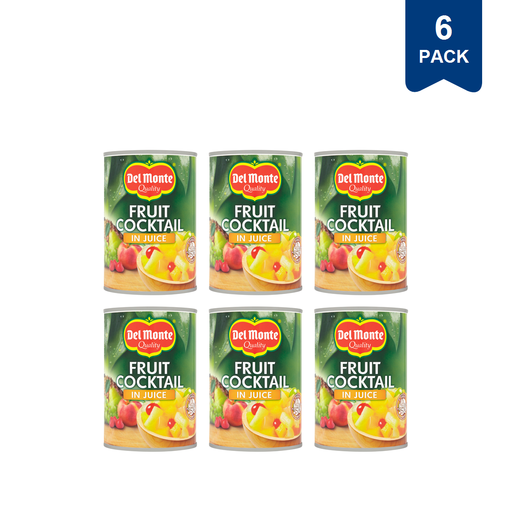
This bundle suits a first shop where several unopened tins of mixed fruit will be kept for later home use.
The title specifies six 415g tins, rather than six individual fruit pots. Confirm the bundle contents and check each opened tin’s storage directions.
 No image available
Choose a single tin like this if pineapple chunks are planned for a shared dish or home snack.
Its labelled size is 432g. Look for drained weight if you need to compare the amount of fruit, and read the opened-storage instruction.
 No image available
This single tin fits a plan to serve pear halves at home, including with a dessert or fruit salad.
It is labelled 415g and packed in juice; check drained weight for fruit-quantity comparisons and follow the exact tin’s storage directions.
Buy a single tin if you can use and store its contents as directed after opening; choose a multipack of pots if separate unopened portions are more useful. Compare grams per tin or pot and drained weight where shown.
Do not assume that across different products: read the “of which sugars” value per 100g on each label. Princes Food and Drinks lists 9.0g per 100g for its Fruit Cocktail with Juice and 15.0g per 100g for its Fruit Cocktail in Light Syrup; those figures are specific to those variants.
Follow the directions on the tin you bought. For its 540g Grapefruit Segments, Marks & Spencer instructs shoppers to transfer the contents to a non-metallic container, refrigerate and eat within two days; another product’s directions may differ.
Yes. The NHS states that 80g of fresh, canned or frozen fruit and vegetables counts as one portion, and advises choosing canned fruit in natural juice or water with no added sugar or salt.