Organic-first family shoppers
You need an organic claim on the fruit you actually buy and are willing to change fruit or pack format if a particular tin does not meet that requirement.


If organic certification is essential, check the organic claim on the exact tin rather than relying on a brand or retailer’s wider range. Otherwise, choose a fruit and tin size your household can use, then check the packing medium; an organic fruit purée is another option only if you do not need tinned fruit.
You need an organic claim on the fruit you actually buy and are willing to change fruit or pack format if a particular tin does not meet that requirement.
You want tins that suit shared breakfasts, desserts or baking. Fruit type, tin size and the amount of fruit after draining all affect what your household can use.
Organic certification is not your deciding factor, but you want to distinguish fruit in natural juice or water from fruit in syrup and check the ingredients for added sugar.
| Concern | What to check | Who this matters to |
|---|---|---|
| Organic status | Look for an organic claim on the exact product’s pack. The Department for Environment, Food & Rural Affairs sets rules for using the term on food; a retailer’s organic range does not establish the status of an individual tin. | If organic production is a household requirement, a suitable fruit and size still will not settle the choice without the pack claim. About 42% of consumers would put verified organic status first. |
| Usable quantity | Check the tin’s net weight and, where shown, drained weight. Match the size to how soon your household can use the fruit after opening. | When stocking fruit for several people, I need a tin that supplies enough fruit without leaving more opened than we can use. Around 33% of consumers would make usable quantity their primary concern. |
| Packing medium | Read the exact variant and ingredients for natural juice, water or syrup. The NHS advises choosing tinned fruit in natural juice or water with no added sugar or salt. | If I am choosing fruit without added sugar, a familiar brand name cannot tell me which liquid is in this tin. Roughly 25% of consumers would put the packing medium first. |
Juice describes the packing medium; organic describes a separately regulated production claim. One does not establish the other.
Check the exact pack for an organic claim if that matters to you, then check the liquid and ingredients separately.
The net weight includes the packing liquid, so two similarly sized tins need not provide the same amount of fruit after draining.
Use drained weight where it is displayed, and choose a size you can use according to the pack’s instructions after opening.
Brands can sell the same fruit in different packing liquids. A light-syrup variant should not be assumed to meet a preference for natural juice or water.
Read the variant name and ingredients on each tin, including when buying a multipack.
GOV.UK distinguishes best-before dates, which concern quality, from use-by dates, which concern safety. Storage directions also matter once a tin is opened.
Check dates when buying several tins and follow each pack’s instructions for opened contents.
Tesco’s tinned-and-pot-fruit range includes own-label and branded products for shoppers comparing fruit formats.
Sainsbury’s lists own-label tinned fruit in juice as well as branded fruit.
Princes offers conventional canned-fruit varieties for cupboard use.
Del Monte offers prepared-fruit variants with different packing liquids.
M&S lists tinned fruit as cupboard ingredients, including rhubarb chunks and grapefruit segments.
These tins offer pineapple, peaches, pears, mixed fruit and prunes for a family cupboard shop. Check the exact pack if organic status or a particular packing medium is essential.
 Image unavailable
Consider the pineapple slices if your household can use this 435g tin. It is labelled in juice; check the pack for an organic claim if certification is essential.
 Image unavailable
Peach halves offer a fruit format for shared desserts or other family uses in a 415g tin labelled in juice. Check the exact pack before treating it as an organic choice.
 Image unavailable
Choose the 415g pear-halves tin if pears suit your household’s plans. It is labelled in juice; use the exact pack to check any organic requirement.
 Image unavailable
This 415g fruit cocktail is an option when you want mixed fruit rather than a single variety. It is labelled in juice; check the ingredients and any organic claim on the exact pack.
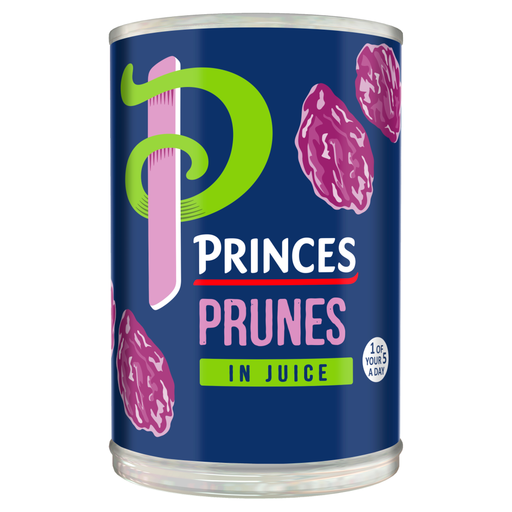 Image unavailable
The 410g prune tin is a different fruit option for the cupboard. Check its ingredients for the precise packing medium, its organic status if required, and the product information’s warning about plum stones before serving.
Check the organic claim on that product’s label or listing. For food marketed as organic in the UK, the Department for Environment, Food & Rural Affairs requires compliance with organic production and certification rules, including a minimum of 95% organic agricultural ingredients. A brand’s other organic products do not establish the status of this tin.
If avoiding added sugar is your priority, the NHS advises choosing tinned fruit in natural juice or water with no added sugar or salt. Check the exact variant and ingredients rather than assuming every fruit product from one brand uses the same packing liquid.
Yes. The NHS includes canned fruit in its 5 A Day guidance and advises choosing fruit in natural juice or water with no added sugar or salt.
Check each tin’s date and storage directions, then follow its instructions after opening. GOV.UK explains that best-before dates concern quality rather than safety; they are different from use-by dates.