Cottage hosts stocking several meals
For repeated breakfasts or desserts, a six-can pack or several standard tins lets you open fruit as meals require. Check that the fruit type suits the planned menu, rather than choosing by pack count alone.


Choose a six-can pack if several cottage meals will use the same fruit; buy individual tins if guest numbers or menus are uncertain. Portion packs make more sense when guests eat at different times and opened leftovers are a concern. Whichever format you choose, check drained weight for the amount of fruit, and read the exact ingredients and nutrition label before choosing juice or syrup.
For repeated breakfasts or desserts, a six-can pack or several standard tins lets you open fruit as meals require. Check that the fruit type suits the planned menu, rather than choosing by pack count alone.
When guests eat separately or take food on outings, individual portions may be easier to use than one opened tin. Tesco Groceries lists pear and peach pieces in a 4 × 120g pot pack.
Anyone choosing between juice and syrup, or shopping for guests who need ingredient information, should check the exact pack. The packing medium, nutrition information and after-opening instructions belong to the particular product.
Decide how the fruit will be served before choosing a pack size: repeated group meals, separate portions and varied recipes call for different formats.
| Concern | What to check | Who this matters to |
|---|---|---|
| Stock for group meals | Count the tins and check fruit type and drained weight before planning repeated servings. | If fruit is needed for several breakfasts or puddings, I want enough stock without opening every tin at once. About 33% of consumers put repeated group-meal supply first. |
| Opened leftovers | Compare portion sizes with the amount usually served at one sitting; read each product’s after-opening instructions. | When guests eat at different times, I would rather open a small portion than leave part of a larger tin in the fridge. Keeping opened leftovers down is the primary need for about 25% of consumers. |
| Packing medium and label | Read the ingredients, nutrition per 100g and allergen information on the exact product. | If juice or light syrup changes what I can serve, I need to inspect the particular tin rather than rely on its front label. Roughly 25% of consumers make that label-and-packing-medium choice their main concern. |
| Menu flexibility | Match the fruit type and form to planned dishes instead of assuming one mixed-fruit case will cover them all. | For different toppings and desserts, I may prefer to pick several individual fruit types. Variety is the leading consideration for about 17% of consumers. |
Liquid is included in the net weight. Tesco Groceries and Sainsbury’s list fruit-cocktail examples weighing 415–420g with 250g of drained fruit.
Use drained weight when planning fruit for servings or a recipe, and check the figure on the exact tin.
Princes lists 9.0g sugars per 100g for its Fruit Cocktail with Juice and 15.0g per 100g for its Fruit Cocktail in Light Syrup. That comparison applies to those products, not every fruit tin.
Compare the ingredients and nutrition panels of the particular products you are considering.
A large tin may leave fruit after a small serving. A Sainsbury’s listing for Ambassador Fruit Cocktail in Light Syrup instructs users to empty, cover and refrigerate it after opening, then use it within three days.
Check your chosen tin’s instructions and consider smaller portions if guests are unlikely to finish an opened tin.
Partly used fruit takes fridge space and may be wasted if it is not used within the product’s stated period.
Its listed tinned-fruit range includes fruit cocktail and individual fruit types. Joybuy lists a six-pack of 415g Fruit Cocktail in Juice tins.
Princes lists fruit cocktail in juice and in light syrup; its juice-packed version is listed in 410g and 220g sizes.
Tesco Groceries lists tinned fruit and portion formats, including Tesco Pear and Peach Pieces in a 4 × 120g pack.
Sainsbury’s lists own-label tinned fruit alongside branded options, including standard tins packed in juice.
M&S lists tinned fruit including 540g grapefruit segments in grapefruit juice.
These selections cover six-can packs for repeat use and one individual tin for a more flexible shop. They include peaches, pineapple, mango and fruit cocktail, so choose according to the meals you plan to make.
 No image available
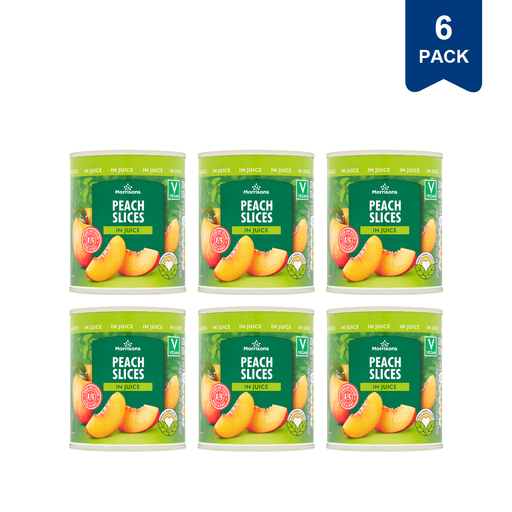
Consider this pack when you want to open smaller tins separately for peach servings. It contains six 220g tins of peach slices in juice; it does not provide a mix of fruit types.
 No image available
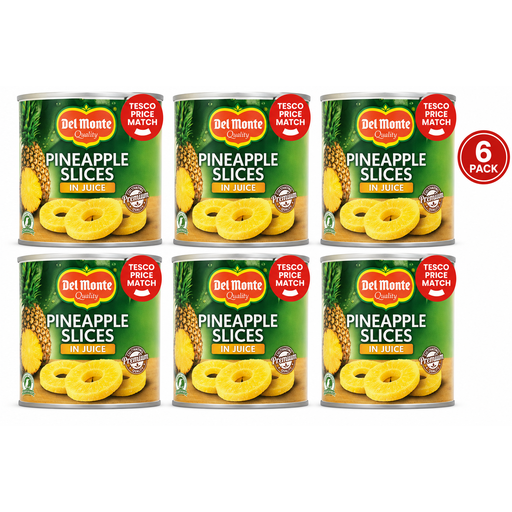
For several meals that call for pineapple, this pack supplies six separate 435g tins of slices in juice. All six contain the same fruit, so choose individual tins if the menu calls for variety.
 No image available
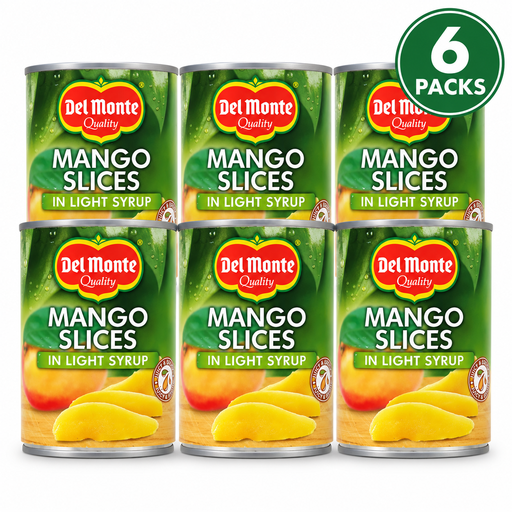
Choose this format when several planned servings use mango in light syrup. The pack contains six 425g tins; check the exact label if the packing medium or nutrition information affects your choice.
 No image available
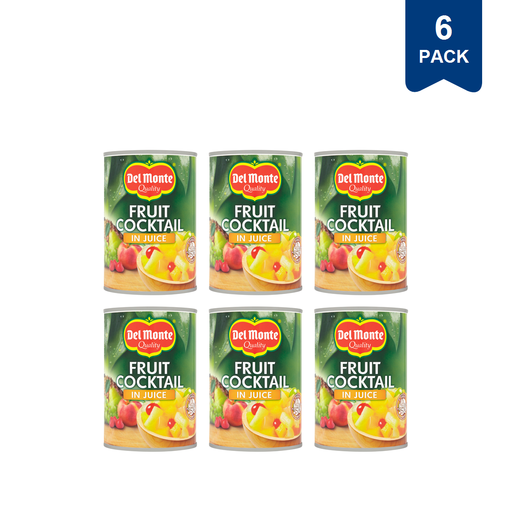
This pack suits repeated uses of fruit cocktail rather than a menu needing different single-fruit tins. It contains six 415g tins in juice; check the drained weight on the product label when planning fruit quantities.
 No image available
A single tin lets you add pineapple to a mixed-fruit shop without committing to six tins of it. This is one 435g tin of slices in juice; repeated meals would require additional tins.
Buy a six-pack when several planned meals will use the same fruit and you have cupboard space. Individual tins let you vary fruit types or adjust the quantity when guest numbers are uncertain.
Not on its own: net weight includes the packing liquid. Tesco Groceries and Sainsbury’s list fruit-cocktail examples with 250g drained weight in 415–420g tins, so use the exact product’s drained weight when planning servings.
Check the recipe and the exact labels before swapping them. Princes lists 9.0g sugars per 100g for its Fruit Cocktail with Juice and 15.0g per 100g for its Fruit Cocktail in Light Syrup; those figures do not describe other brands or fruit mixes.
Follow that tin’s after-opening instructions. For example, Sainsbury’s listing for Ambassador Fruit Cocktail in Light Syrup says to empty, cover and refrigerate the contents, then use them within three days; do not apply that period to every product.
Keep the original packaging available so guests can inspect ingredients and allergen information. If supplying food as a food business, GOV.UK guidance says retail and catering food business operators must provide allergen information; whether a particular cottage arrangement falls into that category depends on how food is supplied.