Hosts making a large dessert
If you are assembling a fruit salad, trifle or topping for several guests, the drained weight helps you work out how many tins the recipe needs.


For a birthday-party fruit bowl, trifle or topping, plan quantities using the drained weight rather than the total tin weight. Then choose a fruit and packing liquid that suit the dessert and guests; individual portions can simplify serving, while tins let you portion the fruit yourself.
If you are assembling a fruit salad, trifle or topping for several guests, the drained weight helps you work out how many tins the recipe needs.
If the dessert calls for fruit in juice or light syrup, check the exact tin’s packing liquid and ingredients before choosing a fruit.
Individual fruit pots can make a self-serve table easier to organise when guests need separate portions rather than a shared bowl.
Decide how much prepared fruit the dessert needs, then check its fruit type, packing liquid and serving format. For quantity planning, compare drained weights on the same basis: Tesco Groceries lists 250g of drained fruit in its 410g peach-slices-in-juice tin.
| Concern | What to check | Who this matters to |
|---|---|---|
| Enough usable fruit | Check the drained weight on each tin and the quantity required by the recipe. | For a fruit bowl serving several guests, I need to know how much fruit remains after draining, not just what the tin weighs; about 36% of consumers put usable fruit quantity first. |
| Recipe and packing liquid | Confirm whether the exact fruit is in juice or light syrup, and read its ingredients. | If my trifle calls for fruit in juice, a syrup-packed tin changes what goes into it. Matching the recipe and guests’ preferences is the primary need for about 21% of consumers. |
| Fruit variety | Check which fruits a mixed tin contains and whether their prepared form suits the dessert. | When I am assembling a mixed fruit salad, a fruit cocktail may save combining separate tins but gives me less control over the mix; variety comes first for about 29% of consumers. |
| Separate portions | Compare the number and size of pots with the portions you intend to serve. | For a self-serve table, I may prefer ready-separated fruit to portioning from a shared bowl. About 14% of consumers prioritise that serving convenience. |
The stated tin weight includes packing liquid. Tesco Groceries, for example, lists 250g drained weight for its 410g peach tin.
Use the drained weight of the exact product to work out how many tins meet the recipe quantity.
Otherwise, you may open an extra tin to make up the fruit needed.
The packing liquid and ingredients differ between products, so a substitution may not suit the planned dessert or a guest’s preference.
Check the recipe first, then read the ingredients and nutrition panel on the tin you intend to serve.
After-opening instructions are product-specific. Tesco Groceries instructs buyers of its peach slices in juice to transfer unused fruit to a covered, non-metallic container, refrigerate it and consume it within two days.
Open tins as needed and follow the storage and use instructions on each product’s label.
Unserved fruit needs suitable storage and may go unused if the label’s use period passes.
Tesco’s own-label range includes standard peach tins and smaller fruit formats for different serving plans.
Sainsbury’s lists own-label peaches in light syrup and fruit juice alongside other tinned fruits.
Del Monte offers prepared fruit in juice, including peach slices used in its own recipe material.
Princes lists peach slices and fruit cocktail with juice in different tin sizes.
These Joybuy selections cover pineapple, mango and peach for party desserts, in single tins and six-packs. Choose the fruit and packing liquid for your recipe, then check each pack’s drained weight when planning portions.
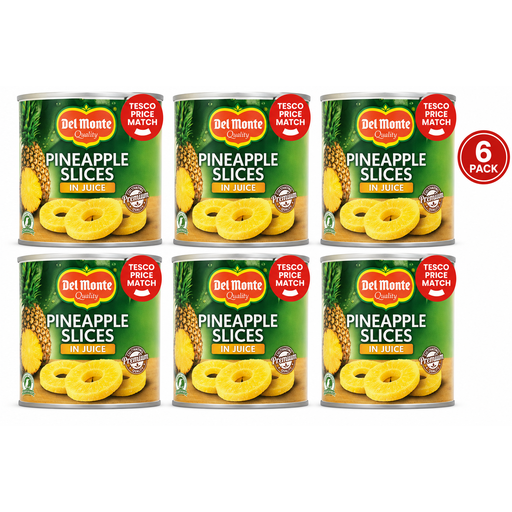 Image unavailable
Consider this six-pack if the dessert calls for pineapple slices in juice. Check the drained weight on the tins to plan the quantity of fruit.
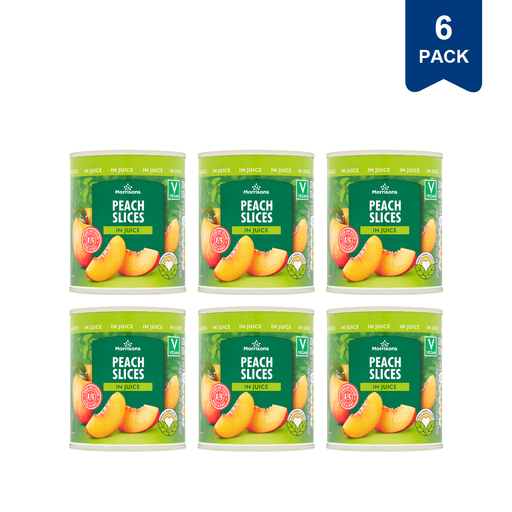 Image unavailable
The six smaller tins suit a plan that calls for peach slices in juice opened in stages. Use the drained weight on each tin, rather than its 220g total weight, to plan portions.
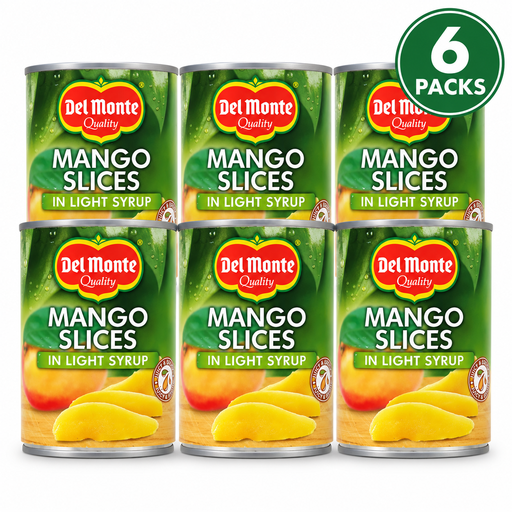 Image unavailable
Choose this six-pack when sliced mango in light syrup fits the dessert. Confirm how much drained mango the recipe needs before deciding how many tins to open.
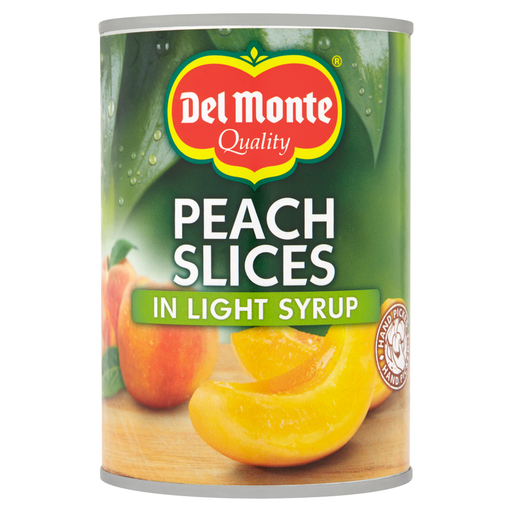 Image unavailable
This single tin is an option for a topping or dessert that calls for peach slices in light syrup. Check its drained weight against the amount your recipe requires.
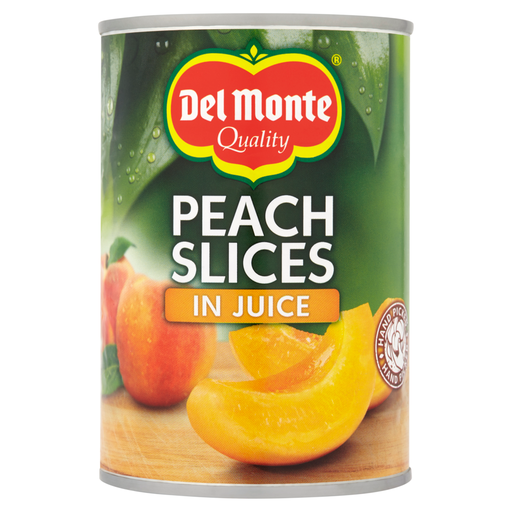 Image unavailable
This single tin is listed as peaches in juice. Check the pack before choosing it for a topping that specifically needs slices, as the product information also describes peach halves.
Start with the recipe’s required quantity of prepared fruit and divide it by the drained weight on the exact tin. Total tin weight includes liquid: Tesco Groceries states 250g drained weight for its 410g peach slices in juice.
Choose the packing liquid that suits the recipe and your guests’ preferences, then check the exact ingredients and nutrition panel. Products within either category need not have identical ingredients.
Follow that product’s label for transferring, refrigerating and using the fruit. For example, Tesco Groceries instructs buyers of its peach slices in juice to transfer unused contents to a covered, non-metallic container, refrigerate them and consume them within two days.
A best-before date concerns quality. GOV.UK says food is usually safe after that date but may not be of the same quality; correct storage still matters, and this guidance does not replace a use-by date or the product’s storage instructions.
Read the ingredients and allergen information on the exact tin, as well as on any toppings or other recipe additions. Do not rely on an older listing in place of the pack being served.