Older adults choosing everyday fruit
You want fruit that is ready to serve and easy to keep in the cupboard. NHS guidance says tinned fruit can count towards 5 A Day and favours varieties in natural juice or water without added sugar or salt.


For an everyday fruit serving, NHS guidance favours tinned fruit in natural juice or water with no added sugar or salt. Choose a tin whose drained fruit and portions the household can use; if appetite is poor or a modified-consistency diet has been prescribed, fruit should fit the person’s wider nutrition or swallowing plan rather than stand in for a meal.
You want fruit that is ready to serve and easy to keep in the cupboard. NHS guidance says tinned fruit can count towards 5 A Day and favours varieties in natural juice or water without added sugar or salt.
You need to judge how much usable fruit a tin contains, whether one person can finish it, and what to do with any remainder after opening.
Fruit may be convenient alongside other foods, but a small appetite or prescribed food texture changes the decision. Cornwall and Isles of Scilly Integrated Care Board’s food-first advice focuses on overall energy, protein and nutrient intake rather than fruit alone.
Start with the packing liquid and the amount of fruit you will use, then consider whether appetite or eating difficulties call for individual guidance.
| Concern | What to check | Who this matters to |
|---|---|---|
| Everyday fruit choice | Look for natural juice or water with no added sugar or salt. The NHS uses 80g of tinned fruit as a 5 A Day portion. | If fruit is part of my usual meals, I want to know what it is packed in rather than choose by the picture on the tin. About 29% of consumers put that everyday fruit choice first. |
| Usable fruit and leftovers | Check the drained weight and pack size, then read the instructions for storing fruit after opening. | When I am serving one person, fruit left in a large tin may go unused. For about 29% of consumers, manageable portions and avoiding that waste are the primary concern. |
| Poor appetite | Consider the fruit within the person’s wider food plan, including other foods at meals; seek appropriate professional advice for persistent poor appetite or unplanned weight loss. | If someone is eating very little, I need more than a convenient fruit serving to plan their meals. Supporting overall intake comes first for about 21% of consumers. |
| Ease of eating | Check the size of the pieces and any stone warning. Follow prescribed modified-consistency instructions before serving. | If chewing or swallowing is difficult, a soft-looking slice is not enough to establish that it is suitable. About 21% of consumers primarily need a manageable portion or the prescribed food texture. |
The weight on the front includes the packing liquid, so it does not tell you how much fruit will be served. A larger tin can also leave more fruit to store after opening.
Compare drained weights for similar fruit and choose a size that fits the household’s portions and the label’s storage instructions.
Fruit contributes to fruit intake, but the checked peach products are not substantial protein foods. Food-first advice for a small appetite considers energy, protein and overall nutrients together.
Serve fruit as part of a wider meal or snack plan, and seek appropriate professional advice if poor appetite persists or weight is falling.
Ordinary tinned fruit still contains pieces; the checked Asda peach slices also carry a warning that stones may remain. A prescribed modified consistency cannot be judged from how soft a product looks.
Check the product warning and follow the person’s speech and language therapist or dietitian instructions before serving it.
Ingredients, nutrition information and storage directions can change. The tin being served is the one that matters.
Check its label, date mark and post-opening instructions when you buy and use it.
Del Monte has peach variants in juice and light syrup in UK supermarket listings.
Princes lists Peach Slices with Juice in 410g and 220g formats, alongside other tinned fruits.
Tesco lists own-label and branded tinned fruit, as well as fruit pots and syrup-packed alternatives.
Sainsbury's lists own-label peaches, apricots, pears, mandarins and prunes in its tinned-fruit range.
Asda lists own-label Peach Slices in Fruit Juice in a 411g tin.
M&S lists tinned fruits including rhubarb chunks and grapefruit segments.
These peach and pineapple tins in juice offer different fruits, cuts and pack sizes to consider when planning portions for an older person.
 No image available
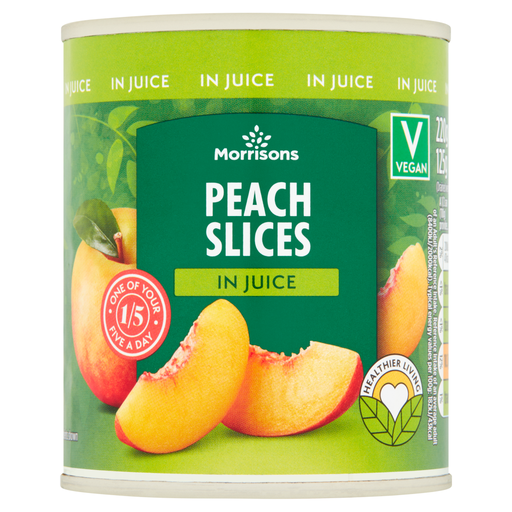
The 220g tin is a smaller-pack option when one person is eating the fruit. Check how much fruit is available after draining and follow the tin’s instructions for any leftovers.
 No image available
Pineapple chunks offer a different fruit and cut from the peach options. If sharing this 432g tin across servings, check the drained amount and whether the pieces suit the person eating them.
 No image available
This 435g tin contains pineapple slices rather than chunks. Consider how the slices will be portioned, and use the label’s directions for storing fruit left after opening.
 No image available
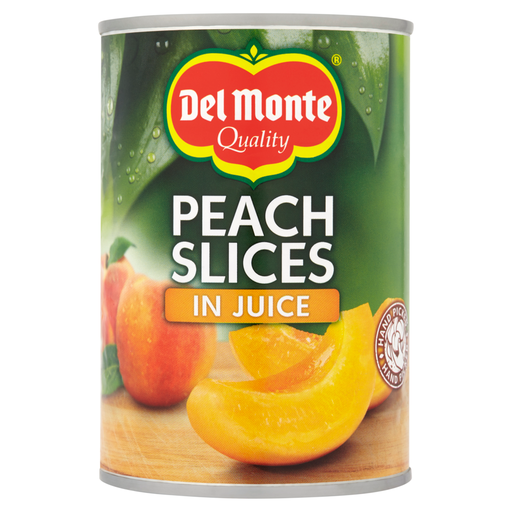
For households planning several peach servings, Tesco lists 250g drained weight for this 415g product. Use that fruit quantity, rather than the weight of the whole tin, when working out portions.
 No image available
Choose peach halves if that cut fits the portions you intend to prepare. The 415g tin’s halves should not be assumed suitable for someone following prescribed modified-consistency instructions.
Yes. The NHS says 80g of canned fruit counts as one portion and advises choosing fruit in natural juice or water with no added sugar or salt.
For routine fruit servings, NHS guidance favours natural juice or water without added sugar or salt. Where a person has a separate nutrition plan for poor appetite or another condition, follow the advice given for that plan rather than using the packing liquid as the only deciding factor.
Not on its own. Cornwall and Isles of Scilly Integrated Care Board’s food-first advice for a small appetite addresses overall energy, protein and nutrients; fruit can be one part of the person’s meals or snacks.
Follow that product’s storage instructions. The checked Asda peach label says to transfer unused fruit to a suitable non-metallic container, cover and refrigerate it, then use it within four days; other products can give different directions.
Not automatically. If a speech and language therapist has prescribed a modified food consistency, follow those instructions before serving ordinary fruit slices, halves or chunks.