Hosts serving one dessert per guest
If every guest needs a separate fruit serving beside cake or on an afternoon-tea stand, check the size and count of individual pots before choosing a multipack. They avoid dividing an opened tin during service.


Choose individual fruit pots if each afternoon-tea guest needs a separate serving with little preparation. A small tin can cover a few plated desserts, while a larger tin suits a shared dish or portions you plan to divide yourself. For tins, use drained weight to plan the fruit you can serve, and check whether the packing liquid suits the dessert.
If every guest needs a separate fruit serving beside cake or on an afternoon-tea stand, check the size and count of individual pots before choosing a multipack. They avoid dividing an opened tin during service.
For a garnish, a small fruit cup or a couple of plated desserts, a small tin may provide enough fruit without opening a larger one. It still needs a serving dish and a plan for anything left over.
For a trifle, fruit salad or sponge topping, choose the fruit and packing liquid that fit the recipe. A tin’s drained weight is more useful than its total weight when planning how much fruit goes into the dish.
Choose when: each guest needs a separate, ready-portioned serving.
Trade-off: a fixed pot size gives you less flexibility when assembling a shared dessert.
Choose when: you need fruit for one or two plated desserts rather than a pot for every guest.
Trade-off: the fruit still needs to be drained or divided, and the tin is not a sealed guest portion.
Choose when: you are preparing a shared fruit dish or dividing fruit among several desserts.
Trade-off: its total weight includes liquid, and any unused fruit needs storing as the label directs.
| Concern | What to check | Who this matters to |
|---|---|---|
| Portions and leftovers | Compare the number and size of pots with your guest count; for tins, check drained weight where stated. | If I want to set out a separate fruit serving for each guest, I need enough portions without opening more fruit than I can use. About 33% of consumers put portion control and avoiding leftovers first. |
| Packing liquid | Check whether the fruit is in juice or syrup, then read the ingredients and sugars per 100g. | When fruit accompanies cake or cream, I want to decide how its packing liquid fits the dessert. For about 27% of consumers, that choice is the main concern. |
| Fruit and presentation | Check whether the tin contains a single fruit or a cocktail, and whether the pieces suit your serving dishes. | For plated desserts, I may need recognisable pieces or a particular mix across the servings. Fruit variety and presentation come first for about 20% of consumers. |
| Preparation and usable fruit | Compare drained weights where available and read the instructions for storing opened fruit. | If I am assembling a shared dessert before guests arrive, I want a workable amount of fruit without unnecessary serving steps. Roughly 20% of consumers prioritise preparation and usable quantity. |
The liquid counts towards total weight. Sainsbury’s lists Del Monte Fruit Cocktail in Juice as 415g, but its drained weight is 250g.
Where a drained weight is given, use it to work out how much fruit you can divide between dishes.
Products containing the same fruit can have different packing liquids and ingredients, which may change how they fit your dessert.
Check the current ingredient list and sugars per 100g, particularly if the fruit will be served with other sweet components.
An opened tin may leave more fruit than the party needs, and storage instructions differ by product.
Consider a smaller format for a few guests. If fruit remains, follow its label for transferring, refrigerating and using the contents.
Fruit left beyond the product’s stated storage period may have to be discarded.
The Sainsbury’s listing for Del Monte Fruit Cocktail in Juice describes variable fruit proportions and juice that can vary by season.
If a particular fruit or a consistent appearance matters, inspect the current ingredients or choose a named single-fruit product.
Its listed tinned-fruit options include fruit cocktail and single-fruit products for desserts divided between guests.
Tesco lists 220g Princes fruit cocktail and peach-slice tins in juice, a format to consider for a few plated servings.
Tesco’s own-label listings include smaller formats, standard tins and multipacks relevant to different serving plans.
Its own-label tinned-fruit listings include peaches, mandarins, apricots and pears in fruit juice, alongside smaller peach-slice tins.
Its Foodhall catalogue lists grapefruit segments in juice and rhubarb chunks in light syrup for hosts choosing fruit for a shared dessert.
These selections include a multipack of separate peach pots and tins to divide among plated servings or use in a shared afternoon-tea dessert.
 No image available
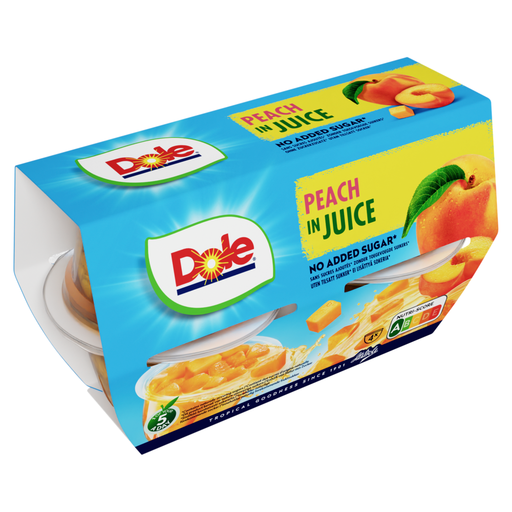
Consider this multipack when you want a separate peach pot for each guest. It contains four 113g pots; check the count against your guest list and the current ingredients against guests’ requirements.
 No image available
Consider this tin for fruit divided between dessert dishes or added to a shared recipe. Sainsbury’s lists a 250g drained weight for this 415g fruit cocktail; it is not a separate sealed portion for each guest. Check the current ingredients if the precise fruit mix matters.
 No image available
Choose pineapple slices if you intend to arrange fruit on plates or use it in a shared dish. This is one 435g tin packed in juice, so divide it yourself and check the label’s drained weight when planning servings.
 No image available
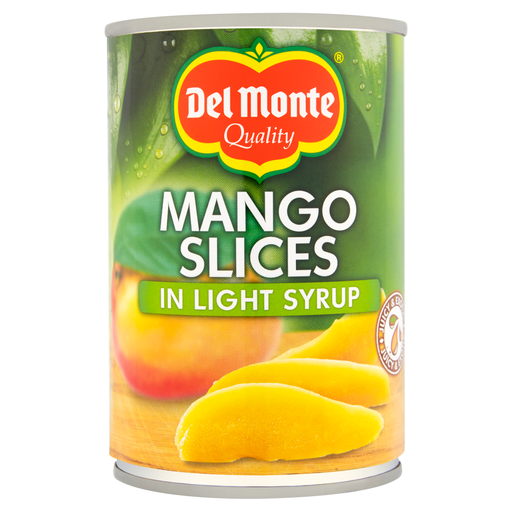
Consider these mango slices when light syrup fits the dessert you are making. The 425g tin needs dividing for individual plates; read the ingredients and drained weight before settling on portions.
 No image available
Consider peach halves when you want to arrange a named fruit on plated desserts. This 415g tin is packed in juice rather than supplied as individual pots; check its drained weight and decide how you will divide the halves.
Use the drained weight where the tin states one, then divide that fruit according to whether it is a garnish, a small fruit cup or the main part of the dessert. For example, Sainsbury’s lists Del Monte Fruit Cocktail in Juice at 415g total weight and 250g drained weight.
Choose according to the dessert and the current product label, rather than assuming one packing liquid always suits afternoon tea. Compare the ingredients and sugars per 100g when deciding how the fruit will work alongside cake, cream or other components.
Follow that product’s label for transferring, refrigerating and using the remaining fruit. For example, M&S instructs shoppers to transfer its grapefruit segments to a non-metallic container, refrigerate them and eat them within two days; instructions can differ for another tin.
GOV.UK explains that a best-before date concerns food quality, whereas a use-by date concerns safety. Check which date appears on the product and follow its storage instructions; do not treat the two labels as interchangeable.
Read the current pack’s ingredient information rather than relying on the fruit named on the front. A fruit cocktail may include several fruits and other ingredients, while its proportions can vary; choose a product whose current label fits your guests’ stated requirements.