Compare the salt declaration per 100g on the exact tin before deciding whether it meets your street-party needs: fruit packed in juice is not automatically a reduced-salt choice. Then choose juice or syrup for the serving you have planned, and check drained weight and fruit format to work out how much you can serve.
Who is choosing?
Salt-label-first party hosts
If a guest has a particular salt preference, compare the declaration on each exact variant rather than judging it by its brand or packing medium. GOV.UK states that prepacked nutrition information is expressed per 100g/ml.
Buffet planners choosing a packing medium
If the fruit will go into shared bowls or desserts, decide whether fruit in juice or syrup suits the dish. Tesco Groceries and Sainsbury's list tinned fruit in juice as well as syrup alternatives; the packing medium does not establish the salt value.
Organisers serving a group
If several guests will share the fruit, compare drained weight and piece format as well as tin size. For individual portions, Tesco Groceries also lists multipack fruit pots alongside tins.
What matters when buying?
Start with the exact tin's salt declaration. GOV.UK says prepacked nutrition information is expressed per 100g/ml; the other checks help match the fruit to how it will be served.
| Concern | What to check | Who this matters to |
|---|
| Salt suitability |
Compare salt per 100g on the exact variants. Use a traffic-light salt colour as a shelf cue where one is shown, then check the declaration. |
If a guest's salt preference comes first, I need the figure for the tin I will actually serve. About 33% of consumers put confirming that salt value first. |
| Juice or syrup |
Read the packing-medium description and ingredients; compare the nutrition declarations of the alternatives. |
For a shared dessert, I want the fruit and packing medium to suit the dish without mistaking that choice for a salt claim. Choosing the serving style is the main concern for about 27% of consumers. |
| Usable fruit |
Check drained weight and whether the fruit comes as slices, halves, chunks or segments. |
When I am filling a bowl for several guests, I need enough fruit in a format I can serve. Roughly 20% of consumers put usable quantity and format first. |
| Serving format |
Choose between tins for sharing and portion packs for individual servings; check how many packs the gathering needs. |
If guests will take their own portions, I would rather plan around individual packs than open a shared bowl. Ease of serving comes first for about 20% of consumers. |
Buying pitfalls
-
Assuming “in juice” means reduced salt
Juice describes the packing medium, not the salt declaration. A tin in juice could still be the wrong choice for a specific salt preference.
Compare salt per 100g on the exact tins before buying several for the party.
-
Planning servings from total tin weight
Total weight includes the liquid, so it does not tell you how much fruit will go into a bowl.
Use drained weight, where stated, and check whether the pieces suit your serving plan.
-
Using a category listing as a nutrition label
A fruit category can contain different varieties and packing media; membership of that category does not establish an individual tin's salt value.
Check the current label or product details for the exact variant you intend to buy.
Brands and retailers to consider
Del Monte
Del Monte appears among tinned-fruit choices in UK supermarket listings, including fruit packed in juice and syrup.
- Its listed fruit types offer different options for a shared serving.
- Check the salt declaration on the particular variant; the brand name does not establish it.
Princes
Princes is represented by tinned pineapple, peaches and pears in the supplied supermarket listings.
- Sainsbury's identifies a Princes pineapple-slices product packed in pineapple juice.
- Check each variant's salt declaration separately, including when switching between juice and syrup.
Tesco
Tesco Groceries groups tins and fruit pots in its tinned-and-pot-fruit range.
- The range is relevant when choosing between shared tins and individual portions.
- Use the exact product label, not the category heading, for a salt comparison.
Sainsbury's
Sainsbury's lists tinned fruit in juice alongside other fruit choices.
- Its listings let shoppers identify fruit and packing medium for a planned dish.
- Neither fruit type nor packing medium establishes a particular product's salt value.
Asda
Asda Groceries has a tinned-fruit listing for pineapple in coconut water.
- This offers another packing-medium description to consider for a party dish.
- Check the product's own nutrition declaration before making a salt-focused choice.
M&S
Marks & Spencer describes grapefruit segments and canned rhubarb in its tinned-fruit range.
- Those fruit types may suit different planned desserts or bowls.
- Assess salt on the exact product label rather than relying on its place in the range.
Tinned fruit on Joybuy
These tins cover pineapple and pears in juice, plus pears in syrup. Choose the fruit and packing medium for your serving plan, then check the current tin's salt declaration before treating any option as suitable for a reduced-salt priority.
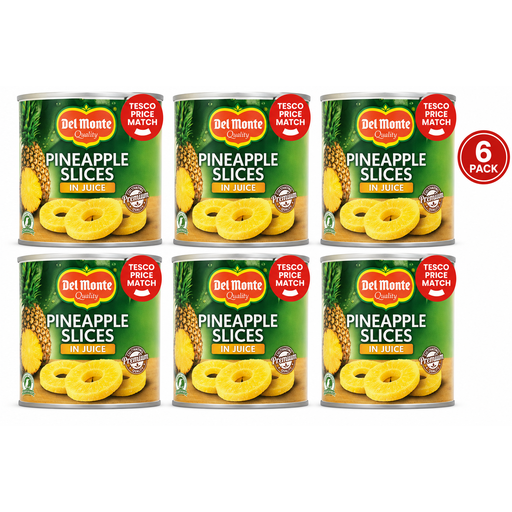 Image unavailable
Del Monte Pineapple Slices in Juice, 435g × 6
Consider this bundle if several tins of pineapple slices in juice fit your shared-serving plan.
It contains six 435g tins. Check salt per 100g and drained weight on the exact pack before deciding how many servings it provides.
View on Joybuy
 Image unavailable
Del Monte Pineapple Slices in Juice, 435g
Consider a single tin if pineapple slices in juice suit the dish but a six-pack does not suit the gathering.
The tin is 435g. Compare its current salt declaration per 100g and drained weight with other tins under consideration.
View on Joybuy
 Image unavailable
Del Monte Pear Halves in Juice, 415g
Choose pear halves in juice if that fruit and format suit your planned bowl or dessert.
The tin is 415g. Check its salt per 100g and drained weight before planning quantities for guests.
View on Joybuy
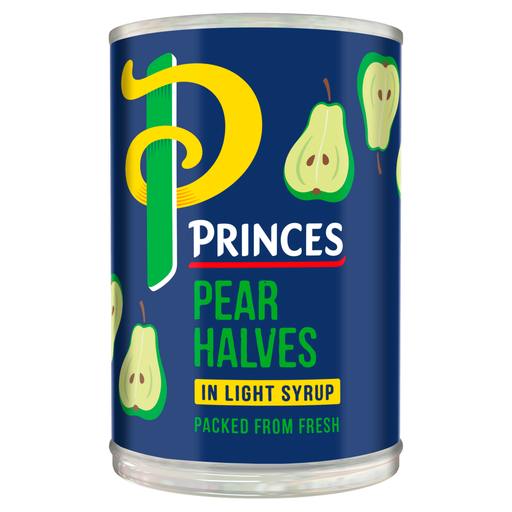 Image unavailable
Princes Pear Halves in Syrup, 410g
Consider these pear halves when syrup suits the dessert you intend to serve; syrup alone says nothing about salt suitability.
The tin is 410g. Compare its salt declaration per 100g and check drained weight before planning portions.
View on Joybuy
 Image unavailable
Princes Pineapple Chunks with Juice, 432g
Consider chunks rather than slices if that piece format suits your planned fruit bowl.
This is a 432g tin with juice. Check salt per 100g on the exact tin and confirm drained weight when working out how much fruit to serve.
View on Joybuy
Questions about choosing tinned fruit
Does fruit in juice mean the tin is reduced salt?
No. “In juice” names the packing medium, not a reduced-salt result. Compare the salt declaration per 100g on the exact tin before choosing it for a salt-focused street-party shop.
How can I compare salt when tins have different sizes?
Compare their salt declarations on the same per-100g basis. GOV.UK states that prepacked nutrition information is expressed per 100g/ml; check drained weight separately to plan how much fruit you can serve.
Is nutrition information required on prepacked tinned fruit?
GOV.UK states that nutrition information must be declared on prepacked food. For your choice, use the declaration for the exact tinned-fruit variant rather than a general category description.
Should I choose fruit in syrup for a party dessert?
Choose syrup-packed fruit if that is the serving style your dessert calls for; fruit in juice is another option. Neither packing medium establishes salt suitability, so check the exact label before buying.


