Salt-conscious meal planners
Anyone choosing fruit for a menu where its salt contribution matters needs the figure for the product and portion being served, rather than a general cue on the front of the pack.


For meals-on-wheels shopping, compare salt per 100g on the exact fruit product, then check the amount in the portion you intend to serve; fruit packed in juice is not automatically lower in salt. Sugars, usable fruit quantity and instructions for storing leftovers also matter when choosing a pack for the planned meals.
Anyone choosing fruit for a menu where its salt contribution matters needs the figure for the product and portion being served, rather than a general cue on the front of the pack.
For a regularly served dessert or snack, the choice between juice and syrup is worth considering alongside the declared sugars. Fruit in juice still contains sugars.
When a tin will provide only one or two servings at a time, drained weight and the instructions for storing opened fruit affect whether the rest can be used as planned.
Start with comparable salt figures, then check whether the packing medium and usable quantity fit the meals you are planning.
| Concern | What to check | Who this matters to |
|---|---|---|
| Salt contribution | Compare salt per 100g across products, then use the stated serving size to assess the portion you will serve. Recheck the current tin label. | If keeping salt down is my priority, I need to know what the fruit portion contributes rather than relying on the words ‘in juice’. About 45% of consumers put the fruit’s salt contribution first. |
| Packing medium and sugars | Check whether the fruit is in juice or syrup and compare declared sugars for the intended serving. | When fruit is a regular dessert, I want to choose its packing medium with the rest of the menu in mind. For about 33% of consumers, that sugar and packing-medium choice is the primary concern. |
| Portions and leftovers | Look for drained weight and serving count, then follow the opened-pack storage instructions on the label. | If I serve only a little fruit at a time, I need a plan for what remains after opening. Managing portions and leftovers comes first for about 22% of consumers. |
Juice describes the packing medium, not the tin’s salt declaration. Tesco’s Peach Slices in Juice 410G listing states 0.03g salt per 100g, while Sainsbury’s Peach Slices in Fruit Juice 411g listing states less than 0.01g per 100g.
Compare the salt lines on the exact products, using both the per-100g figure and the portion you intend to serve.
Fruit in juice is not sugar-free: the Tesco peach listing gives 19.9g sugars per half-can, and the Sainsbury’s peach listing gives 22.6g per half-can.
Compare sugars using the stated serving sizes when deciding whether juice- or syrup-packed fruit fits the menu.
The Tesco and Sainsbury’s peach listings each describe two servings and instruct users to transfer leftovers to a non-metallic container, refrigerate them and use them within 2 days.
Match the usable quantity to the meals planned, and follow the instructions on the tin you open.
Fruit left beyond its stated opened-pack storage period may go unused.
A product’s current packaging is the relevant place to confirm its nutrition and storage instructions when it arrives.
Check salt, sugars, ingredients and opened-pack directions on the delivered product before adding it to the menu.
These examples help frame checks on specific products; a figure for one fruit tin does not describe every product from its brand.
Own-label peach slices in juice with declared pack, serving and storage details.
Own-label peach slices in fruit juice with figures stated for two servings.
Peach slices sold in juice as well as other packing formats.
Peach products appear in both juice and syrup formats in Tesco’s tinned-fruit range.
A tinned-fruit range that includes grapefruit segments in juice.
These selections include tinned fruit in juice or syrup, plus portioned pots and a bottle-format peach product. For a specifically tinned-fruit menu, check the format as well as the current nutrition label.
 No image available
This pineapple-in-juice tin is an option when the packing medium matters alongside salt. Check the current label for salt per intended serving and for instructions on using any fruit left after opening.
 No image available
Choose this format to compare pear halves in juice with other fruit options. Before planning portions, check the tin for drained weight, serving size and salt in the amount you expect to serve.
 No image available
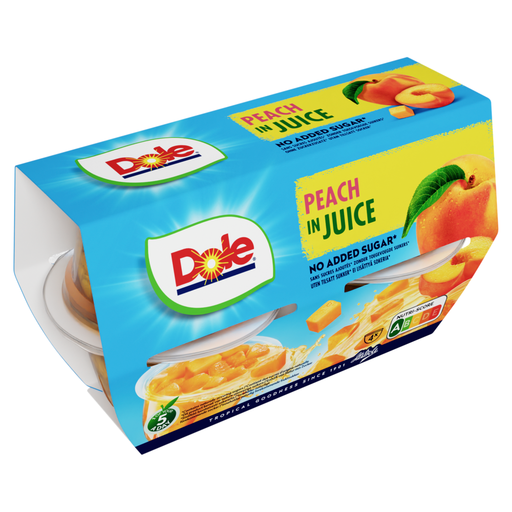
Four separate 113g pots offer a portioned alternative when opening a larger tin would leave unused fruit. These are pots, not tins; check the label for salt per pot and any instructions that apply after opening one.
 No image available
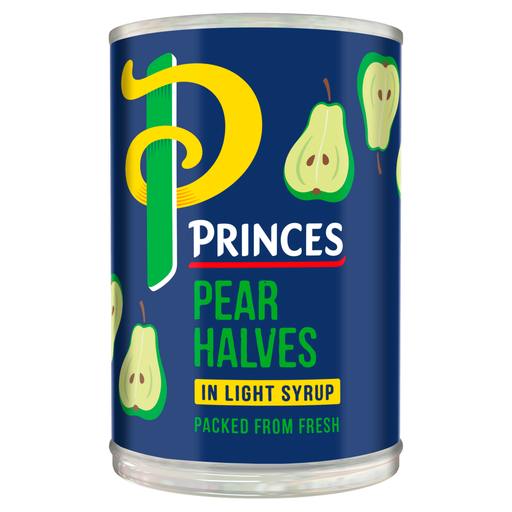
This syrup-packed pear tin is relevant if salt is the first comparison, but syrup should not stand in for a sugar check. Confirm salt and sugars for the serving you plan, along with the usable quantity.
 No image available
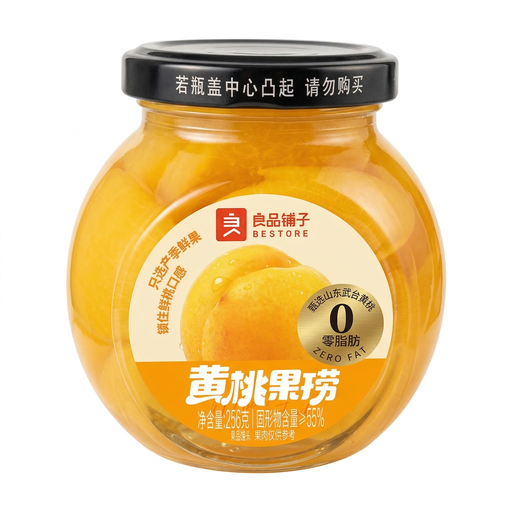
This bottle-format peach product is a preserved-fruit alternative rather than a conventional tin. If that format suits the menu, check its serving information, salt and sugars, and opened-pack instructions on the current label.
Not necessarily: ‘in juice’ identifies the packing medium, not a salt level. Tesco Groceries lists 0.03g salt per 100g for its Peach Slices in Juice 410G, while Sainsbury’s lists less than 0.01g per 100g for its Peach Slices in Fruit Juice 411g; compare the exact tins you are considering.
Use salt per 100g to compare products on the same basis, then check how much the portion you will actually serve contains. The NHS states that adults should have no more than 6g of salt a day, so the fruit portion is one part of the overall menu.
Yes. Fruit in juice is not sugar-free: Tesco Groceries lists 19.9g sugars per half-can for its peach slices in juice, and Sainsbury’s lists 22.6g per half-can for its peach slices in fruit juice. Use the serving declaration when comparing them with other options.
Follow that tin’s storage instructions. The researched Tesco and Sainsbury’s own-label peach products instruct users to transfer leftovers to a non-metallic container, refrigerate them and use them within 2 days; another product may specify a different period.