Tinned fruit makes more sense as a separate dessert or fruit course after fish and chips than as a way to reduce the salt in the main meal. Compare the salt declaration per 100g on the exact product; if you also want to avoid the extra sugar from syrup, consider fruit packed in juice or water, then choose a format that suits the number of servings.
Who these choices matter to
Salt-label checkers
If salt is the deciding factor, compare the figure on the exact tin rather than treating a search term such as “reduced salt” as a product claim. Princes and M&S publish different salt figures for specific fruit products, which makes the individual label the useful point of comparison.
Juice-over-syrup shoppers
If you want fruit after the meal without the extra sugar associated with syrup, check what the fruit is packed in. Tesco Real Food advises choosing fruit in natural juice or water instead of syrup for that reason; the packing medium does not establish its salt content.
Households planning portions
A larger tin and individually portioned fruit answer different serving needs. Check how much fruit the pack contains and whether you are likely to have leftovers that need storing after the meal.
What to check when buying
For fruit served separately after fish and chips, start with the consideration that matters most to you: its salt declaration, packing medium or serving format.
| Concern |
What to check |
Who this matters to |
| Salt declaration |
Read salt per 100g on the exact pack. When comparing products, check whether each figure refers to fruit as sold or drained. |
If I am watching the salt in the fruit course, I need the exact label figure before deciding, rather than relying on “reduced salt” search wording. About 42% of consumers put checking that declaration first. |
| Juice or syrup |
Check whether the fruit is packed in water, juice, light syrup or syrup; read the salt declaration separately. |
For dessert, I may prefer fruit in juice or water so that syrup does not add extra sugar. Roughly 33% of consumers make the packing medium their primary concern. |
| Servings and leftovers |
Compare pack size and drained weight where shown, then read the product’s instructions for storing opened fruit. |
When only a few people want fruit, I need a format I can serve without overlooking what to do with leftovers. About 25% of consumers put portions and storage first. |
Common buying mistakes
-
Assuming the fruit category proves a salt claim
Salt figures apply to individual products. For example, Princes lists 0.05g salt per 100g for its Pineapple Chunks in Juice, while M&S lists 0.03g per 100g for its Grapefruit Segments; neither figure describes every product from that brand.
Compare the declaration on the tins you are considering, using the same per-100g basis.
-
Choosing syrup when juice was the preference
Retailer listings include fruit in both juice and syrup. Tesco Real Food recommends juice or water instead of syrup when avoiding the extra sugar from the packing medium.
Read the packing description as well as the fruit name. Choose syrup if a sweeter dessert is what you want, but still check salt separately.
-
Judging the serving size by the tin alone
The tin’s net weight can include packing liquid, so tins of similar overall size need not contain the same amount of fruit.
Look for drained weight when comparing fruit quantities, and choose a format that fits the servings you intend to make.
-
Applying one storage instruction to every tin
Instructions for opened fruit can differ by product. A storage direction for one variety should not be treated as a rule for another.
Read the exact pack before storing leftovers and follow its container, refrigeration and use instructions.
Brands to consider
Princes
Princes offers pineapple chunks and slices in juice in different tin sizes.
- Princes lists pineapple, pineapple juice and citric acid for its Pineapple Chunks in Juice, alongside 0.05g salt per 100g.
- That declaration applies to the named pineapple product, not every Princes fruit tin.
Del Monte
Del Monte fruit appears in UK supermarket tinned-fruit listings, including juice-packed and syrup-packed options.
- Different fruits and packing media give shoppers a choice of dessert format.
- Check each product’s packing description and salt declaration rather than applying one figure across the range.
Tesco
Tesco lists own-label tinned and portioned fruit, including products packed in juice and syrup.
- The formats allow a choice between a tin and smaller fruit portions.
- A category listing cannot establish the salt declaration of a particular pack; read its nutrition panel.
Sainsbury's
Sainsbury's lists own-label fruit in different varieties, sizes and packing media.
- Fruit type and format can be compared according to how the dessert will be served.
- The packing medium and salt figure still need checking on the specific product.
M&S
M&S provides product-specific information for its tinned fruit, including Grapefruit Segments.
- Its Grapefruit Segments product information lists 0.03g salt per 100g.
- Use that figure and the product’s storage directions only for the grapefruit product concerned.
Joybuy fruit selections
These juice-packed fruit tins and portioned peaches are options for a separate dessert after fish and chips. Compare the nutrition panel on the exact pack if salt is your deciding factor.
 Image unavailable
Del Monte Pineapple Slices in Juice 435g
For a pineapple dessert served separately from the main meal, this 435g tin contains slices in juice. Check the pack’s salt declaration and its basis before comparing it with another fruit.
View on Joybuy
 Image unavailable
Del Monte Fruit Cocktail in Juice 415g
If you would rather serve a fruit cocktail than one fruit variety, this 415g option is packed in juice. Compare salt per 100g on the pack, including whether the declaration is for the fruit as sold or drained.
View on Joybuy
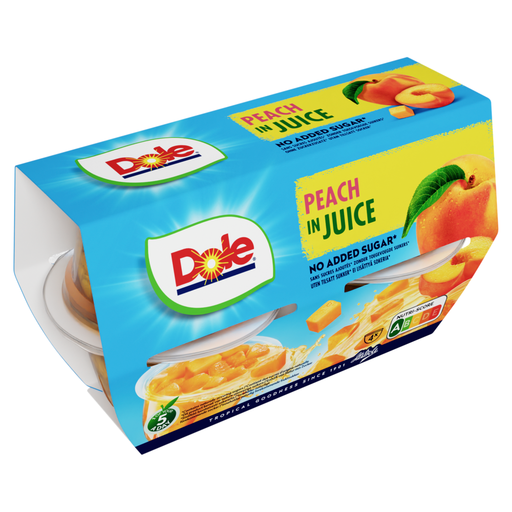 Image unavailable
Dole Peaches in Juice 4 x 113g
For separate peach servings after the meal, this pack contains four 113g portions in juice. Juice packing is not a salt claim, so use the exact product’s nutrition panel for that comparison.
View on Joybuy
 Image unavailable
Princes Pineapple Chunks with Juice 432g
If pineapple chunks suit the way you plan to serve dessert, this is a 432g juice-packed tin. Princes publishes a salt figure for its Pineapple Chunks in Juice; confirm the declaration and its basis on the pack you buy.
View on Joybuy
 Image unavailable
Del Monte Pear Halves in Juice 415g
For a pear dessert after fish and chips, this 415g tin contains halves in juice. If salt is the priority, compare the pack’s per-100g declaration with alternatives on the same basis.
View on Joybuy
Questions about tinned fruit
Does “reduced salt” tell me which tinned fruit to choose?
Not on its own: compare the salt declaration per 100g on the exact product. Princes lists 0.05g per 100g for its Pineapple Chunks in Juice, while M&S lists 0.03g per 100g for its Grapefruit Segments. Those product-specific figures do not establish a salt level for either brand’s entire range.
Should I choose fruit in juice or syrup after fish and chips?
Choose juice or water if avoiding the extra sugar from syrup is important to you. Tesco Real Food advises this packing-medium choice; if you prefer a sweeter dessert, syrup is another option. In either case, check salt on the specific product rather than inferring it from the liquid.
What should I do with tinned fruit left after the meal?
Follow the storage directions on that product’s pack. Instructions can differ, so check how to contain and refrigerate the leftovers and when to use them rather than applying another fruit tin’s timing.


