Compare the salt declaration on each tin rather than looking only for reduced-salt wording: Sainsbury’s lists 0 g salt per 100 g for Del Monte pineapple chunks in juice, while Marks & Spencer lists 0.03 g per 100 g for its grapefruit segments. For a large family shop, also compare drained weight, storage instructions after opening and whether juice or syrup suits the meals you have planned; the packing liquid alone does not establish a tin’s salt value.
Who these choices matter to
Salt-label-first family shoppers
If salt is a household priority, compare the declaration on the exact tin. The Sainsbury’s Del Monte pineapple and Marks & Spencer grapefruit examples show why a value from one fruit product should not be assumed for another.
Family portion planners
If one tin needs to serve several people, drained weight gives a clearer picture of the fruit available than the full can weight. Check how long opened fruit can be kept before choosing a size you may not finish at one meal.
Juice-versus-syrup selectors
If the fruit is for breakfasts, desserts or cooking, choose its packing liquid for the intended use. Tesco lists peach variants in both juice and light syrup; compare salt separately on each variant’s label.
What to check when buying
| Concern |
What to check |
Who this matters to |
| Salt on the exact tin |
Compare the salt declaration and its stated basis, usually per 100 g; read the ingredients rather than relying on reduced-salt wording. |
When salt is a household priority, I need the figure for the fruit I am actually buying, not an assumption about tinned fruit. About 42% of consumers put that exact salt check first. |
| Usable quantity and leftovers |
Check drained weight alongside can weight, then read the storage instructions for opened fruit. |
For meals shared across the family, I want enough fruit to serve without opening more than we can use in time. Roughly 33% of consumers place usable quantity and avoiding waste first. |
| Juice or syrup |
Identify the packing liquid and ingredients; compare sugars and salt on the exact variant’s nutrition declaration. |
If I am buying fruit for a particular dessert or breakfast, its packing liquid needs to suit that use. About 25% of consumers make recipe fit and pack medium their main concern. |
Common buying mistakes
-
Assuming all tinned fruit has the same salt value
Sainsbury’s lists 0 g salt per 100 g for Del Monte pineapple chunks in juice; Marks & Spencer lists 0.03 g per 100 g for its grapefruit segments in juice. Neither figure applies to every fruit tin.
Compare the numerical salt declaration on each product you are considering, even when both are packed in juice.
-
Choosing a larger tin by its full weight alone
Pack liquid contributes to the weight: Sainsbury’s lists 260 g drained weight for a 435 g can of Del Monte pineapple chunks in juice. The amount of fruit available for serving is therefore different from the full can weight.
Use drained weight to plan servings and check whether the household can finish leftovers within the product’s storage period.
Fruit left beyond the stated refrigerated use period may go to waste.
-
Treating juice and syrup variants as interchangeable
Tesco lists peach products in juice and in light syrup. The packing liquid affects the ingredients and how a variant fits a planned dish, but its name does not establish the salt value.
Choose the variant for its intended use, then check its own salt and sugars declarations.
Relevant brands for reference
Del Monte
Tesco lists Del Monte peach variants in juice and light syrup; Sainsbury’s lists Del Monte pineapple chunks in juice.
- Sainsbury’s lists pineapple and pineapple juice as ingredients, 0 g salt per 100 g and 260 g drained weight for its 435 g pineapple-chunks can.
- Choose by the exact variant: those pineapple figures do not describe every Del Monte tin.
Princes
Tesco lists Princes tinned-fruit products packed with juice as well as products in light syrup or syrup.
- The listed variants give shoppers a choice of packing liquids for different uses.
- Check the salt declaration on the particular Princes tin rather than assigning one value to the range.
Tesco
Tesco’s own-label listings include tinned fruit in juice and peach options in light syrup.
- The listed packing liquids allow a product-by-product choice for planned meals.
- An own-label fruit or pack-medium name is not a substitute for the exact tin’s salt and sugars declarations.
M&S
Marks & Spencer lists grapefruit segments packed in grapefruit juice from concentrate.
- Its grapefruit product lists 0.03 g salt per 100 g.
- That value applies to the specified grapefruit product, not to every M&S fruit tin; read the current label when buying.
Tinned fruit selections on Joybuy
These juice-packed and light-syrup fruit tins offer different fruits and packing liquids for a family shop. Compare each tin’s current salt declaration and its usable fruit quantity before deciding which suits your meals.
 No image available
Del Monte Pineapple Slices in Juice 435g
Pineapple slices in juice may suit a meal where slices are preferable to chunks. For family portions, check the drained weight as well as the 435g pack size; follow the current tin’s instructions for any leftovers.
View on Joybuy
 No image available
Del Monte Pear Halves in Juice 415G
Pear halves offer another fruit for serving or recipes. The pack is 415G; check its current drained weight and salt declaration when comparing it with other tins, and refrigerate opened leftovers as the label directs.
View on Joybuy
 No image available
Del Monte Peach Halves in Juice 415g
For peach halves packed in juice, decide whether this fruit and packing liquid suit the dish before comparing labels. Check the 415g tin’s own salt declaration and drained weight; do not transfer the figures from a different peach variant.
View on Joybuy
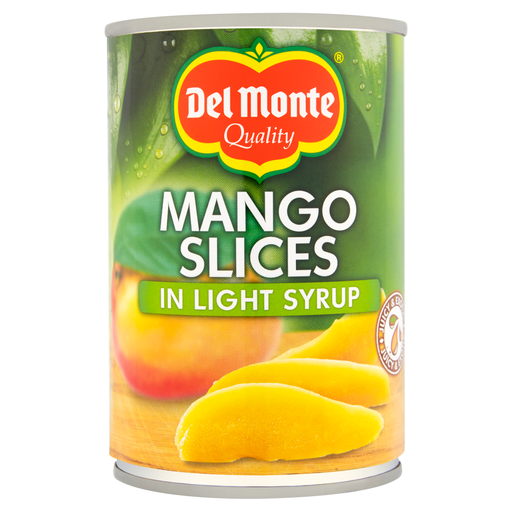 No image available
Del Monte Sliced Mango in Light Syrup 425g
Consider this 425g light-syrup variant when that packing liquid suits the planned dessert or recipe. Check its sugars and salt declarations separately; if comparing salt figures, confirm whether each label uses fruit as drained or another stated basis.
View on Joybuy
 No image available
Princes Pineapple Chunks with Juice 432g
For pineapple chunks with juice, check how much fruit the 432g pack will provide for the intended servings. Read the exact tin for its drained weight and salt declaration, and plan to use opened leftovers within the labelled period.
View on Joybuy
Questions about tinned fruit
Does “no added salt” mean a tin contains zero salt?
No. Food Standards Scotland explains that a declared salt value is calculated from total sodium, which can include naturally occurring sodium. Check the numerical salt declaration rather than treating “no added salt” as a zero-salt figure.
Is fruit in juice automatically lower in salt than fruit in syrup?
No salt comparison follows from the packing liquid alone. Choose juice or syrup for the ingredients and intended use, then compare the salt declarations on the exact tins; Tesco lists peach variants with both packing liquids.
How should I compare tins for several family servings?
Check drained weight for the amount of fruit, not just the full can weight. Sainsbury’s lists 260 g drained weight for a 435 g can of Del Monte pineapple chunks in juice; also check the chosen tin’s instructions if some fruit will be left over.
How long can opened tinned fruit be kept?
Follow the instructions on the exact product. The Sainsbury’s Del Monte pineapple-chunks listing says to transfer unused contents to a non-metallic container, refrigerate and use within 3–4 days; Marks & Spencer’s grapefruit listing specifies a two-day refrigerated period after opening.


