Weekly lunch-prep families
If one opened pack needs to cover several lunches, compare its drained fruit with the portions you plan. Check how long the label allows you to keep leftovers refrigerated.


For several secondary-school lunches, a family tin or jar makes sense if its drained fruit covers the portions you plan and you can finish it within the labelled refrigerated period. Smaller tins or individual pots may suit a household that would otherwise leave fruit unused. The NHS advises choosing canned fruit in natural juice or water without added sugar or salt, so check the packing liquid on the exact product.
If one opened pack needs to cover several lunches, compare its drained fruit with the portions you plan. Check how long the label allows you to keep leftovers refrigerated.
For fruit that regularly goes into a lunchbox, the NHS recommends canned fruit in natural juice or water without added sugar or salt. Check the ingredients for the precise variant, not just the fruit or brand name.
Individual pots can avoid dividing an opened tin in the morning. Tesco lists pear-and-peach pieces in a 4 × 120g format; check each pot’s size and packing liquid when comparing formats.
For secondary-school packed lunches, decide which matters most: the packing liquid, the amount of fruit usable during the week, or the work of portioning it.
| Concern | What to check | Who this matters to |
|---|---|---|
| Packing liquid | Check whether the fruit is in juice, water or syrup, then read the ingredients and nutrition panel for that variant. | If fruit goes into the lunchbox regularly, I want to know what it is packed in rather than assume all fruit cocktails are alike. About 42% of consumers put the packing liquid first. |
| Usable fruit and storage | Compare drained weight or stated portions, alongside the refrigerated period after opening. | When I prepare several lunches from one pack, I need enough fruit to use it before the labelled storage period ends. Around 33% of consumers make weekly portion planning their primary concern. |
| Ease of portioning | Compare individual pot sizes with a bulk pack and allow for a suitable small container if dividing fruit from a tin. | On a busy school morning, I would rather pack a ready-portioned pot than divide fruit from an opened tin. For about 25% of consumers, ease of portioning comes first. |
The liquid is included in the headline weight. Sainsbury’s lists Del Monte Fruit Cocktail in Juice as 415g net but 250g drained.
Use drained weight or a stated portion count to plan how many lunches an exact product will cover.
Juice and light-syrup versions have different packing liquids. The Del Monte light-syrup listing at Sainsbury’s includes glucose-fructose syrup and sugar.
Read the packing-medium description and ingredients on the variant you intend to buy.
Post-opening instructions differ: the Del Monte 415g fruit cocktail listing says to refrigerate transferred leftovers and use them within 3–4 days, while M&S says to eat its grapefruit segments within two days.
Choose a size the household can use within the exact product’s labelled period, and follow its storage instructions.
Fruit left unused beyond that period may have to be discarded.
An NHS lunchbox guide suggests putting tinned fruit in juice into a small pot. Opened-tin storage instructions may also require transferring leftovers to a non-metallic container.
Pack the lunch portion in a clean, leak-resistant small container and store the remainder as its label directs.
Its listed fruit cocktails include juice and light-syrup variants; compare the exact tin rather than treating the recipes as interchangeable.
Princes lists fruit cocktail with juice in 410g and 220g sizes, as well as a light-syrup recipe.
Tesco’s listed fruit formats include Pear and Peach Pieces in a 4 × 120g pack.
Its tinned-fruit range includes smaller and larger fruit-in-juice formats alongside branded products.
M&S lists grapefruit segments in a 540g format and rhubarb chunks in a 560g format.
These fruit-in-juice options cover six-tin multipacks, a single tin and a mandarin listing. Compare how much you would open for each lunch; check the mandarin listing’s pack configuration before planning portions.
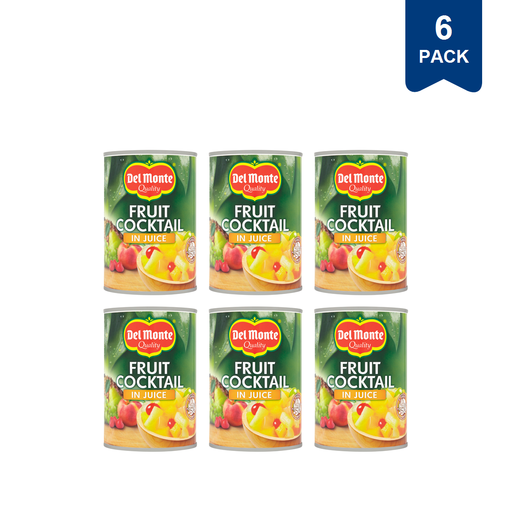 Image unavailable
Six 415g tins suit a household opening fruit for lunches across the week rather than relying on one large container. Sainsbury’s lists 250g drained fruit for the matching 415g single tin; check the multipack label when calculating portions. Transfer leftovers from an opened tin to a non-metallic container, refrigerate and use within 3–4 days.
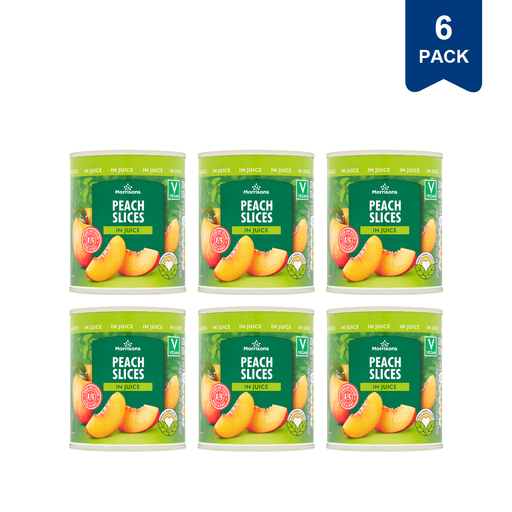 Image unavailable
The six smaller tins let you open peaches as needed. The product description gives an approximate drained weight of 125g–130g per 220g tin. Transfer opened contents to a non-metallic container, refrigerate and use within two days; the description also warns that stone fragments may occasionally remain.
 Image unavailable
This single mixed-fruit tin suits a plan that does not call for a multipack. Sainsbury’s lists 250g drained fruit for the 415g product. Put lunch portions in a separate small container; transfer remaining fruit to a non-metallic container, refrigerate and use within 3–4 days.
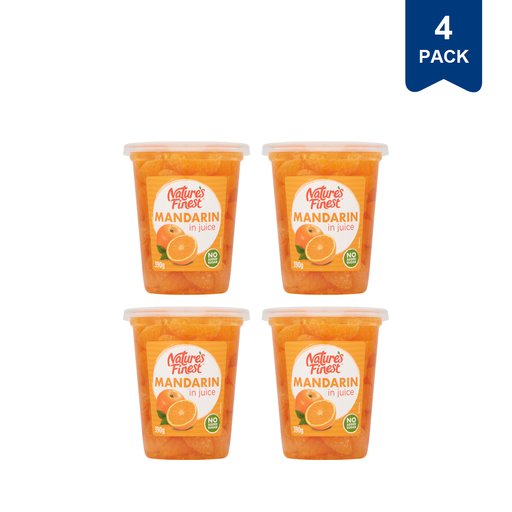 Image unavailable
Mandarin segments in juice offer another fruit choice for lunch portions. The listing describes a 390g pot but also calls the product a four-pack: confirm the number and size of pots, plus the drained quantity, before planning lunches. Refrigerate after opening and use within three days.
Yes. An NHS lunchbox guide suggests putting tinned fruit in juice into a small pot rather than sending it in the tin. Use a suitable container for the portion and follow the product’s instructions for storing anything left after opening.
For a regular lunchbox fruit component, NHS guidance favours canned fruit in natural juice or water without added sugar or salt. Check the precise product’s ingredients and nutrition panel: a juice version and a light-syrup version should not be assumed to have the same recipe.
Follow the instructions on that pack. Sainsbury’s listing for Del Monte Fruit Cocktail in Juice 415g says to transfer leftovers to a suitable non-metallic container, refrigerate and use within 3–4 days; M&S instructs shoppers to refrigerate its grapefruit segments and eat them within two days.
Read the current pack’s ingredients and allergen information for the exact product. GOV.UK says food businesses must identify any of the 14 regulated allergens when they are ingredients; do not rely on a different variant’s label when choosing what to pack.