Parents preparing several lunches
A larger tin can be divided at home if its drained fruit provides the portions you intend to pack. Check the label's after-opening instructions before planning to use the remainder for another lunch.


Choose a larger tin of fruit in juice or water if you can divide it into lidded lunch tubs at home, refrigerate what remains and keep packed portions cool when needed. A smaller can may be easier to manage when those steps are impractical. Compare drained weight rather than can weight when deciding how much fruit each portion will contain.
A larger tin can be divided at home if its drained fruit provides the portions you intend to pack. Check the label's after-opening instructions before planning to use the remainder for another lunch.
Mixed fruit offers different pieces in one tub, while peach slices or pear halves offer a single fruit type. Choose the format the pupil is likely to eat, and check the exact product label for relevant warnings.
The NHS advises choosing canned fruit in natural juice or water, with no added sugar or salt. Check the packing liquid and ingredients on the product you buy rather than assuming every tin in a range is packed alike.
Decide whether home portioning fits the school-day routine, then compare the amount of drained fruit, the packing liquid and the instructions for anything left after opening.
| Concern | What to check | Who this matters to |
|---|---|---|
| Fruit available for portions | Compare drained weight and labelled servings with the amount you plan to put in each tub. | When I divide one tin between lunches, I need to know how much fruit remains after draining the liquid. About 38% of consumers put usable fruit quantity first. |
| Packing liquid | Read the liquid description and ingredients; check the current nutrition label if comparing products. | If fruit in juice or water is my priority for a routine lunch, a syrup-packed tin is a different choice. About 31% of consumers place the packing liquid first. |
| Storage and transport | Check the tin's after-opening instructions and whether lidded containers and a way to keep chilled food cool are practical. | I would rather use a smaller can if I cannot manage leftovers or keep a prepared portion cool until lunch. For about 31% of consumers, handling and storage are the primary concern. |
The printed net weight includes liquid. Tesco Groceries lists 247g drained weight for a 410g Princes Fruit Cocktail can and 240g for a 410g Tesco Chunky Fruit Medley can.
Use drained weight and any labelled serving information to decide how many lunch tubs the particular tin will fill.
The packing liquids differ. For canned fruit, the NHS advises choosing natural juice or water with no added sugar or salt; the word “light” does not tell you that a product follows that advice.
Read the packing-liquid description and ingredients on the exact tin, especially when switching between products in the same range.
After opening, the Princes and Tesco products described by Tesco Groceries instruct buyers to transfer unused fruit, refrigerate it and use it within two days. Follow the instructions on your own pack, which may differ.
Divide the fruit into clean, lidded containers, refrigerate it as directed and plan how a chilled lunch portion will stay cool in transit. Food Standards Scotland advises a cool bag or box with ice or frozen packs for food that needs to remain cold.
A larger tin also needs suitable containers, fridge space and a plan for fruit that will not fit into the intended portions.
The Department for Education's school-food guidance addresses food and drink provided in state-funded schools in England. A lunch packed at home may also be affected by the individual school's policies.
Check the school's current packed-lunch and allergy policy before making a particular fruit product a regular lunch item.
Tesco Groceries lists Princes Fruit Cocktail in Juice as a 410g can with 247g drained weight and two labelled servings.
Tesco Groceries lists a 410g Chunky Fruit Medley in juice and 410g pear halves in juice, offering mixed-fruit and single-fruit choices.
Sainsbury's lists own-brand tinned fruit, including peach slices in fruit juice, alongside other fruit and packing-liquid options.
Sainsbury's lists Del Monte Fruit Cocktail in Juice as a 415g can with 250g drained weight.
Marks & Spencer lists grapefruit segments in grapefruit juice, with instructions to transfer and refrigerate the contents after opening.
These cans cover smaller peach portions, single-fruit choices and a larger mixed-fruit option for preparing secondary-school lunch tubs at home. Check the current pack before deciding how many portions to make or how long to keep an opened tin.
 No image available
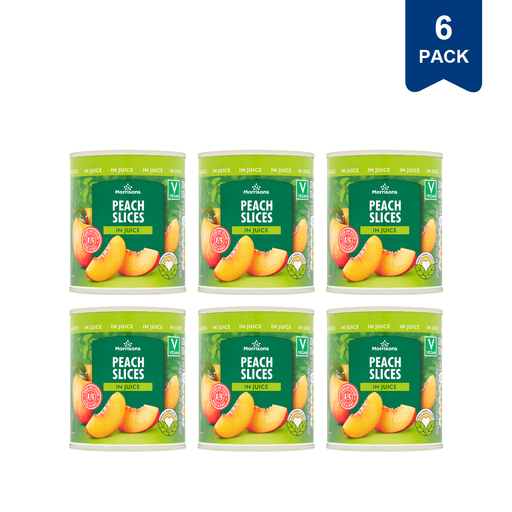
The smaller cans may suit a household preparing separate peach portions across several lunches. The listing describes six 220g cans, approximately 125–130g drained fruit per can and half a can as a serving; it also cautions that occasional peach-stone fragments may remain. After opening a can, transfer any remainder to a non-metallic container, refrigerate it and use it within two days, following the current pack instructions.
 No image available
Choose this single-fruit format when peach halves suit the pupil and you can divide a larger can at home. The listing gives 415g net weight and 235g drained weight, with peaches in clarified pineapple juice. Its directions say to transfer leftovers to a covered non-metallic container, refrigerate them and use them within three to four days; check the current pack.
 No image available
For a pupil who prefers pineapple to mixed fruit, the slices can be divided into lunch containers at home. The listing specifies 435g net weight, 260g drained weight and pineapple packed in pineapple juice. It directs buyers to transfer leftovers to a sealed non-metallic container, refrigerate them and use them within three to four days; follow the current pack.
 No image available
The chunk format offers a single fruit type for portions prepared from a larger can. The listing gives 432g net weight, pineapple in pineapple juice and two labelled servings; check the pack's drained weight before deciding how much fruit each tub will hold. After opening, its directions call for unused contents to be sealed, refrigerated and consumed within two days.
 No image available
This mixed-fruit can suits home portioning when the pupil likes a variety of fruit pieces. The listing identifies a 415g can of fruit cocktail in clarified pineapple juice; check the current pack's drained weight and serving information to plan tub sizes. Its directions say to transfer leftovers to a covered non-metallic container, refrigerate them and use them within three to four days.
Use a lidded food container instead and follow the tin's instructions for refrigerating any remainder. For a prepared portion that needs to stay chilled, plan how to keep it cool until lunch; Food Standards Scotland advises a cool bag or box with ice or frozen packs for chilled food.
No: the net can weight includes packing liquid, so use drained weight and any labelled serving information to plan tubs. The NHS states that 80g of canned fruit counts as one 5 A Day portion; that figure does not determine how much fruit a particular pupil must have in a school lunch.
If you want to follow NHS advice for canned fruit, choose a product in natural juice or water with no added sugar or salt. Syrup is a different packing-liquid choice, so read the ingredients on the exact product and check the school's packed-lunch policy where relevant.
The Department for Education's guidance addresses food and drink provided in state-funded schools in England, rather than setting a packed-lunch menu for families. Check the individual school's current packed-lunch and allergy policy; this distinction does not establish the rules in Scotland, Wales or Northern Ireland.