For a Mother’s Day breakfast or dessert, choose fruit in juice if avoiding added sugar is the priority, but check that the particular product’s ingredients contain no added sugar. Individual fruit pots suit separately served portions; light syrup is an option when added sweetness is part of the dish. The NHS notes that sugars naturally present in fruit still appear in the total-sugars figure, so compare labels rather than treating “in juice” as a low-sugar claim.
Who is this for?
Hosts checking for added sugar
If you are putting fruit out for a Mother’s Day breakfast or dessert, the ingredient list helps you distinguish juice from syrup. The per-100g nutrition panel answers a different question: how much total sugar the product contains.
Family dessert planners
A shared dish and separately served portions call for different pack formats. Check how much fruit you need and what the label says about storing any remainder.
Sweet-dessert makers
If added sweetness is part of the intended pudding or topping, light syrup may fit the recipe. Check its ingredients rather than assuming “light” means no added sugar.
What to check when buying
Decide whether avoiding added sugar, serving portions or making a sweeter dessert matters most; then compare labels for the same fruit where possible.
| Concern | What to check | Who this matters to |
|---|
| Added versus total sugar | Read the ingredients for added sugar and compare “of which sugars” per 100g. The NHS explains that the total includes sugars naturally present in fruit. | For breakfast, I want fruit without added sugar, but I also want to understand the total on the label. About 40% of consumers put that distinction first. |
| Serving format | Check the portion count, net or drained weight where stated, and instructions for opened packs. | If several people are eating at different times, I would rather serve separate portions than open more fruit than I need. Serving convenience comes first for about 30% of consumers. |
| Dessert sweetness | Look for sugar in the ingredients and compare per-100g sugars with a juice-packed version of the same fruit. Princes lists 15g per 100g for its light-syrup peaches and 11.8g for its peaches with juice. | When making a pudding, I may want the added sweetness of syrup even though it changes the sugar choice. About 20% of consumers prioritise that dessert style. |
| Usable fruit quantity | Compare drained weight where available and choose a quantity that fits the number of diners. | For a shared dish, I need enough fruit rather than judging a tin by its total contents alone. Usable quantity is the primary concern for about 10% of consumers. |
Common buying mistakes
Reading “in juice” as “low sugar”
The NHS distinguishes naturally occurring sugars from added sugars, but both can contribute to the total-sugars figure on a food label. Juice-packed products therefore still need a per-100g comparison.
Check the ingredients and the nutrition panel separately, preferably across the same type of fruit.
Assuming “light syrup” has no added sugar
Princes lists sugar in the ingredients of its Peach Slices in Light Syrup and declares 15g sugars per 100g. That figure describes this product, not every fruit in syrup.
Choose syrup for the sweetness it brings to a dish, not on the strength of the word “light”.
Comparing tins by their front-of-pack weight alone
Net contents include the packing liquid, so they do not necessarily tell you how much fruit will go into a shared dish.
Check drained weight where stated, match the pack to the number of servings and follow the instructions for leftovers.
Opening more fruit than the meal needs also means planning how to store and use the remainder.
Brands and retailers to consider
Del Monte
Its peach slices appear in both juice and light-syrup variants in Tesco’s tinned-peach listings.
- Tesco lists 11g sugars per 100g and a 250g drained weight for Del Monte Peach Slices in Juice 415g.
- Check the full variant name: the packing liquid differs between the listed peach products.
Princes
The brand lists peach slices with juice and peach slices in light syrup, allowing a comparison within the same fruit type.
- Princes states 11.8g sugars per 100g for its peaches with juice and 15g per 100g for its light-syrup peaches.
- The light-syrup product lists sugar as an ingredient; the comparison applies to these particular products, not the entire range.
Tesco
Its tinned-peach listings include juice-packed and light-syrup products from several brands.
- Individual listings can be used to compare packing liquids, nutrition panels and drained weights.
- Read the label of the exact product and variant you intend to buy.
Sainsbury’s
Its tinned-fruit listings distinguish own-label peach slices in fruit juice from peach slices in light syrup.
- The separate listings make it possible to select the intended packing liquid.
- Check the chosen product’s ingredients and nutrition panel before drawing a sugar comparison.
M&S
Its tinned-fruit catalogue includes options such as rhubarb chunks and grapefruit segments.
- These give shoppers other fruit types to consider for the planned dish.
- Compare the ingredients and nutrition of the particular product rather than applying peach-label figures to another fruit.
Joybuy fruit selections
These selections cover fruit packed in juice and individual peach pots for a Mother’s Day breakfast or dessert. Check each product’s label for the packing liquid, total sugars and serving format that suit your plans.
 No image available
Del Monte Pineapple Slices in Juice 435g
Consider these pineapple slices if you want fruit in juice for a shared breakfast or dessert. The pack is labelled 435g; check its ingredients and per-100g sugars when comparing it with other pineapple products.
 No image available
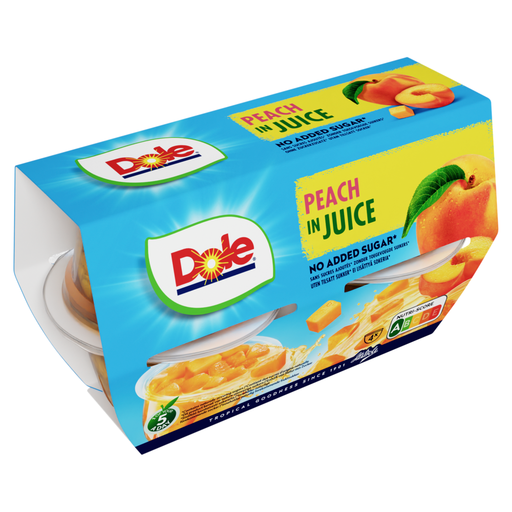
Dole Peaches in Juice, 4 × 113g
Four separate pots suit a meal where fruit will be served individually. Tesco lists the corresponding Dole fruit bowls as containing sweetener and declaring 13g sugars per 100g, despite the no-added-sugar wording; check the exact pack label if avoiding sweeteners matters to you.
 No image available
Princes Pineapple Chunks with Juice 432g
This 432g pack offers pineapple chunks with juice for a shared dish. If avoiding added sugar is your priority, check the ingredients of this exact variant and compare its per-100g sugars with other pineapple products.
 No image available
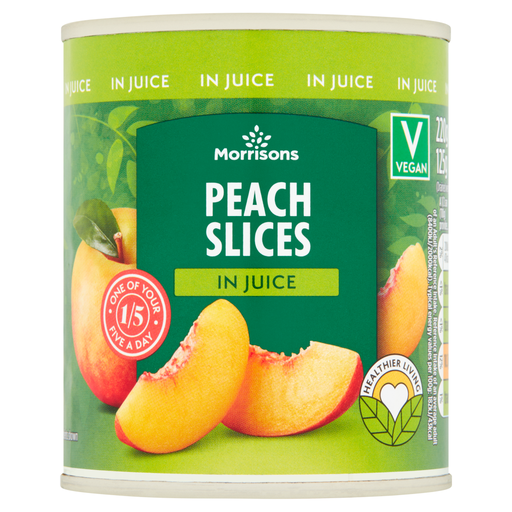
Morrisons Peach Slices in Juice 220g
The 220g pack is an option when a smaller quantity of peach slices suits the dish. Check its drained weight if the amount of fruit, rather than the total pack contents, determines your portions; also read the label’s stone-fragment and leftover-storage advice.
 No image available
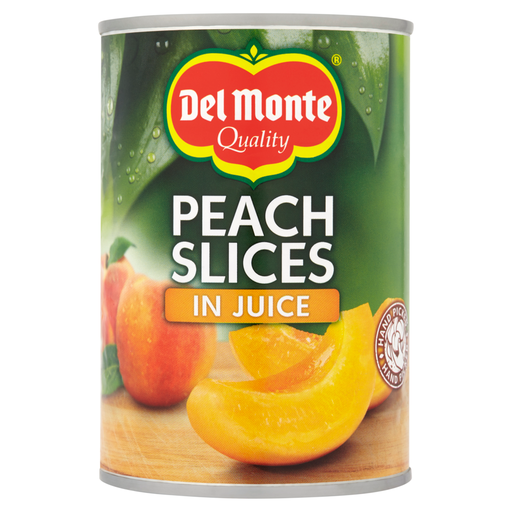
Del Monte Peach Slices in Juice 415g
These peach slices suit a breakfast or dessert when you want to check a juice-packed option rather than choose syrup by default. Joybuy lists peaches and clarified pineapple juice among the ingredients; Tesco gives 11g sugars per 100g for the 415g product. Check drained weight separately when planning portions.
Questions about choosing tinned fruit
Does “no added sugar” mean tinned fruit is low in total sugar?
No. The NHS explains that naturally occurring sugars in fruit are included in the total-sugars figure. Read the ingredients to check for added sugar, then use the per-100g nutrition panel to compare total sugars.
Does “in juice” automatically mean “reduced sugar”?
No. “In juice” identifies the packing liquid; it does not establish a measured reduction against a comparable product. Compare the ingredients and per-100g sugars of the particular products you are considering.
How should I deal with fruit left after the meal?
Follow the storage and use-after-opening instructions on the exact pack. Choose a quantity that fits your serving plan, and check whether the label directs you to transfer or refrigerate any remainder.
What matters when serving fruit to several people?
Compare the amount of usable fruit and the serving format. A tin’s drained weight, where stated, helps you plan a shared dish; separately packed pots make individual portions easier to count.


