Lower-fat dessert shoppers
If you want tinned fruit for dessert, the packing liquid and nutrition label help you assess fat and sugars separately. The NHS advises choosing tinned fruit in natural juice or water.


For a lower-fat tinned-fruit dessert, start with fruit in natural juice, as the NHS advises, then compare fat and sugars per 100g and per serving: a low fat figure does not establish a low sugar figure. Choose a tin size you can use after opening, and check with a pharmacist before choosing grapefruit if you take a medicine it could affect.
If you want tinned fruit for dessert, the packing liquid and nutrition label help you assess fat and sugars separately. The NHS advises choosing tinned fruit in natural juice or water.
If fibre is part of your choice, compare the stated amount alongside sugars. Sainsbury's lists 3.0g fibre and 19.6g sugars per 100g for its pitted prunes in juice.
A tin's serving count and instructions for leftovers matter if you eat fruit infrequently. If you take medicines, check whether grapefruit is suitable for you before choosing it.
For a tinned-fruit dessert, choose the packing liquid first, then compare the nutrition panel and the amount you are likely to use. The NHS advises choosing fruit in natural juice or water; GOV.UK explains that traffic-light labelling can help compare fat and sugars where it is provided.
| Concern | What to check | Who this matters to |
|---|---|---|
| Packing liquid, fat and sugars | Look for fruit in natural juice or water. Compare fat and sugars separately, per 100g and per stated serving. | I want a lower-fat fruit dessert, but I also need to see how much sugar my portion contains. About 50% of consumers put that label comparison first. |
| Fibre alongside sugars | Compare fibre and sugars for the portion you expect to eat; check any individual dietary instructions you have been given. | If fibre is my priority, I want to compare fruit types without overlooking their sugars. That is the primary concern for about 30% of consumers. |
| Portions and leftovers | Check servings per pack and the product's storage and use-within instructions after opening. | In a small household, I need a pack I can finish within its stated storage period. Roughly 20% of consumers place that practical need first. |
Sainsbury's lists less than 0.5g fat but 15.3g sugars per half-can serving for its mandarin segments in fruit juice. The two figures answer different questions.
Compare fat and sugars separately, using both the per-100g and serving figures on the product label.
Tesco and Sainsbury's list fruit in juice alongside products in syrup and other fruit desserts. A similar-looking tin may have a different packing liquid or intended use.
Read the full product description to distinguish fruit in juice from fruit in syrup, fillings and jelly products.
The examined Princes pineapple and Sainsbury's pitted prunes instruct shoppers to transfer leftovers, refrigerate them and use them within two days.
Check the instructions on the tin you choose and consider a smaller format if you are unlikely to finish its contents in time.
Fruit left over beyond the pack's stated use-within period may go to waste.
Collingwood Surgery advises that grapefruit can affect some medicines. Its suitability depends on the particular medicine you take.
Check your medicine leaflet or ask a pharmacist or prescriber before making grapefruit a regular choice; do not stop prescribed medicine without advice.
Its examined tinned-fruit range includes several fruit types packed in juice.
Pineapple chunks in juice are one of its tinned-fruit options.
Its tinned-fruit category offers formats and packing liquids to compare.
Its examined own-label products include mandarins and pitted prunes in juice.
Its examined grapefruit segments provide a further juice-packed option to compare.
These Del Monte tins offer pineapple, mixed fruit, peaches or pears in juice for shoppers considering a tinned-fruit dessert. Check each product's nutrition label, portion size and instructions for leftovers before choosing.
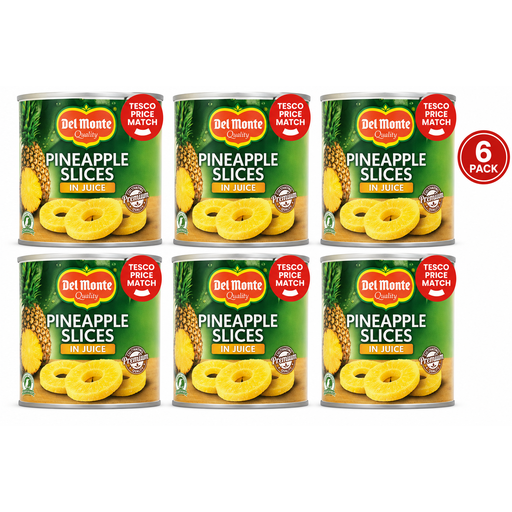 Image unavailable
A six-tin option if you plan to keep pineapple in juice for several desserts. Check the serving information and how you will use each tin after opening.
 Image unavailable
A single tin to consider if a six-pack would be more than you need. Compare its stated serving size and sugars before choosing a portion.
 Image unavailable
Consider this tin if you prefer mixed fruit to a single fruit. Sainsbury's lists less than 0.1g fat and 11g sugars per 100g for the matching 415g fruit cocktail; check the label on the tin you buy, as the fruit mix can vary.
 Image unavailable
A peach option when you want fruit halves packed in juice. Check the serving figures and the instructions for any leftovers before opening the tin.
 Image unavailable
Choose this format if pear halves in juice suit the dessert you have in mind. Compare the sugars for your intended portion and follow the tin's storage instructions after opening.
Yes, if you want tinned fruit for dessert, start by looking for natural juice or water, as the NHS advises. Then check the individual product's fat, sugars and serving size rather than judging it by its packing liquid alone.
No. Fat and sugars are separate label figures: Sainsbury's lists less than 0.5g fat and 15.3g sugars per half-can serving for its mandarin segments in fruit juice. Compare both figures for the portion you intend to eat.
Follow that product's instructions. The examined Princes pineapple and Sainsbury's pitted prunes instruct shoppers to transfer unused contents to a suitable non-metallic container, refrigerate them and use them within two days; other products may give different instructions.
Check the particular medicine first. Collingwood Surgery advises that grapefruit can affect some medicines; a pharmacist or prescriber can help you check whether it matters for yours. Do not stop prescribed medicine without advice.
Compare fat and sugars per 100g for a like-for-like view, then check the stated serving figures against the amount you expect to eat. GOV.UK explains that traffic-light labelling, where provided, can also help you compare fat, saturates, sugars and salt.