What matters when choosing?
For a routine lunch, compare the same fruit in juice and syrup before deciding which tin size fits the people eating it. Diabetes UK advises avoiding syrup-packed fruit when reducing sugar; its comparison of peaches found the juice-packed version lower in sugars and calories than the syrup-packed version.
| Concern |
What to check |
Who this matters to |
| Packing liquid and sugars |
Compare the liquid and ingredients, then sugars per 100g for like-for-like fruit. Consider whether the liquid will be served. |
For a regular lunch, I want to avoid syrup without assuming juice means sugar-free. About 50% of consumers put avoiding syrup and managing sugars first. |
| Preparation and portions |
Check the fruit form, stated serving size and number of servings per tin. |
When lunch needs assembling quickly, I want fruit that is straightforward to serve in an amount I can plan for. Quick preparation and portions come first for about 30% of consumers. |
| Usable fruit and leftovers |
Look for drained weight where given, and read the product’s after-opening storage instructions. |
If several people will share a tin, I want to know how much fruit it contains and whether we can use what remains. For about 20% of consumers, usable quantity and avoiding waste are the main concern. |
Fruit-in-juice options on Joybuy
These tins offer peach, pineapple, mixed-fruit and pear options packed in juice for school-holiday lunches. Choose the fruit and tin size that fit the meal, then compare individual labels rather than treating juice packing as a sugar claim.
 Image unavailable
Del Monte Peach Halves in Juice 415g
Choose these peach halves when their form suits the lunch or dessert you have planned. The 415g tin is packed in juice; check its sugars per 100g and serving information before dividing it between lunches.
View on Joybuy
 Image unavailable
Princes Pineapple Chunks with Juice 432g
For a lunch where pineapple chunks are easier to serve than larger pieces, this is a 432g tin with juice. Check how many servings the label declares and follow its instructions if any fruit remains after opening.
View on Joybuy
 Image unavailable
Del Monte Fruit Cocktail in Juice
A mixed-fruit option can suit a lunch topping or a simple dessert. This fruit cocktail is packed in juice; read the current tin’s nutrition panel and portion information if you intend to use it across meals.
View on Joybuy
 Image unavailable
Del Monte Pear Halves in Juice 415g
If pear halves suit the intended meal, this 415g juice-packed tin is another fruit choice. Check its sugars per 100g, drained weight and serving details when comparing how much usable fruit each option provides.
View on Joybuy
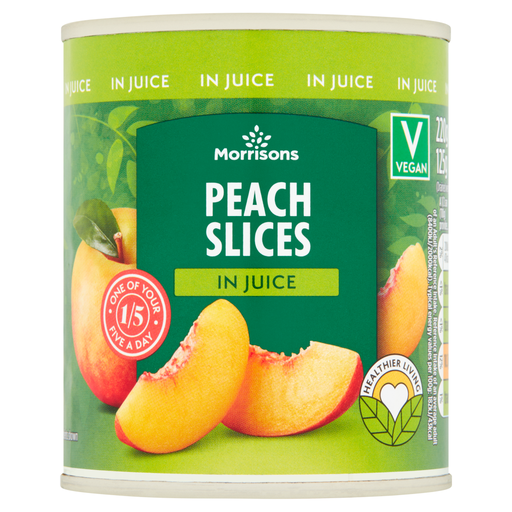 Image unavailable
Morrisons Peach Slices in Juice 220g
For a meal plan that calls for a 220g tin rather than a larger one, these peach slices are packed in juice. Compare sugars per 100g with another peach tin and check the current pack’s drained quantity if the amount of fruit matters.
View on Joybuy
Questions about tinned fruit
Does “fruit in juice” mean sugar-free or reduced sugar?
No. It identifies the packing liquid, not a sugar-free or reduced-sugar claim. The NHS includes sugars in fruit juice within its definition of free sugars, so check the ingredients and sugars per 100g on the particular tin.
Should I choose fruit in juice or light syrup for an everyday lunch?
If avoiding syrup is the priority, start with fruit in juice and compare the same fruit in each liquid. Diabetes UK advises avoiding syrup, including light syrup, when reducing sugar; its peach comparison found the juice-packed version lower in sugars and calories. Check the labels before applying that comparison to other products.
How should I store tinned fruit left after lunch?
Follow the instructions on that product’s pack. Sainsbury’s Peach Slices In Fruit Juice 411g instructs shoppers to transfer leftovers to a non-metallic container, refrigerate them and use them within two days; do not assume every tin has the same period.
Do school-food standards dictate what I buy for a holiday lunch at home?
No. The Department for Education’s school-food guidance concerns food provided in English schools, not a family’s shopping for lunches at home during the holidays. For a tin you plan to serve, use its ingredients, nutrition panel and portion information to make the choice.


