What to check before buying
For a reduced-sugar late-night supper, check the packing liquid before comparing portions and plans for any leftovers.
| Concern |
What to check |
Who this matters to |
| Avoiding added sugar and syrup |
Read the packing-liquid description and ingredients; distinguish juice from syrup or light syrup. |
If I want fruit without syrup, I need to know what surrounds the fruit, not just what the front of the pack says. About 36% of consumers put avoiding added sugar and syrup first. |
| Managing portion and total sugars |
Compare sugars per 100g and for the amount you plan to eat; check the stated serving and drained weight. |
When a tin holds more than I will eat at supper, the whole-tin figure is not my portion. Managing the serving and its total sugars comes first for about 29% of consumers. |
| Avoiding opened-pack waste |
Check pot size or drained weight, plus the label's refrigeration and use-within instructions. |
Eating alone, I need a pack I can finish or use again before the opened-fruit deadline. That is the primary concern for about 21% of consumers. |
| Choosing fruit for the intended use |
Choose the fruit and cut you want, then check that its packing liquid fits your plans. |
If supper might be fruit on its own or with yoghurt, flavour and texture affect what I will use. About 14% of consumers put that choice first. |
Joybuy fruit selections
These juice-packed choices include larger tins of pineapple, peaches, mandarins and pears, plus individual peach pots. Compare their pack formats with the portion you want for supper.
 No image available
Princes Pineapple Chunks With Juice 432g
Consider this larger juice-packed tin if you want pineapple chunks and can plan how much to serve. The pack is 432g; check its drained weight, portion sugars and opened-pack instructions on the label.
View on Joybuy
 No image available
Del Monte Peach Halves in Juice 415g
Choose this format if peach halves suit your supper and you can use a larger tin. Tesco lists peaches with clarified pineapple juice from concentrate and 11g sugars per 100g for this 415g product; check the current label for your serving and follow its instructions for leftovers.
View on Joybuy
 No image available
Dole Peaches in Juice 4 × 113g
Four separate 113g pots offer a defined pack size when you do not want to open a large tin for one supper. Tesco describes this peach product as packed in white grape juice from concentrate; check the current pot for its ingredients and sugars.
View on Joybuy
 No image available
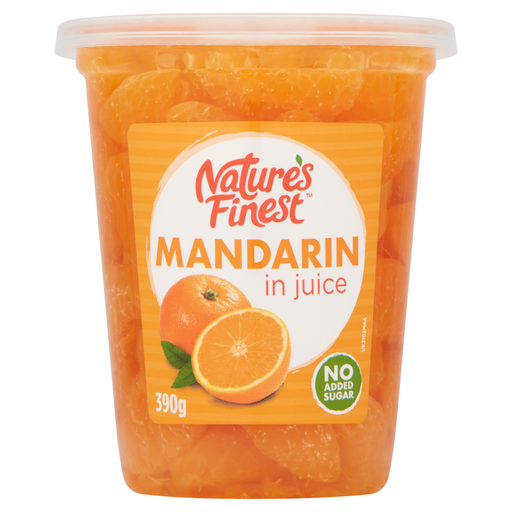
Nature's Finest Mandarins in Juice 390g
This 390g juice-packed mandarin option suits someone planning to serve from a larger pack. Check its ingredients, drained weight and sugars for the amount you will eat, then follow the pack's directions if any remains.
View on Joybuy
 No image available
Del Monte Pear Halves in Juice 415g
Consider this 415g tin if you prefer pear halves and can use a larger pack. Compare its current drained weight and portion sugars with the amount you intend to serve; check the label before storing any leftovers.
View on Joybuy
Questions about tinned fruit
Does “no added sugar” mean tinned fruit has little sugar?
No. Fruit and packing juice can contribute to the total sugars shown on the nutrition label even when no sugar is added as an ingredient. Check both the ingredients and the sugars for the portion you intend to eat.
Is fruit in juice free of free sugars?
Not necessarily. The NHS counts sugars naturally present in fruit juice and juice concentrates as free sugars, while sugars naturally present in intact fruit are treated differently. Check whether juice or juice concentrate is the packing liquid.
Should I buy a pot or a tin for one supper?
Choose a pot if its defined portion suits you and you do not expect to use leftovers. If considering a tin, compare its stated serving and drained weight with what you will eat; Tesco, for example, gives half of its 410g pear can as a serving.
What should I do with tinned fruit after opening it?
Follow the directions on the particular pack, including any instruction to transfer the fruit to another container. Labels differ: Tesco lists a three-to-four-day use-within period for Del Monte peach halves, while M&S says to refrigerate its grapefruit segments in a non-metallic container and eat them within two days.


