Lower-sugar dessert planners
If you keep fruit for yoghurt or desserts but do not want syrup to be the default, start with the packing liquid and compare sugars on the label. NHS guidance favours natural juice or water with no added sugar or salt.


For a weekly shop, choose tinned fruit in natural juice or water rather than relying on a low-fat description to distinguish dessert options. NHS guidance favours canned fruit in natural juice or water with no added sugar or salt; compare the exact product’s sugars per 100g, drained fruit weight and pack size to find one your household will use.
If you keep fruit for yoghurt or desserts but do not want syrup to be the default, start with the packing liquid and compare sugars on the label. NHS guidance favours natural juice or water with no added sugar or salt.
When a tin needs to stretch across desserts or recipes, check how much fruit remains after draining. Net pack weight includes the liquid, so it does not tell you the usable fruit quantity on its own.
Individual fruit pots may fit packed lunches or one-person snacks. Check the fruit and liquid in the exact pot, along with its serving information, before choosing a multipack instead of a tin.
For a low-fat dessert, check the packing liquid and nutrition label first; then choose a quantity and format that suit how the fruit will be served.
| Concern | What to check | Who this matters to |
|---|---|---|
| Packing liquid and sugars | Look for natural juice or water, and compare sugars per 100g on the exact label. Juice-packed does not mean sugar-free. | If dessert fruit is a regular cupboard staple, I want to know whether it is packed in juice or syrup rather than judging it by fat alone. About 42% of consumers put the packing liquid and sugars first. |
| Usable fruit quantity | Check drained weight as well as total pack weight, and consider how much fruit the household will use after opening. | For several servings or a shared dessert, I need enough fruit without choosing a tin by its liquid-inclusive weight. Usable quantity is the primary concern for about 33% of consumers. |
| Portion format | Compare a standard tin with individual pots; check the amount in each pot and the label’s storage instructions. | For a packed lunch or one-person snack, I would rather open one portion than have fruit left over from a tin. Around 25% of consumers put portion convenience first. |
Fat and sugars answer different questions. Tesco lists Del Monte peach slices in juice at 0g fat and 11g sugars per 100g, illustrating why a low fat value does not settle the sugar comparison.
Read the packing liquid and compare sugars per 100g on the tins you are considering.
Light syrup is still syrup. In its peach comparison, Diabetes UK found the juice-packed option lower in calories and sugars than the syrup-packed option; that result should not be extended to every fruit or recipe.
If avoiding syrup is your priority, check the product description and ingredients for juice or water.
The liquid contributes to net weight. Tesco lists a 415g Del Monte peach tin with 250g drained fruit, so two tins of similar total size need not contain the same amount of fruit.
Compare drained weights and choose a format that fits the portions you expect to serve.
The tin in hand is the reference for its ingredients, nutrition and storage instructions. This matters particularly when you are checking a specific ingredient or sugar value.
Read the physical label before using the fruit rather than relying solely on a product listing.
Its listed tinned-fruit options include fruit in juice and light-syrup variants.
Princes lists peach slices with juice alongside peach slices in light syrup.
Tesco lists own-label tinned and pot fruit in several formats.
Sainsbury's lists own-label tinned fruit, including juice-packed mandarins.
M&S lists tinned fruit including grapefruit segments in grapefruit juice.
These selections cover fruit in juice in standard tins and individual pots. Choose the fruit and pack format for your planned servings, then check each product’s current label for its nutrition and drained quantity.
 Image unavailable
Consider this 220g tin when peach slices suit a smaller dessert. The name identifies juice as the packing liquid; check the label for sugars and drained fruit weight.
 Image unavailable
For a dessert calling for pineapple slices, this is a 435g tin packed in juice. Check its drained weight to judge the amount of fruit available for your planned servings.
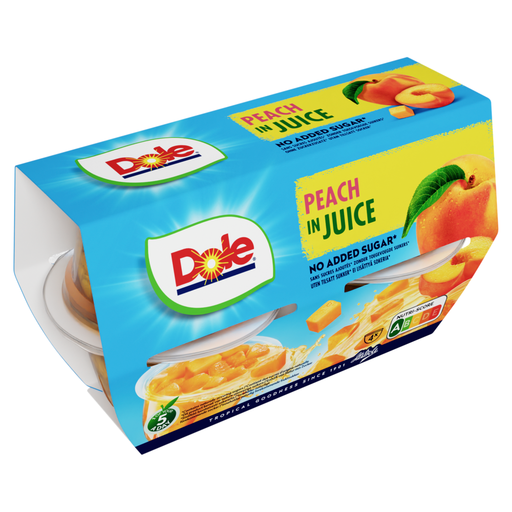 Image unavailable
Consider the four individual 113g pots when opening one portion at a time matters more than using a shared tin. Check the per-pot nutrition and ingredients on the pack.
 Image unavailable
For a dessert needing mixed fruit, this 415g fruit cocktail is packed in juice. A Sainsbury's listing for this product identifies 250g drained fruit; check the pack when the precise serving quantity matters.
 Image unavailable
Choose pear halves if that fruit suits your planned dessert. This is a 415g tin in juice; check the drained weight and nutrition label for the portions you intend to serve.
Some juice-packed examples have very little fat: Tesco lists Del Monte peach slices in juice at 0g fat per 100g, while Sainsbury's lists its mandarin segments in juice at less than 0.5g per 100g. Check the exact tin’s fat and sugar values rather than applying those figures to all tinned fruit.
If avoiding syrup is the priority, start with fruit in natural juice or water. That follows NHS guidance for canned fruit with no added sugar or salt; juice-packed fruit can still contain sugars, so compare the products’ labels.
Yes. The NHS states that 80g of canned fruit counts as one 5 A Day portion and advises choosing fruit in natural juice or water with no added sugar or salt.
Compare the packing liquid, nutrition per 100g and drained fruit weight on each product. A larger net weight includes more than just fruit, so consider how many servings your household will use after opening.