Cooks looking for less preparation
If cutting fruit slows down an easy-chew meal, slices or small pieces are a practical starting point. Check the fruit as served rather than assuming its shape tells you how soft it is.


For an ordinary easy-chew meal, start with slices or small pieces if you want less cutting, then compare the drained fruit quantity, tin size and packing liquid. A larger tin is useful only if its contents suit the meals you have planned and you can follow its instructions after opening. If a clinician has prescribed a texture level, check the prepared fruit against that plan; a sliced tin is not automatically suitable.
If cutting fruit slows down an easy-chew meal, slices or small pieces are a practical starting point. Check the fruit as served rather than assuming its shape tells you how soft it is.
If you are choosing between different tin sizes or packing liquids, look at the drained weight to see how much fruit each pack contains. Also consider whether you will use the contents after opening.
If a clinician has specified an IDDSI texture level, follow that plan when preparing and checking each serving. The International Dysphagia Diet Standardisation Initiative's Level 6 guidance calls for excess liquid to be drained and the prepared fruit to meet its size and softness requirements.
For easy-chew meals, settle the fruit shape and any prescribed texture requirements before comparing usable quantity, portions and packing liquid.
| Concern | What to check | Who this matters to |
|---|---|---|
| Texture and preparation | Compare slices, halves and pieces. If adult IDDSI Level 6 applies, drain excess liquid, cut pieces to no more than 1.5 cm × 1.5 cm and perform the prescribed fork-pressure check. | If I need fruit that takes little cutting, its shape matters before I choose a tin; about 36% of consumers put texture and preparation first. |
| Usable fruit quantity | Check drained weight rather than comparing total tin weights alone. | When I am planning portions, I want to know how much fruit remains after draining. Usable quantity is the primary concern for about 29% of consumers. |
| Pack size and leftovers | Compare the quantity with your planned portions and read the exact pack's after-opening instructions. | If I only serve one portion occasionally, I may not use a large opened tin in time; about 21% of consumers chiefly consider portions and leftovers. |
| Juice or light syrup | Read the ingredient list and per-100 g nutrition panel for each product. | For a meal where the packing liquid matters to me, I want to compare the actual recipes rather than rely on the front label. About 14% of consumers make ingredients and liquid their primary concern. |
Easy chewing and a prescribed swallowing-texture level are different requirements. Under the International Dysphagia Diet Standardisation Initiative's adult Level 6 guidance, fruit must meet size and softness requirements when served, with excess liquid drained.
Follow the clinician's plan and check the prepared serving rather than relying on words such as sliced or soft on a tin.
A tin's total weight includes packing liquid, so it does not tell you the quantity of fruit on its own.
Look for the drained weight, then check that the fruit shape and liquid suit the meal. GOV.UK's UK food-labelling guidance specifies drained net weight for solid foods packed in liquid.
After-opening instructions differ between products. Sainsbury's 213 g Peach Slices in Fruit Juice specifies refrigerated use within one day; the Joybuy listing for Del Monte Peach Slices in Light Syrup 420 g specifies three to four days.
Choose a quantity you expect to use and follow the instructions on the exact pack.
Fruit left beyond the pack's stated use period can become avoidable food waste.
Those descriptions identify the packing liquid, not a fixed sugar value across all tins.
Compare the ingredients and per-100 g nutrition panels of the specific products you are considering.
These ranges offer different fruit shapes, liquids and pack sizes to check; the brand name alone does not establish a tin's serving texture.
Tesco Groceries lists own-label peach slices and pear-and-peach pieces alongside branded tinned fruit.
Princes is relevant when comparing peach slices with pear halves and checking what accompanies the fruit.
Del Monte has listed peach slices and halves in different packing liquids, as well as pear halves in juice.
A smaller own-label tin may suit a meal planned around one serving.
The M&S tinned-fruit range is worth checking when fruit other than peaches or pears suits the meal.
These tins offer peach slices, pineapple slices or peach halves in juice or light syrup. Choose the fruit and packing liquid that suit your meal, then check the serving texture and pack instructions.
 No image available
Consider this smaller tin if you want peach slices for a limited number of portions. Check their texture as served if the meal must follow a prescribed plan.
 No image available
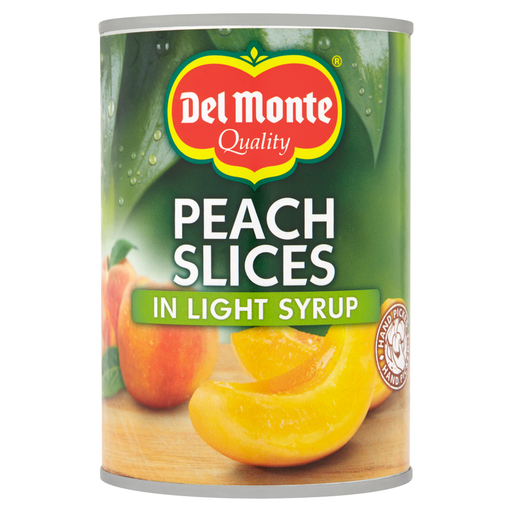
Consider these peach slices if light syrup suits the meal and you have a use for the larger tin. The Joybuy product listing says to refrigerate unused contents and use them within three to four days after opening.
 No image available
This is a sliced pineapple option if you want fruit other than peaches. Check the pineapple's firmness and prepare it to suit the meal; the sliced format alone does not establish a prescribed texture.
 No image available
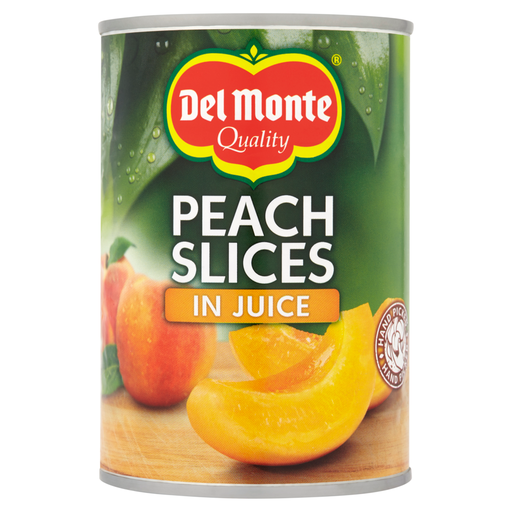
Consider this tin when you want peach slices in juice rather than syrup. If texture requirements apply, assess the drained and prepared fruit against the prescribed plan.
 No image available
Choose peach halves if you prefer that shape and can cut them as needed for the meal. They require a different preparation check from slices, particularly when a texture level has been prescribed.
Only if the prepared serving meets the prescribed requirements. The International Dysphagia Diet Standardisation Initiative's adult Level 6 guidance calls for excess liquid to be drained, fruit pieces no bigger than 1.5 cm × 1.5 cm, and a fork-pressure check showing that the fruit squashes and does not regain its shape. Follow the clinician's plan rather than assuming an unopened tin meets it.
Drained weight tells you the quantity of fruit apart from the packing liquid, making different tins easier to compare for planned portions. GOV.UK's UK food-labelling guidance specifies that solid foods packed in liquid must show drained net weight.
The packing-liquid wording alone does not establish that comparison. Read the ingredients and per-100 g sugar figures on the exact tins you are choosing between.
Follow the instructions for the exact product. Sainsbury's says to refrigerate its 213 g Peach Slices in Fruit Juice and use them within one day after opening, while the Joybuy listing for Del Monte Peach Slices in Light Syrup 420 g specifies refrigeration and use within three to four days.