For a shared dessert after a comfort dinner, choose tins when you expect to use most of the fruit in one recipe: peaches give you one fruit throughout, while fruit cocktail supplies a mixture. Choose separately portioned packs when you need smaller servings on different occasions, and check each product's drained weight, ingredients and instructions for storing anything left after opening.
Who is each format for?
Shared-dessert planners
If you are making a trifle or another dessert for several people, work from the recipe quantity before choosing a tin size. Princes' fruit-cocktail trifle recipe, for instance, calls for two 410g tins; one standard tin would not meet that recipe's stated quantity.
Cupboard stockers
Several separate tins give you flexibility across future desserts without opening them all at once. Check how much drained fruit each contains, rather than assuming that the number of tins tells you how much fruit a recipe will yield.
Small-portion shoppers
Individually sealed portions make sense if you usually serve fruit a little at a time. Tesco lists four-pack fruit formats as well as tins, so consider whether separate servings are more useful to you than one larger opened container.
What matters when choosing?
Start with the amount and type of fruit your dessert needs, then decide whether you can use the contents of an opened container.
| Concern |
What to check |
Who this matters to |
| Enough fruit for the recipe |
Check the recipe quantity and drained weight; decide whether it calls for mixed fruit or one fruit. |
If I am making a shared trifle, I need enough fruit to build the planned layers without finding another tin halfway through. About 27% of consumers put shared-dessert quantity first. |
| Quantity for stocking up |
Compare the number of containers and the usable fruit in each, not just the stated net weight. |
When stocking the cupboard, I want enough fruit for the desserts I actually plan to make, without opening more than I can use. For about 33% of consumers, that usable quantity is the primary concern. |
| Juice, syrup and ingredients |
Read the packing medium and the exact ingredient list; check the nutrition panel if its values matter to your choice. |
If the dessert calls for fruit in juice, I do not want to mistake a light-syrup version for it. About 27% of consumers chiefly want to check the packing medium and ingredients. |
| Portions and leftovers |
Check whether servings are separately sealed and follow the selected product's after-opening instructions. |
When I only need a small serving at a time, opening a whole tin creates leftovers to store. Smaller portions are the first priority for about 13% of consumers. |
What should you watch for?
-
Assuming net weight is all fruit
A tin's stated weight includes its contents as packed, while drained weight describes the fruit after the liquid is removed. That difference matters if your recipe specifies an amount of fruit.
Where drained weight is shown, use it alongside the recipe quantity before deciding how many tins to buy.
-
Treating label phrases as a complete ingredient list
Products labelled as fruit in juice can still have different ingredients. Tesco's listing for Dole peach cups carries a no-added-sugar claim but also lists steviol glycosides as a sweetener.
Read the ingredient list on the exact product if a particular sweetener or packing medium affects your choice.
-
Opening more fruit than you need
A large tin suits a planned shared dessert, but unused fruit needs attention once the tin is open. Health Well's Food Standards Agency food-safety guidance advises against storing food in an opened tin.
Transfer leftovers to another container and follow the selected product's refrigeration and after-opening instructions. If you regularly need only small servings, consider separately sealed portions.
Leftover fruit may go unused if you cannot finish it within the product's stated after-opening period.
-
Relying on the date when a tin is bulging
A visible bulge is a separate food-safety concern. Health Well's Food Standards Agency food-safety guidance advises against eating food from a visibly bulging can.
Inspect tins before storing them and do not use one that is visibly bulging.
Brands to consider
Princes
A reference point for fruit cocktail when a recipe calls for mixed fruit rather than uniform peach pieces.
- Princes lists fruit cocktail in both juice and light syrup; its juice version comes in 410g and 220g sizes.
- Check the selected tin's packing medium and ingredients rather than treating the versions as interchangeable.
Del Monte
Offers fruit-cocktail formats to consider when matching a tin to a dessert quantity.
- Del Monte Europe lists its light-syrup fruit cocktail in 227g, 420g and 825g formats.
- Those format details describe the light-syrup product; check the label when choosing a different Del Monte variant.
Tesco
Its grocery listings provide examples of both tins and four-pack fruit portions.
- Tesco lists a 4 × 120g pear-and-peach pack, a format to consider for separate servings.
- A portion pack and a tin serve different plans; check each item's quantity and ingredients before substituting one for the other.
M&S
Its listed rhubarb and grapefruit offer alternatives when the dessert does not call for peaches or fruit cocktail.
- Marks & Spencer lists Rhubarb Chunks 560g and Grapefruit Segments 540g in its tinned-fruit range.
- Those fruits will not give the same mix or format as a peach or fruit-cocktail tin; match the fruit to the recipe.
Joybuy tinned-fruit selections
These selections include mixed-fruit and single-fruit tins for desserts, several multi-tin packs for cupboard stocking, and peach pots for separate servings. Choose by the fruit and container size your plans call for.
 No image available
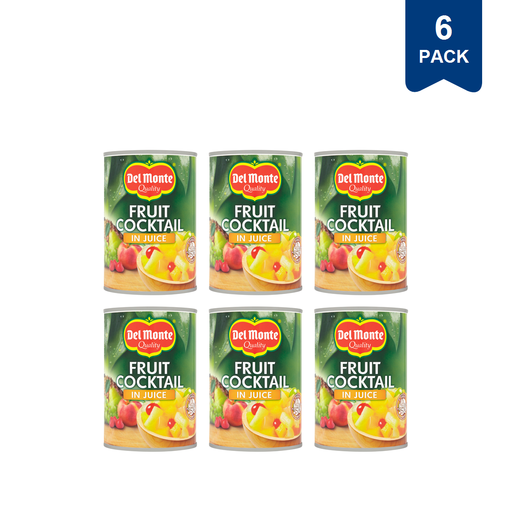
Del Monte Fruit Cocktail in Juice 415g, six-pack
Consider this for a dessert that calls for mixed fruit rather than peach pieces alone. The pack contains six 415g tins; check the drained quantity against your recipe before deciding how many to open.
View on Joybuy
 No image available
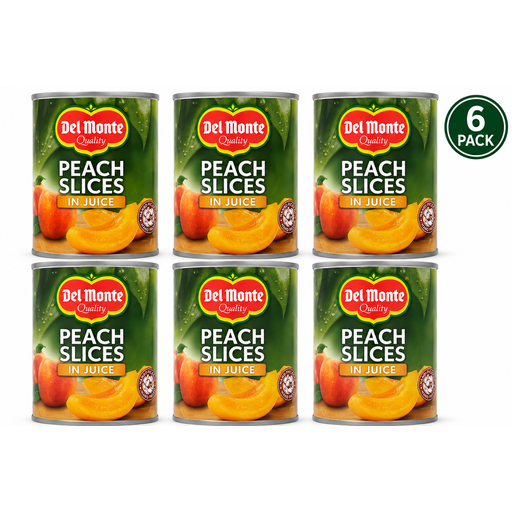
Del Monte Peach Slices in Juice 415g, six-pack
Choose peach slices when the dessert calls for one fruit throughout. This is a pack of six 415g tins, so you can plan how many to use for the shared dessert and leave the others unopened.
View on Joybuy
 No image available
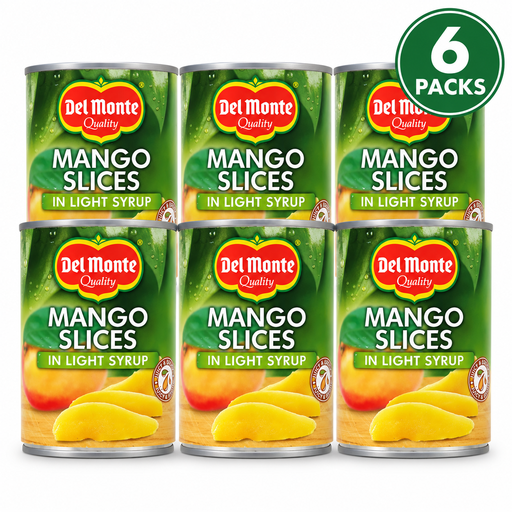
Del Monte Sliced Mango in Light Syrup 425g, six-pack
This suits a dessert planned around mango rather than peaches or mixed fruit. It contains six 425g tins; note the light-syrup packing medium when checking it against your recipe.
View on Joybuy
 No image available
Princes Pineapple Chunks with Juice 432g
Consider this single tin when the planned dessert calls for pineapple chunks. It is a 432g tin with juice, not a multi-tin pack; check the fruit quantity needed for a larger shared recipe.
View on Joybuy
 No image available
Dole Peaches in Juice, 4 × 113g
Choose the four separate peach pots if you need individual servings rather than fruit for one large shared dessert. Check the ingredient list if sweeteners affect your choice, and follow the pot's instructions after opening.
View on Joybuy
Frequently asked questions
Should I choose fruit in juice or light syrup for dessert?
Choose the packing medium that fits the dessert you intend to make, then check the exact product label. Princes offers fruit cocktail in both juice and light syrup, so the name of the fruit alone will not tell you which version you have picked.
Does no added sugar mean there is no sweetener?
No. Tesco's listing for Dole peach cups uses a no-added-sugar claim while listing steviol glycosides as a sweetener. Read the full ingredient list if that distinction matters to you.
What should I do with fruit left in an opened tin?
Transfer leftovers out of the opened tin and follow the product's refrigeration and after-opening instructions. Health Well's Food Standards Agency food-safety guidance advises against storing food in an opened tin; the time allowed after opening should be checked on the item you bought.
Can I use a visibly bulging tin?
Do not eat food from a visibly bulging tin. Health Well's Food Standards Agency food-safety guidance identifies a visible bulge as a reason not to use the contents, regardless of the date printed on the can.


